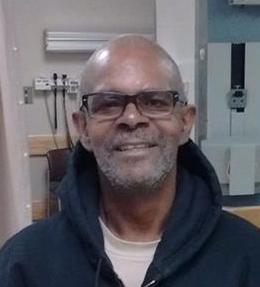
Kennedy Fitzgerald Ransom II was a 25-year-old man from Indianapolis, Indiana. In late August 2012, his life came to an abrupt end, and what remains in the public record is mostly the outline of his absence rather than the story of his days. An obituary published in early September notes that he died on August 26, 2012, and that his family arranged a morning service at Williams & Bluitt Funeral Home’s Peoples Chapel, followed by burial at New Crown Cemetery, a resting place on the southeast side of the city where generations of Indianapolis families have been laid to rest.
Beyond those brief funeral details, the circumstances of his death are described only in stark, minimal terms. Public cold-case listings maintained by crime-mapping resources include his name among Indianapolis homicide victims, recording his age, noting that the Indianapolis Metropolitan Police Department is the investigating agency, and classifying his death simply as “murder.” He appears there alongside dozens of other victims whose cases remain unresolved, grouped under the heading of cold cases and unsolved crimes, with no additional narrative about where he was found, what time the crime occurred, or what events led up to the violence that ended his life.
In those same public summaries, there is a telling silence where suspect information might be. No description of a person of interest, no physical or vehicle description, no composite sketch or plea directed at a particular neighborhood appears in connection with his name. There is no mention of an arrest, and no reference to charges, a trial, or a conviction tied to his killing. Instead, his entry sits unchanged among other unsolved homicides, suggesting that, at least in the public-facing record, investigators have never identified or charged anyone for his death and that the case remains open but unresolved.
For those who cared about him, the most concrete traces that remain accessible to strangers are the funeral announcement and the bare listing in a cold-case database: a time and place where mourners gathered to say goodbye, a cemetery where his grave can be found, and a one-word classification of how he died. Together, they sketch a quiet, somber story of a young life cut short, a family that had to plan services and stand by a graveside while the questions of who was responsible and why went unanswered. Years later, his name persists in those sparse online records, a reminder that behind each short line of text in a cold-case roster is a grieving circle of people still living with the absence, and a homicide that, in the public eye, has yet to find justice.