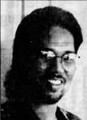
James Broatch was 45 years old when he was last seen in Haleiwa, on the North Shore of Oʻahu, on January 31, 1994. Public NamUs records identify him as a White/Caucasian male with brown hair and brown eyes, about 5 feet 8 inches tall and approximately 130 pounds, with his last known contact recorded in Haleiwa, Hawaii. The case is listed in NamUs as Missing Person / NamUs #MP124841, with the Honolulu Police Department identified as the investigating agency.
On the day he vanished, James was reportedly seen surfing at a break known as Phantoms, where waves were described as approximately 20 feet or higher. At some point, he failed to come out of the water. His surfboard and multicolored wetsuit were later recovered, a heartbreaking indication that something had gone terribly wrong in the ocean while he was doing something that, by all available public information, placed him directly in the powerful surf conditions of the North Shore.
After James failed to return, an extensive search was conducted by the Honolulu Fire Department and Honolulu Ocean Safety. His white 1977 Dodge van, bearing Hawaii license plate ETT 468, was found parked unattended at 59-014 Oopuola Street, near the surf spot where he had been surfing. The available public details do not describe any confirmed sighting of James after he entered the water, and the recovery of his belongings appears to have become one of the central known facts in the case.
The Honolulu Police Department case number associated with James’s disappearance is 94-045007, and NamUs lists the agency date reported as January 31, 1994. NamUs is a national clearinghouse and database used for missing, unidentified, and unclaimed persons cases, providing a central place where law enforcement, investigators, and the public can access case information. In James’s case, the public record preserves the essential details of where he was last seen, what was recovered, and which agency remains connected to the investigation.
James Broatch’s case is, at its heart, the story of a man last seen in the ocean off Haleiwa during dangerous, towering surf, followed by a search that recovered his surfboard, wetsuit, and vehicle but did not publicly document his safe return. The public record is sparse, but what is known is clear and deeply painful: James was last known to be surfing at Phantoms on January 31, 1994; he did not make it back out of the water; emergency responders searched for him; and the Honolulu Police Department remains the listed investigating agency. The case stands as a somber North Shore missing person case centered on a sudden disappearance in heavy surf, the recovery of personal belongings, and the enduring absence of definitive public answers.Last Seen: Jan 31, 1994