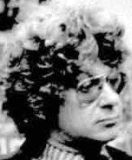
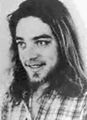
Jesús María De Galíndez, a 40-year-old Basque nationalist and vocal opponent of two different fascist regimes, vanished from Manhattan, New York, on March 12, 1956. An anti-fascist and Basque nationalist, De Galíndez had initially fallen afoul of General Francisco Franco's dictatorship in his native Spain. He fled to the Dominican Republic in 1939, where he became a legal adviser to the National Department of Labor.
However, after showing sympathy for striking workers, he was dismissed. This led him to New York City in 1946, where he became a prominent voice against the brutal dictatorship of Generalissimo Rafael Leonidas Trujillo in the Dominican Republic.
While in New York, De Galíndez balanced his activism with an academic career, teaching political science at Columbia University as he pursued his Ph.D. He penned a syndicated political column that appeared in newspapers across Latin America and authored a book-length exposé on the savagery of Trujillo's rule titled, "The Era of Trujillo." Aware of the danger he was in, as other activists had been killed by Trujillo's agents on American soil, De Galíndez wrote a letter to be opened upon his death or disappearance, explicitly holding Trujillo's agents responsible. His fears were not unfounded; a friend of his was murdered in Manhattan in 1952. On the evening of his disappearance, De Galíndez finished teaching a class at Columbia University at 9:20 p.m. and accepted a ride from a student, who dropped him off at the 7th Avenue and 57th Street subway entrance. He was last seen walking towards the subway, carrying his briefcase. Five days later, he was reported missing, with all his personal effects, including money and papers, untouched in his Fifth Avenue apartment. In a posthumous acknowledgment of his academic contributions, Columbia University awarded him his Ph.D. in absentia in June 1956.
It is widely believed that De Galíndez was abducted by agents of the Trujillo regime, drugged, and flown to the Dominican Republic, where he was tortured and killed. An investigation by *Life* Magazine in 1957 detailed this theory, suggesting he was ultimately killed in Trujillo's presence and buried in an unmarked grave. The pilots allegedly involved were an American named Gerald Lester Murphy and a Dominican, Octavio Antonio de la Maza. Evidence showed Murphy flew a rented plane with extra fuel tanks from New York to Miami and then south on the night De Galíndez disappeared. Murphy later took a job with a Dominican airline, a position allegedly secured by Trujillo himself. Before his own disappearance in December 1956, Murphy reportedly confided to his fiancée that his "invalid" passenger had been De Galíndez. De la Maza was subsequently charged with Murphy's murder but was found hanged in his jail cell in January 1957, leaving behind a confession that many found suspect.
In an attempt to counter the negative publicity, Trujillo hired New York lawyer Morris Ernst to investigate. Ernst's report, released after a ten-month investigation, claimed De Galíndez had embezzled money from Basque nationalists and disappeared voluntarily. Despite these efforts, the case damaged the relationship between the United States and the Trujillo regime. Trujillo was assassinated in 1961, with one of the conspirators being the brother of Octavio de la Maza, who believed the regime was responsible for his brother's death. De Galíndez's unpublished book, "The Era of Trujillo," was eventually published in Chile and became a bestseller throughout Latin America. Although foul play is strongly suspected, no one has ever been charged in the disappearance of Jesús María De Galíndez.Last Seen: Mar 12, 1956