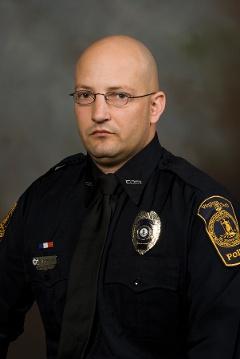
On a summer day in August 2006, the life of 40-year-old Corporal Eric Evine Sutphin of the Montgomery County Sheriff's Office was tragically cut short. The events leading to his death began on August 20, 2006, when an inmate named William Morva was taken to Montgomery Regional Hospital for treatment of minor injuries. While at the hospital, Morva, who was awaiting trial on attempted armed robbery charges, managed to overpower a sheriff's deputy.
He used a metal toilet-paper container to knock the deputy unconscious and then stole his firearm.
With the deputy's weapon in hand, Morva shot and killed an unarmed hospital security guard, Derrick McFarland, who was attempting to intervene. This act sparked a massive manhunt for the escaped inmate. The search extended to the area around the Virginia Tech campus in Blacksburg. It was there, on the morning of August 21, 2006, that Corporal Sutphin encountered Morva on the Huckleberry Trail while participating in the search. Morva ambushed the veteran officer, fatally shooting him in the back of the head. After an intensive search that led to the lockdown of the Virginia Tech campus, Morva was captured later that day, found hiding in a briar patch near where he had killed the corporal.
In the aftermath, the wheels of justice began to turn. Brad Finch, the Commonwealth's Attorney, announced that he would seek the death penalty for William Morva, who was charged with capital murder for the deaths of both Corporal Sutphin and Derrick McFarland. In 2008, a jury found Morva guilty of capital murder and, following their recommendation, a judge sentenced him to death. Over the next several years, Morva's case went through numerous appeals. His defense attorneys argued that he suffered from a severe delusional disorder that made it impossible for him to distinguish between reality and his delusions. Despite these appeals, which went as high as the U.S. Supreme Court, his conviction and death sentence were repeatedly upheld.
Even as his execution date neared, there were last-minute pleas for clemency from various groups, including mental health advocates and international organizations. In a poignant turn of events, one of Corporal Sutphin's daughters, Rachel Sutphin, also advocated for Morva's life to be spared, citing her personal opposition to the death penalty. However, Corporal Sutphin's mother expressed her desire for justice to be carried out. Ultimately, Virginia Governor Terry McAuliffe declined to grant clemency, stating that Morva had received a fair trial. On July 6, 2017, William Morva was executed by lethal injection at the Greensville Correctional Center. He was the last person to be executed by the Commonwealth of Virginia before the state abolished capital punishment in 2021.