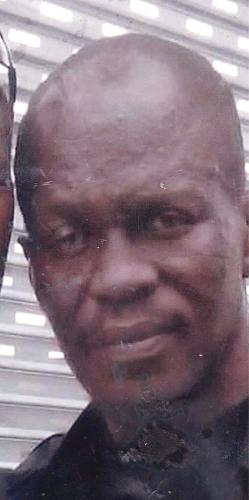
In the early hours of a Sunday in June 2016, the quiet of Camden’s 400 block of Washington Street was broken by gunfire and a frantic 911 call. When officers arrived at about 2:19 a.m., they found Anthony Rosado, a 53-year-old male from Camden, lying wounded in the street, suffering from gunshot injuries that would soon prove fatal. Police rushed him to Cooper University Hospital, where doctors fought to stabilize him, but his injuries were too severe.
After days of medical care, he was pronounced dead at the hospital in late June, turning a desperate attempt at survival into another entry in the city’s long struggle with violent crime.
Reports later pieced together only the barest outline of what had happened that night. The shooting appeared to have occurred outdoors on Washington Street, but no clear public account emerged of a confrontation, a robbery, an argument, or any other motive that might explain why Rosado was targeted. What is known is that he was alone when first responders reached him; whoever pulled the trigger had already vanished into the darkness of the surrounding neighborhood. As detectives canvassed the area, they searched for witnesses, cameras, anything that could turn a short burst of gunfire into a solvable case.
In the days that followed, the Camden County Prosecutor’s Office and Camden County Police Department publicly acknowledged his death and appealed to the community for help. Press statements emphasized that the investigation was ongoing and urged anyone with information to call named detectives, the kind of plea that underscores how dependent such cases are on people willing to come forward. Yet even as time passed, there were no announcements of a suspect being identified, no press conference showing a surveillance still, no warning to the public about a wanted gunman. The silence from investigators on any leads became its own kind of statement: the trail, at least publicly, was thin from the very beginning.
Online memorials and case summaries filled in pieces of who Anthony was beyond the sterile language of law enforcement. On one gun-violence remembrance site, candles were lit in his honor, and brief notes described him with words that painted a warm, affectionate picture—a man remembered as gentle, loving, funny, and charming by those who knew him. Another site dedicated to unsolved killings recorded the essential facts of his case and labeled it a “death by force,” noting that he had been discovered in the street after the 911 call and that he had died from his injuries, one more victim in a city already burdened by its homicide rate.
What makes Rosado’s story even more wrenching is how it stands in contrast to other Camden shootings from the same period. Just days after his own ordeal, 48-year-old Walter Davis was fatally shot in an unrelated incident on Sycamore Street; that case led to the arrest of a 22-year-old suspect and the public announcement that a second person was being sought. Authorities were able to name the accused, describe how he had been tracked down with the help of a regional fugitive task force, and take him into custody. For Rosado’s killing, there were no such breakthroughs, no publicized arrests, and no suspects paraded in front of cameras—only a lingering question about who fired the shots on Washington Street and why.
Years later, case-tracking websites still list Anthony Rosado’s death as unsolved. They describe a man found shot in the early morning, taken from the 400 block of Washington Street to Cooper University Hospital, and never returning home. They also state plainly that despite investigative efforts, no one has been arrested, no motive has been confirmed, and the identity of the shooter remains unknown. In online forums, visitors speak of him in the present tense, express sympathy for his family, and wonder aloud whether someone, somewhere in Camden still carries the secret of what happened that night. For now, his case remains a cold file connected to a specific stretch of Washington Street, a hospital room in Cooper, and a family and community left without answers about who took his life or why.