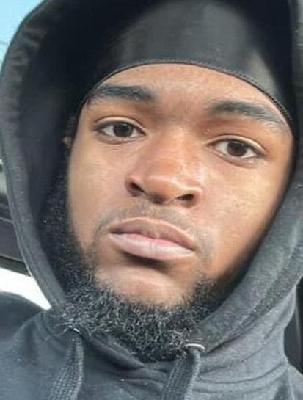
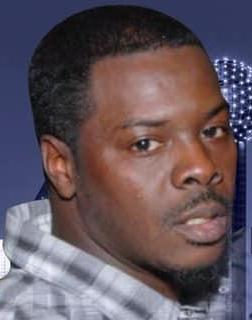
Jonathan Rojas, an 18-year-old Hispanic/Latino male from Camden, New Jersey, was shot to death on the morning of July 30, 2018, as he sat inside a vehicle with a friend near Fourth Street and Kaighns Avenue. Rojas had been preparing for a new chapter in his life and had spoken about plans to attend Camden County College. A former teacher who had remained in contact with him remembered him as smart, funny and respectful in the classroom and said Rojas had recently talked about wanting a
different and more positive future for himself.
At approximately 7:42 a.m., a gunman riding a red bicycle approached the vehicle and fired a semiautomatic handgun five times into it. Rojas was struck, as was passenger Devon Fisher. Police responding to the scene found extensive evidence of the barrage, including bullet damage to the windshield and interior of the vehicle, shattered glass and five. 40-caliber shell casings. Bullet fragments were later recovered from inside the vehicle and from Rojas's body. Rojas was transported for medical treatment but was pronounced dead at the hospital later that morning. Fisher survived his injuries.
Although investigators did not have an eyewitness who actually saw the shots being fired, a witness saw a man immediately afterward riding a bicycle along Kaighns Avenue. The bicyclist was described as tall and thin, dressed entirely in black and wearing a black ski mask. The witness watched the man abandon the bicycle and get into a silver Chevrolet SUV about a block from the shooting and recorded the vehicle's license plate number. Surveillance cameras and a ShotSpotter activation helped investigators reconstruct the gunman's movements, showing the Chevrolet in the immediate area when the shooting occurred, picking up the bicyclist moments later and then traveling to a nearby residence.
Investigators identified Jermaine Venable of Clementon and Dametre Tokley of Camden as suspects. Police located the Chevrolet, placed it under surveillance and ultimately took both men into custody later that day. Detectives then searched a residence the men had visited after the shooting. A. 40-caliber Glock Model 22 handgun with a round in the chamber and a loaded extended magazine was discovered in a living-room closet. Although investigators obtained no usable DNA or fingerprints from the gun, ammunition in the weapon carried the same caliber markings as the casings recovered at the shooting scene. A New Jersey State Police firearms examiner later testified that the recovered shell casings and bullet material were fired from that handgun and that three bullet fragments recovered during Rojas's autopsy had also been fired from it.
Police also searched the Chevrolet and recovered cell phones, cash, a black hooded sweatshirt, a black mask, disposable gloves and other items. Tokley later signed an affidavit stating that he had placed the handgun in the closet himself and had been alone when he did so. Venable denied having anything to do with the killing. He told investigators that Tokley had driven him around that morning and claimed that another person known to him only as "Naz" had also been in the vehicle. A fingerprint recovered from the exterior of the Chevrolet was potentially matched to Nasir Mason, but investigators testified that Mason was not considered a suspect in Rojas's homicide. Venable's defense later attempted to suggest Mason could have been responsible, but the trial court found that the proposed third-party guilt theory was based on speculation rather than evidence directly connecting Mason to the murder.
A Camden County grand jury charged Venable and Tokley with first-degree murder, first-degree conspiracy to commit murder, first-degree attempted murder, aggravated assault, possession of a weapon for an unlawful purpose and unlawful possession of a weapon. Venable faced additional weapons charges because of his prior criminal record. Prosecutors maintained that Venable was the masked bicyclist who fired into the vehicle and that Tokley drove the Chevrolet used to pick him up immediately afterward. The cases against the two men were ultimately severed for trial.
Venable went before a jury in February 2022. Prosecutors presented the surveillance footage, witness testimony, firearms evidence and the sequence showing Tokley's Chevrolet picking up the bicyclist seconds after Rojas was shot. The jury convicted Venable of first-degree murder, conspiracy to commit murder, aggravated assault, possession of a weapon for an unlawful purpose and unlawful possession of a weapon. He was acquitted of attempted murder but was subsequently convicted of the additional prohibited-person weapons offenses. The court imposed an aggregate 75-year prison sentence, with 85 percent of the applicable term subject to New Jersey's No Early Release Act.
Venable appealed, challenging the firearms evidence, the restrictions placed on his attempt to implicate another person, the jury instructions, his conspiracy conviction and the sentence. On March 13, 2025, the New Jersey Superior Court Appellate Division rejected those arguments and affirmed his convictions and sentence. The appellate court concluded that the evidence was sufficient for the jury to find that Venable and Tokley acted together in the killing, noting the surveillance footage that tracked the getaway vehicle from the scene and showed the bicyclist being picked up immediately after Rojas was shot. The decision left Venable's murder conviction and lengthy prison sentence intact.