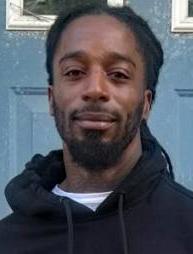
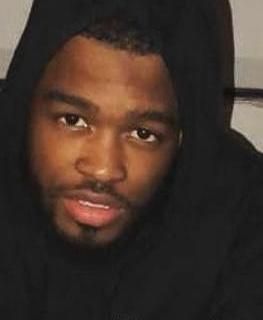
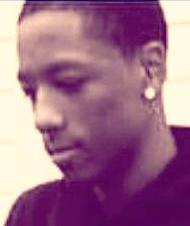
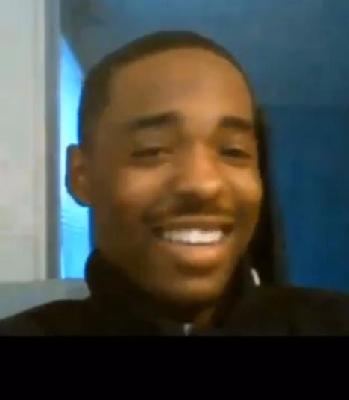
On the afternoon of December 24, 2021, 33-year-old JaQuan Rajahn Nichols, a Black / African American man from Salem, New Jersey, moved through a familiar holiday landscape, unaware that the day would become the one his family and community would forever associate with his loss. Born on February 1, 1988, in Newark, Delaware, and raised largely in and around Salem, he was remembered in public tributes as warm, kind-hearted, and quick with an infectious smile.
He attended Salem City Schools and also spent time in the Red Clay School District in Wilmington, Delaware, before enrolling in courses at Mercer County Community College, where he worked toward an associate degree in business, balancing everyday responsibilities with plans for a more settled future.
As Christmas approached, Salem City was already quieted by winter and the holiday weekend when, in the early hours of that Friday, police were dispatched to Kent Street after a call reporting gunfire. Responding officers found Nichols on the street suffering from a fatal gunshot wound, the violence of the encounter stark against the stillness of the neighborhood. Authorities later confirmed that he lived in Salem and that he had been discovered there with the injury that took his life. Despite emergency response, his death was recorded that same day, and the news reverberated quickly through the tight-knit community that knew him not as a headline, but as a son, relative, and friend.
His killing did not occur in isolation. Over that same holiday period, another man, 29-year-old Tevin Richmond of Salem, was fatally shot on Walnut Street, and the pair of back-to-back homicides left residents shaken and searching for answers. Local prosecutors publicly described the two deaths as separate shootings and appealed to the public for help, emphasizing that they needed information from anyone who might have seen something or heard rumors about what happened on those late-December streets. Contact numbers for the Salem City Police Department and the Salem County Prosecutor’s Office were circulated in news coverage, underscoring how reliant investigators were on the community to move the case forward.
In the months and then years that followed, the official picture of what happened to Nichols remained frustratingly incomplete. Case summaries and public case pages dedicated to his death note that he was found shot on Kent Street and identify the incident as a homicide but do not describe a clear motive, a detailed sequence of events, or any publicly confirmed leads that have crystallized into an arrest. Community members posting on discussion forums attached to those case pages have repeatedly remarked on how little information about possible suspects has been released, reflecting a shared sense that the investigation has stayed largely opaque to the public. The same summaries, updated as recently as 2025, still list him as a victim in an unresolved “death by force” case, with no suspect or defendant named in connection with the killing.
News accounts from the immediate aftermath likewise reported that authorities had neither a motive nor suspects in Nichols’s shooting or in the related holiday-weekend homicide, even as they emphasized their desire to solve the crimes. Over time, advocacy and memorial sites that track gun-violence victims in the United States have continued to list Nichols as someone “lost to gun violence” in Salem on December 24, 2021, linking back to the original regional coverage and official records, but they do not record any later breakthrough in the form of an arrest or named suspect. Taken together, these public sources indicate that, as far as the record shows, no one has yet been charged with his murder.
Where the criminal case stalls, the remembrance of Nichols’s life continues more fully. His obituary and online memorials dwell on his personality and his impact: the way he made people laugh, the affection in which he was held by family and friends, and the sense of promise cut short by sudden violence. On digital memorial pages, dozens of virtual candles have been lit in his name and messages left by people who knew him speak in present tense about their love and their grief, framing his story not only as that of a victim in an unsolved homicide, but as that of a man whose everyday presence is still missed. Through these tributes, the outline provided by police reports—time, street name, cause of death—is filled in with memories of a life that was more than the crime that ended it, even as the central question of who pulled the trigger on that cold December day remains unanswered in the public record.