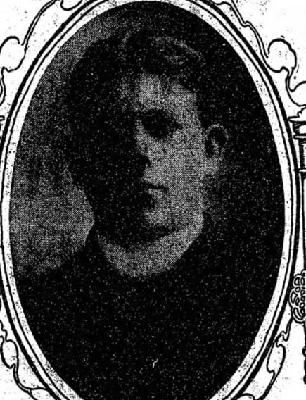
John F. Daley, a 29-year-old white man, was on patrol in Detroit’s business district when the night turned dangerous shortly before midnight on November 17, 1904. He came upon two burglars working at the rear of William Diedrich’s store at 75 Michigan Avenue, near Wayne Street—an alleyway that sat in the shadows behind a busy corner even after the shops closed.
The burglars had already started forcing a store window, and in the confusion of Daley’s attempt to stop them, gunfire cracked through the alley. He was struck in the chest, and his revolver was later found just feet from the partly opened window, as if he’d tried to bring it to bear while turning to pursue. Wounded and falling forward into the dark, he cried out for help, and the sound of shots and shouting jolted nearby sleepers awake.
One man who answered that call was Herbert H. Pickell, a special officer for the Michigan Central Railroad, who was close enough to hear the shot that dropped Daley. Pickell joined the chase as the killers fled west, zigzagging between Lafayette Avenue and the parallel alley, with a growing crowd trailing behind. Near Lafayette and Third Street, the fugitives turned and shot Pickell through the abdomen, the bullet driving through him and exiting near the backbone. After firing more shots to frighten back pursuers, the pair escaped toward the railroad yards. Investigators believed the break-in at Diedrich’s was meant as a route into a jewelry store next door.
In the immediate aftermath, descriptions of the two burglars were sharply drawn in the newspapers: one was reported as white and the other as Black, and within about an hour a Black man was arrested on suspicion. In the days that followed, another report identified a suspect by name—Floyd Harper—describing him as “the older of the two” and stating that he was identified by multiple people, including Pickell, who was said to have made a statement at Harper Hospital when the prisoner was brought there for identification.
The case did not end with the first rush of arrests. A later newspaper item reported that Floyd Harper was tried and convicted of Daley’s murder, but that Michigan’s Supreme Court in Lansing granted him a new trial in July 1906. The surviving clips available online do not clearly show what the final outcome was after that reversal, only that the conviction was no longer treated as settled by the court at that time.