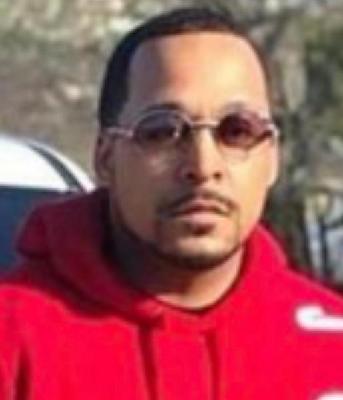
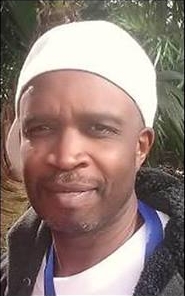
Walter Jay Charlton was a 46-year-old man living in Detroit, Michigan, when his life was cut short by gunfire on March 13, 1968. Memorial records that preserve only the barest outline of his story describe him as having been “lost to gun violence” in the city that day, his name now appearing among thousands of others whose deaths are cataloged in online tributes to victims of shootings in the United States.
The fragmentary public record indicates that Charlton died in what is identified as a mass shooting in Detroit on March 13, 1968—a single incident in which multiple people were struck by gunfire. A national gun-violence memorial site lists that event as having two people killed and three others injured, and names Walter Jay Charlton as one of the deceased. Beyond these stark numbers, however, there is no accessible description of where in the city the shooting occurred, what brought the victims together in that place, or what immediate circumstances led to the gunfire that took Charlton’s life. The incident survives in the historical record largely as a line in a database and a brief note that he died from gunshot wounds in Detroit on that date.
Charlton’s death unfolded in a city still reeling from the seismic events of the previous summer. In July 1967, Detroit had experienced one of the deadliest urban uprisings in modern U.S. history, a five-day conflict rooted in long-standing tensions over policing, segregation, and economic inequality. That upheaval left 43 people dead, hundreds injured, and large swaths of the city scarred by fire and gunfire. Historians of the period describe late-1960s Detroit as a place where mistrust between law enforcement and many residents—particularly in Black neighborhoods—ran high and where the presence of weapons and the memory of the prior year’s violence hung over daily life. Charlton’s killing, occurring less than a year after the uprising, belongs to this broader landscape of fear and unease, even if the available sources do not spell out exactly how his final moments fit into the city’s troubled narrative.
Despite references to a mass shooting and the acknowledgement that multiple victims were hit, the online trail offers no details about who fired the shots that killed Walter Jay Charlton. None of the memorial or reference entries that mention him identify a suspect, name a person of interest, or describe any follow-up actions by police. There is likewise no accessible documentation of an arrest, indictment, or trial connected to the March 13, 1968 incident in which he died. If investigators ever developed leads or brought someone into custody, those efforts have not surfaced in the digital records that now serve as the primary public window into the case.
What remains, more than half a century later, is a stark contrast between the richness of the historical literature on Detroit’s turbulent late-1960s and the silence surrounding this individual killing. Scholars and public-history projects have carefully reconstructed the patterns of police violence, community resistance, and everyday fear that defined the city in those years, yet Charlton’s story appears only in brief memorial lines noting his name, age, city, and the fact that he died by gunfire in a mass shooting with other victims. In the absence of publicly available information about suspects or justice proceedings, his death stands as one of many individual tragedies folded into a broader history of violence, remembered today chiefly through the quiet testimony of online memorials that mark the date, the place, and the fact that he never came home.