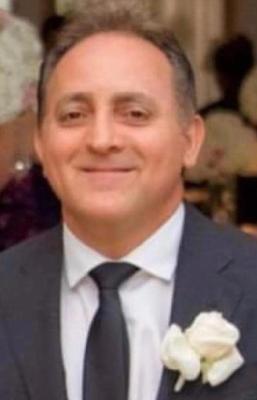
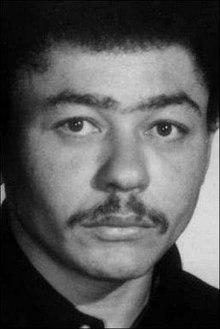
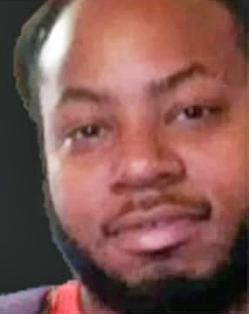
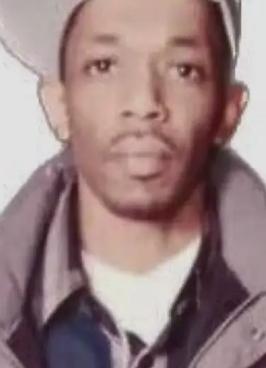
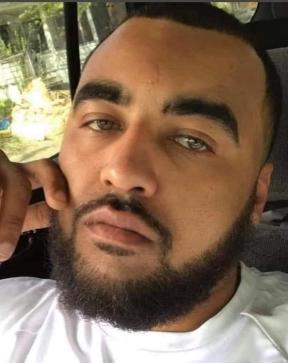
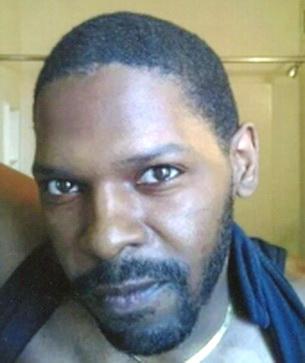
Brandon Rice, a 33-year-old man from Highland Park, Michigan, was killed on the morning of April 23, 2015, outside the home he shared with his family in the 300 block of Elmhurst. Rice was a father of six, and the morning had begun with an ordinary family routine: he was outside warming up his vehicle so he could take some of his children to school. At about 7:20 a.m., he was shot. His longtime girlfriend, who said they had been together for 14 years, was inside the home with the children and witnessed the killing from only a short distance away. She remembered Rice as someone who was always there for his family and said she watched him die on their front porch.
Investigators quickly focused on Dmarco Dorian-Vincent Hoskins. On the day of the killing, Highland Park police publicly identified Hoskins as a person of interest, saying witnesses had placed him at the location and that detectives wanted to question him. Hoskins spoke with a television reporter by telephone and maintained that he was in North Carolina and had already been there for about a month. Despite that assertion, authorities in North Carolina took him into custody in connection with the investigation. The case would eventually develop into something far more complicated than a seemingly isolated shooting, because Rice and Hoskins already had a violent history and Rice was expected to be a witness in a criminal case against him.
Less than a month before Rice was killed, on March 31, 2015, he had survived another shooting in Detroit. Prosecutors alleged that Hoskins and another person followed Rice as he drove his SUV before gunfire erupted around Second Street and Webb Street. Rice survived and identified Hoskins to family members, police and a grand jury as the person who shot him. According to later court records, Detroit police officer Elijah Lately, who was a childhood friend of Hoskins, secretly provided Hoskins with information from the police investigation. Lately sent Hoskins a photograph of a police report and also read information from another report over the telephone, including Rice's identification of Hoskins. Lately later testified that after hearing the information, Hoskins made a statement that Lately understood to mean Rice needed to be eliminated. Hoskins was indicted in connection with the March shooting on April 3, leaving Rice positioned as an important prosecution witness.
Prosecutors ultimately contended that Rice's killing three weeks later was intended to prevent him from testifying. Evidence later discussed by the Michigan Court of Appeals included testimony that Hoskins and Nathan Stokes Jr. had been seen together near Rice's home on the night of the March shooting, with Hoskins allegedly possessing a. 44-caliber handgun and Stokes possessing a. 45-caliber weapon. Investigators recovered. 44- and. 45-caliber casings after that attack. At the trial concerning Rice's eventual death, Rice's fiancée, Carrie Bryant, and her adult daughter, Sequoia, testified that Stokes was the person who shot Rice on April 23. A firearms expert testified that seven. 45-caliber casings recovered after the March attack had been fired from the same gun that produced five. 45-caliber casings found at the scene of Rice's fatal shooting. Cellphone analysis also showed communications close to the time of the homicide between a number associated with Hoskins and another phone linked through its contacts to Stokes; that second phone traveled from Pennsylvania to the area of the killing and then returned to Pennsylvania.
The prosecution's theory was that Hoskins arranged for Rice to be killed while Hoskins was away in North Carolina, giving him distance from the crime and what prosecutors characterized as an attempted alibi. Hoskins and Stokes were eventually charged together with first-degree premeditated murder, conspiracy to commit first-degree premeditated murder and witness intimidation. Prosecutors alleged that Stokes carried out the shooting at Hoskins's direction and that the purpose was to silence Rice before he could testify about the March attack. Hoskins was held without bond during the proceedings. Despite the prosecution's theory and the evidence presented against them, the homicide case ended without a conviction. Their jury trial began on February 29, 2016, and Hoskins and Stokes were acquitted on every charge arising from Rice's death.
The acquittals did not end the legal disputes surrounding the case. Hoskins still faced charges arising from the March 31 nonfatal shooting of Rice, including assault with intent to murder, intentionally discharging a firearm from a motor vehicle causing injury and felony-firearm. A major question became whether Rice's statements identifying Hoskins could be used at that later trial even though Rice was no longer alive to testify. The Michigan Court of Appeals concluded in 2017 that, under the lower preponderance-of-the-evidence standard used to decide that evidentiary question, the prosecution had presented sufficient evidence to show that Hoskins intentionally procured Rice's absence by having him killed. That finding did not overturn the homicide acquittal or amount to a murder conviction; the murder jury had already found the evidence insufficient to convict Hoskins and Stokes beyond a reasonable doubt. Instead, the appellate decision concerned whether Rice's earlier statements could be admitted in the separate prosecution over the March shooting.
Elijah Lately also became entangled in the investigation. The Detroit Homicide Task Force began investigating Rice's killing the day after the shooting and interviewed Lately on April 24 and again on July 20, 2015. Prosecutors alleged that Lately knew about the plan to kill Rice, knew who was involved and knew details about the homicide scene, yet denied having information when questioned. They also accused him of falsely denying contact with suspects after the killing. On August 14, 2015, a one-person grand jury indicted Lately on two felony counts of lying to a police officer during a violent-crime investigation. The indictment was unsealed three days later, Lately was arrested, suspended without pay from the Detroit Police Department and initially held on a $400,000 bond. The bond was later reduced to $100,000 with GPS monitoring and restrictions on his movements.
Later court proceedings showed that Lately ultimately entered into a plea agreement and was required to testify, and an appellate opinion described his admitted lies to fellow police officers as one of the issues affecting his credibility. His testimony nevertheless became part of the evidence connecting Hoskins to the events leading up to Rice's death. The prosecution argued that Lately had not merely withheld information but had compromised the investigation by giving Hoskins police information and, according to testimony, warning people associated with the case to stay out of sight. The resulting prosecution exposed an alleged attempt to silence a witness and an alleged effort by a police officer to conceal information, but it did not produce a murder conviction: the two men tried for Rice's killing, Hoskins and Stokes, were both acquitted of first-degree murder, conspiracy and witness intimidation.