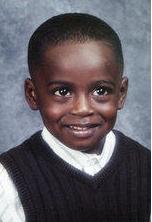
In the late summer of 2015, the life of 21-year-old Donnie Younger, a male resident of Flint, Michigan, was cut tragically short. On the night of August 29th, a sequence of events unfolded that would end in his violent death. Earlier in the evening, an argument had broken out at a local McDonald's restaurant, an altercation that would prove to be a fatal precursor. Following this dispute, Younger was discovered on Wisner Street, inside a car that had crashed into a utility pole.
The initial scene may have appeared to be a mere traffic accident, but the truth was far more sinister. An investigation revealed that Donnie Younger had suffered a fatal gunshot wound, turning a car crash into a homicide investigation.
The subsequent police work led to the identification and arrest of two suspects, Deondra Markeith Keel-Haywood and Daquavius Davonte Tramble. The investigation pieced together their movements on that fateful night, including borrowing a car and their presence at the McDonald's where the initial conflict took place. This gathering of evidence culminated in bringing charges against both men for their roles in the death of Donnie Younger. The community was left to grapple with another act of gun violence that had claimed a young life.
The pursuit of justice for Donnie Younger moved to the courtroom, where Keel-Haywood and Tramble faced a joint trial, though their cases were presented to separate juries. The legal proceedings were complex, with witness testimony and evidence detailing the series of interactions that led to the fatal shooting. Ultimately, both men were found guilty for their involvement in the crime. Deondra Markeith Keel-Haywood was convicted of second-degree murder, assault with intent to murder, being a felon in possession of a firearm, and multiple counts of possessing a firearm during the commission of a felony. His sentence was a prison term of 33 to 50 years for the murder and assault, with additional time for the weapons charges.
Daquavius Davonte Tramble was also convicted on charges of second-degree murder, assault with intent to murder, and felony-firearm offenses. He received a sentence of 375 months to 50 years for the murder and assault convictions, in addition to penalties for the firearm charges. The convictions and lengthy sentences brought a measure of closure to the case, holding the two men accountable for the senseless killing of Donnie Younger and underscoring the severe consequences of the violence that had impacted the Flint community.