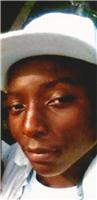
In the late summer of 2015, the city of Muskegon Heights, Michigan, was unsettled by a series of violent events that would culminate in the death of 21-year-old Darnell Leroy Byrd III. On the night of September 5, 2015, Byrd was discovered in a dimly lit alley, having sustained fatal gunshot wounds. His death marked a tragic chapter in a period of heightened violence that had gripped the community.
Just days before his own demise, on August 30, Byrd had been involved in another shooting incident at the East Park Manor Public Housing complex. In that event, four individuals were shot, and one man, Thedrick Bryant, lost his life. Byrd himself sustained minor injuries during this earlier altercation and was subsequently charged with receiving and concealing stolen ammunition. This incident was a precursor to the violence that would ultimately claim his life, weaving a complex narrative of interconnected events and individuals.
The investigation into Byrd's murder led to the identification and arrest of several suspects. Three men, Jeremy Darnell Morton, then 28, Kierelle Montrell Burns, 23, and Josiah Fousse, 22, were charged with open murder and felony firearm in connection with Byrd's death. The charges against Burns and Morton were enhanced due to their prior criminal histories, with Burns being charged as a second-time habitual offender and Morton as a fourth-time habitual offender. The investigation also resulted in charges against two women for their roles in the aftermath of the crime. Brittany Jon-na Kelsey, 24, was charged with lying to a police officer during the investigation, and Shamarea Zhane Salazar, 21, faced charges of being an accessory after the fact.
The legal process that followed brought a measure of resolution to the case. Kierelle Burns was ultimately convicted for his role in the murder of Darnell Leroy Byrd III and is serving a life sentence. Jeremy Darnell Morton also faced trial for his involvement in the homicide. The series of shootings and the subsequent investigation and trials cast a somber shadow over the Muskegon Heights community, prompting increased security measures and even the cancellation of local events, including a high school football game, as residents grappled with the impact of the violence.