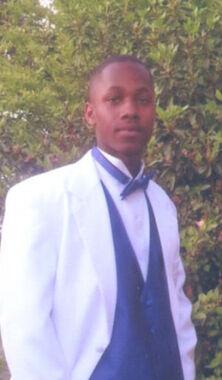
Kelvin Devonte Tyronne Harris was 19 years old, a young man from Meridian, Mississippi, standing at the threshold between high school and adulthood when his life was cut short on the night of Friday, July 4, 2014. He had just graduated with the Meridian High School Class of 2014, where he was known on the baseball diamond as #24 for the Wildcats and had also spent time playing football at Sheffield High School in Memphis, Tennessee. His obituary describes a teenager with clear plans for the future, intending to attend the University of Memphis after graduation. At home he was a son and brother, survived by his mother, Connie Harris, his father, Kelvin Colenberg, several siblings, and grandparents who all lived in or around Meridian and who gathered just days later to mourn a life that should have been unfolding, not ending.
On that Fourth of July evening, while much of the city focused on celebrations and fireworks, the quiet routines of Meridian were broken by gunfire. By the time the night was over, the teenager whose family had just celebrated his graduation was dead, and detectives with the Meridian Police Department were working a homicide. Local news characterized the killing simply as a “Friday night shooting death of a teenager,” stark language that underscored how quickly the holiday had turned tragic. In the initial days that followed, officials released few details about the circumstances of the shooting itself, focusing instead on identifying the victim and then, swiftly, a suspect.
Within that first week, Meridian police announced that they had charged 26-year-old Lyndell Marcell Pritchard in connection with Kelvin’s death. According to contemporary reports, Pritchard was arrested and charged with murder, along with two counts of possession of stolen firearms. Detectives told reporters that his first appearance in court—an initial hearing—had been scheduled for Monday after the shooting, but the date was pushed back to Wednesday, an early indication that the legal process might move more slowly than the grief-stricken family could bear. At the same time, authorities emphasized that the case remained under active investigation even after the arrest, signaling that they were still piecing together exactly what had led to the fatal gunfire that ended Kelvin’s life.
Public records show that Pritchard’s encounters with the justice system did not end with that first set of charges. In 2015, while being held at the Lauderdale County Detention Facility in Meridian, he filed a federal habeas corpus action—Pritchard v. Lauderdale County—challenging aspects of his confinement. The federal district court ultimately dismissed his petition with prejudice and denied a certificate of appealability in early 2016, leaving his custody status unchanged and suggesting that, at least at that point, he remained jailed in connection with his state charges. Even so, the federal documents focus on procedural and constitutional questions surrounding his detention rather than on Kelvin’s case itself, offering no clear public record of any subsequent state-court trial, plea, or verdict on the murder charge.
Several years later, Pritchard’s name surfaced again in federal court, this time in a different context along the Gulf Coast. In September 2018, the U.S. Department of Justice announced that a man identified as Lyndell Marcel Pritchard, 30, of Gulfport and “formerly of Meridian,” had pleaded guilty in federal court to possession with intent to distribute marijuana after officers found nearly two pounds of marijuana, digital scales, and eight firearms in the home where he was living. He faced a possible five-year federal prison sentence and a substantial fine in that case. The federal press release does not mention Kelvin or the earlier homicide, and the available public records do not clearly explain how, if at all, the state murder charge and the later federal drug conviction intersected. For Kelvin’s story, the trail in open sources effectively stops with the initial arrest and pretrial detention of the man accused of killing him, leaving any eventual resolution of the homicide charge largely invisible in the public record.
While the legal paperwork and sparse news briefs are dry, the way Kelvin was remembered in his obituary paints a more textured picture of the person behind those headlines. The notice in the local paper describes funeral services held at Independent Baptist Church on Highway 39 North, officiated by Rev. Jerome Roberts, with burial at Sunset Memorial Gardens Cemetery. It lists the family members who stood graveside—parents, siblings, grandparents—and recalls him not as a victim, but as a recent graduate, a ballplayer, and a young man who had already begun to map out his college years. In the absence of detailed public reporting about the outcome of the criminal case, those memorial words and the simple line on a gun-violence remembrance page stating that he was “lost to gun violence” in Meridian on July 4, 2014, remain the clearest testament to what was taken from his family and community that night: a promising life, stopped just as it was beginning to unfold.