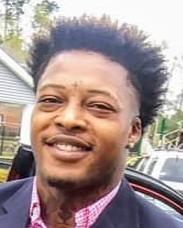
On the night of December 29, 2015, Richard DeShawn Barnes, a 43-year-old man from Hattiesburg, Mississippi, was caught up in a quiet, late-December evening that turned suddenly violent. Shortly before midnight, a pickup truck rolled into the emergency bay at Forrest General Hospital, its passenger door open and broken glass scattered on the pavement. Inside was Barnes, gravely wounded by gunfire.
Medical staff and responders could do nothing to save him; he was pronounced dead at the hospital, and the death was soon classified as a homicide, ultimately recorded as the city’s sixth of the year.
Investigators quickly traced the shooting back to Spencer Street, to the driveway of an abandoned, wood-paneled house at 929 Spencer. There, the truck in which Barnes had been riding had been parked earlier that night. According to police, Barnes had gone there with a woman he knew, and the two spent several hours sitting in the single-cab pickup, talking and eating as they lingered in the driveway. At some point, both of them drifted off to sleep in the cab. The woman later told detectives that she was jolted awake by the sound of glass shattering and gunfire erupting around them. She said she threw herself down to take cover as bullets tore into the vehicle, and when the shooting stopped, she climbed behind the wheel and drove the truck straight to Forrest General in a desperate attempt to get Barnes help.
Back on Spencer Street, officers and crime scene technicians methodically worked the darkened yard and driveway of the abandoned house. They documented and collected multiple spent shell casings and photographed another patch of broken glass, piecing together the path of the gunfire from the street toward the truck. Police later said that at least six or seven shots had been fired into the vehicle, with most of them striking Barnes. His body was sent to the State Crime Lab in Jackson for an autopsy, and the deputy coroner reported that he died from multiple gunshot wounds. Early news reports emphasized that the shooting had occurred at or near the abandoned home, and that Barnes had arrived at the hospital only because someone drove him there after the attack.
In the immediate aftermath, Hattiesburg police announced that they were searching for a suspect or suspects in the case. Officers had been notified of the shooting around 11:30 p.m., when dispatchers received word that a gunshot victim had just arrived at the hospital by private vehicle. Even with physical evidence from the scene and the witness account from the woman in the truck, investigators soon found themselves facing a shortage of solid leads. A subsequent summary of 2015 homicides in Hattiesburg noted that Barnes’s killing was still under investigation and that police were “still looking for suspects,” underscoring how little was known publicly about who had opened fire or why.
Months later, the woman who had been in the truck with Barnes was identified as 53-year-old Latonya Anderson. Through the course of the investigation, she was arrested and charged with hindering prosecution, an indication that detectives believed she had, at some point, impeded their efforts to get to the truth about what happened on Spencer Street. However, authorities did not accuse her of pulling the trigger, and no one was publicly charged with Barnes’s murder. By August 2016, police described the case as having gone cold, with the investigation stalled while they awaited additional processing of evidence from the crime lab and searched for new information that might break the case open. They continued to appeal to the public for help, urging anyone who might have seen a person or vehicle in the area that night—even a detail that seemed insignificant—to contact Hattiesburg police or Crime Stoppers. Years later, Barnes’s death remains an unresolved chapter in the city’s record of violence, his final ride through the hospital’s emergency bay still the last clearly documented moments of his life.