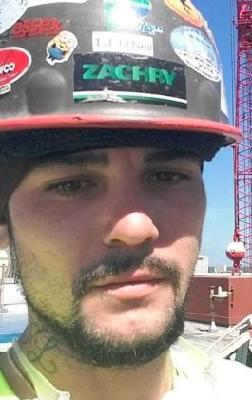
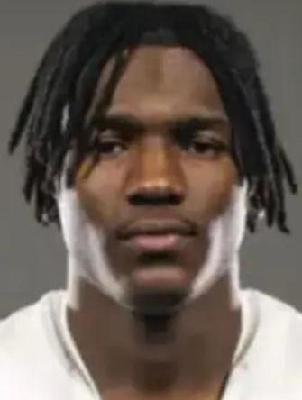
Michael Paul McLendon, a 38-year-old White/Caucasian male from Brooklyn in Forrest County, Mississippi, was fatally shot on September 7, 2018, in Hattiesburg. The shooting occurred shortly after 1 p.m. in the 4700 block of Hardy Street, on a grassy hill and parking-area vicinity between Newk’s Eatery and Red Lobster. McLendon was still alive when police and emergency personnel reached him and was transported to a local hospital, but he later died from his injuries. A forensic pathologist determined that he died from a gunshot wound to the head and classified his death as a homicide.
The investigation quickly focused on Justin Lee Anderson, who knew McLendon and was described during later court proceedings as a friend of the family. Testimony at Anderson’s eventual trial revealed that the two had been together before the shooting. Anderson’s mother, Rosemary Geauxtreaux, testified that Anderson and McLendon had been using drugs in nearby woods before joining her and her husband on the hill. She said the two had been handling a handgun and pointing it at one another during the day, despite her repeatedly telling them to put it away. According to her testimony, there had not been a physical fight immediately before the shooting. She had her back turned when she heard what sounded like a firecracker and was then told that McLendon had been shot. Although she characterized the shooting at trial as accidental, the court noted that she had not actually witnessed the moment the gun discharged and that portions of her trial account differed from her earlier police statement.
Employees at Newk’s provided additional evidence about what occurred immediately before and after the gunfire. Restaurant owner Kevin Fitzpatrick testified that he saw Anderson and another man meet near the restaurant and eventually join an older couple on the hill. Fitzpatrick and general manager Max McGehee both recalled hearing voices become louder shortly before a noise they initially believed might have been a firecracker. Afterward, they saw people running from the hill. Fitzpatrick testified that he heard Anderson’s mother demanding to know why he had shot McLendon and heard Anderson make a statement indicating that McLendon had been bothering him. McGehee went inside to call 911 and discovered that several Hattiesburg police officers were already eating inside the restaurant.
Sergeant Lashaunda Buckhalter and the other officers immediately went outside. Buckhalter testified that Anderson was sitting on a sidewalk crying, with his hands on his head, while McLendon was lying face down with an apparent head wound. Anderson, his mother and her husband were temporarily handcuffed as first responders attended to McLendon and officers secured the scene. A handgun was found unloaded on the curb and taken into evidence. Firearms testing later showed that bullets recovered from McLendon’s head were consistent with the. 22-caliber handgun recovered at the scene.
Anderson was advised of his rights and taken to the Hattiesburg Police Department. Detective Jeremy Dunaway later testified that, before a formal interrogation had progressed, Anderson spontaneously stated that he had shot someone in the head. Anderson also made a statement that he was tired of people bothering him. Police arrested him in connection with McLendon’s killing, and he was charged with first-degree murder. His bond was set at $250,000 on September 10, 2018, and he was held in the Forrest County Jail.
The case ultimately went to trial in Lamar County. The defense presented evidence intended to support the possibility that the shooting had been accidental or the result of reckless handling of the firearm. Anderson’s employer testified that Anderson had appeared high and sleep-deprived earlier that day and had been told not to work. Jurors received instructions on first-degree murder as well as lesser offenses including second-degree murder and culpable negligence. Anderson also sought a heat-of-passion manslaughter instruction, arguing that the raised voices and circumstances preceding the gunshot supported a lesser offense, but the trial court found insufficient evidence of the legally required provocation. The jury rejected the lesser theories and on May 11, 2022, found Justin Lee Anderson guilty of first-degree murder. He was sentenced to life in prison.
Anderson appealed the conviction, challenging the refusal to give the heat-of-passion instruction, the admission of his statement to police and the weight of the evidence supporting first-degree murder. On May 18, 2023, the Mississippi Supreme Court affirmed both the conviction and life sentence. The court concluded that evidence of loud conversation or disagreement did not establish the type of provocation necessary for heat-of-passion manslaughter, that admission of Anderson’s statement to police did not amount to reversible error, and that the jury had been entitled to reject the theory that McLendon’s death resulted merely from an accident or culpable negligence. Anderson remained the only person identified in the available court and news records as criminally responsible for McLendon’s death.