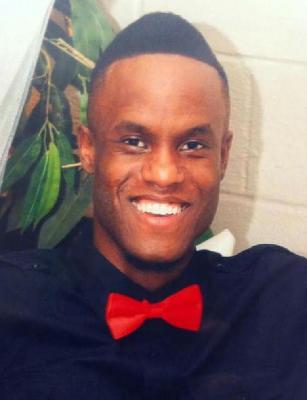
In the quiet of an early May morning in 2023, downtown Jacksonville, Florida, was almost empty when a passerby noticed a man lying near a dumpster in the 500 block of West Ashley Street. The witness flagged down a Jacksonville Sheriff’s Office bailiff around 6:45 a.m., and responding officers and paramedics found Gary Jackson, a 39-year-old Black man, dead from apparent gunshot wounds on the pavement behind the dumpster.
What began as a stranger’s uneasy discovery quickly became the center of a homicide investigation that would lay bare a terrifying chase through the darkened streets and the final desperate moments of a man trying to hide.
Word of Jackson’s death spread quickly among those who knew him. Friends and family stressed that he was not some nameless drifter who happened to die in an alley; he had people who loved him, and he left behind a young daughter who could not understand why her father was gone. One friend, speaking to local reporters, insisted that he “had family who loves him” and was not homeless, pushing back against any attempt to reduce him to just a body found behind a dumpster. For his sister and other relatives, every new detail the police uncovered sharpened their grief into something closer to horror as they imagined what he endured in his last minutes.
Detectives from the Jacksonville Sheriff’s Office canvassed the surrounding blocks and pulled surveillance footage from nearby businesses. What the cameras showed was chilling. In the pre-dawn hours, a Jeep Grand Cherokee could be seen trailing Jackson along downtown streets. A man ran after him on foot, holding what appeared to be a handgun with an extended magazine. Jackson tried to flee, eventually slipping behind a dumpster in the 500 block of West Ashley Street, using the metal container as his last cover. On the footage, the pursuer raised the gun; multiple muzzle flashes lit up the alley. When the shots stopped, the gunman went through Jackson’s pockets before returning to the waiting Jeep, leaving him mortally wounded on the ground. Investigators later recovered multiple shell casings and an extended magazine near his body, physical evidence that matched what they saw on the video.
Within weeks, police announced they had identified three young white men they believed were responsible. Ryan Nichols, then 19, was charged with first-degree murder, accused of being the shooter. His associates, 18-year-old Daniel DeGuardia and 21-year-old Holden Dodson, were charged as accessories after the fact, allegedly helping Nichols before and after the killing and driving the Jeep captured on video. A grand jury later formally indicted Nichols and Dodson, deepening the case against them and confirming prosecutors’ view that this was not a random act but a deliberate hunt that had ended behind that downtown dumpster.
As the case moved toward trial, more of that night’s story emerged in court. During a sentencing hearing, Dodson testified that he, Nichols, and DeGuardia spent the night drinking and using cocaine before heading downtown. Both Nichols and Dodson were armed, he said. At some point in the early morning hours, they encountered Jackson. According to Dodson and DeGuardia, Nichols became convinced that Jackson had stolen his gun. Nichols took off after him on foot while the Jeep followed, a sequence that mirrored what investigators had seen on the surveillance tapes. When Nichols returned to the vehicle, he allegedly bragged about what he had done, using a racial slur and saying that no one could steal from him. The narrative painted in court was of a chaotic, drug-fueled night that spiraled into a deadly chase and execution-style killing over a perceived slight.
Rather than go to trial, all three men ultimately entered guilty pleas. Nichols admitted to second-degree murder, accepting responsibility for pulling the trigger and ending Jackson’s life. Dodson and DeGuardia pleaded guilty to accessory after the fact for their roles in driving the vehicle, staying with Nichols throughout the night, and helping him leave the scene once Jackson was shot. In June 2024, a judge sentenced Nichols to 40 years in prison with a 10-year minimum mandatory term, a punishment the court said reflected the cruelty of chasing a man through the streets and gunning him down as he tried to hide. DeGuardia and Dodson, facing potential sentences of up to 15 years, were instead given seven years of probation after the court weighed their roles and cooperation.
Throughout the sentencings, Jackson’s family filled the courtroom with their presence and their pain. His sister spoke about waking up every day to the knowledge that her brother had begged for his life, imagining him sprinting through the empty streets, cornered behind cold metal with nowhere else to run. She described how his young daughter kept asking why her father had been killed, a question no one in the family could answer. Other relatives called the three defendants “monsters” for hunting him down and said that the racial overtones of the killing, the chase, and the crude language Nichols reportedly used afterward made the lack of hate-crime charges feel like a second betrayal. Even after the prison term and probation were handed down, the family walked out of the courthouse knowing that, for them, the case would never really be over: the alley where Jackson fell, the dumpster where he tried to hide, and the questions about why it happened at all would remain part of their lives long after the legal record was closed.