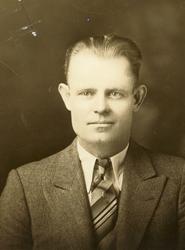
On Sunday, May 17, 2020, Paul Edward Pierce, a 46-year-old white male from Seminary, Mississippi, died after being shot in or near the small Covington County seat of Collins, a quiet community strung along Highway 49 in the Piney Woods of south Mississippi. The date marks the abrupt end of a life that, in public records and memorial pages, had until then appeared only in the ordinary ways that people’s names surface in hometown newspapers and funeral notices.
That evening, instead of routine local news, his name became linked with the language of gun violence and homicide, recorded in databases that catalog fatal shootings across the United States and identify Collins as the place where his life was taken.
Pierce’s roots and daily life were tied more closely to Seminary, a smaller town a short drive from Collins, where the hills soften and fields and pine stands give structure to the landscape. Funeral notices list him as “of Seminary,” and they record that he died at his residence there on that Sunday in May, when early summer heat was beginning to settle over Covington County. A few days later, the community gathered to lay him to rest. On Saturday, May 23, 2020, at 12:30 p.m., graveside services were held at Bullock Cemetery in Seminary, a country burial ground long associated with local families from the Sanford–Seminary area. Pastor John Reid and Brother Tim Saucier officiated as friends and relatives came to the graveside rather than to a crowded chapel, the service arranged under the direction of Billy M. King–Colonial Chapel Funeral Home in nearby Collins. After the prayers and words of remembrance, Paul was interred there in Bullock Cemetery, his birth and death dates—November 28, 1973, and May 17, 2020—marking out a life that ended far sooner than many had expected when the year began.
Even as the funeral details were being set, the shooting that claimed Pierce’s life had already drawn the attention of law enforcement and local media. Memorial records that track gun deaths link his case to a news report from Covington County with a stark headline: a Sanford man charged with murder, his bond set at one million dollars. In those accounts, the killing of Pierce is not described in narrative detail, but the existence of a murder charge indicates that investigators quickly came to regard his death not as an accident or an act of self-harm, but as a criminal homicide for which someone from the nearby Sanford community was formally accused. The high bond amount, reported alongside the charge, suggests that authorities and the court viewed the allegations with particular gravity, treating the case as a serious act of lethal violence rather than a lesser offense.
Beyond the fact of that murder charge and the substantial bond, however, the public trail grows thin. The online record that connects Pierce’s death to the criminal case does not clearly show what became of the accused Sanford man—whether he remained in custody awaiting trial, whether the case was presented to a jury, or whether it was resolved by a plea to murder or to some lesser offense. There is no widely available reporting that walks through courtroom testimony, verdicts, or sentencing, and no easily accessible summary of later appeals or post-conviction proceedings tied to the shooting in Collins on May 17, 2020.
What remains instead, in the public record, is a kind of split picture. On one side are the memorial notices and funeral announcements from Seminary and Collins, focused on burial arrangements at Bullock Cemetery and on the simple fact that Pierce died at his home that Sunday in May. On the other side are the terse entries in gun-violence databases, which record him as a victim “lost to gun violence” in Collins and link his name to the news of a murder charge and a million-dollar bond for a man from nearby Sanford. Taken together, those fragments show a life that ended in a shooting serious enough to prompt a homicide arrest, a family and community that gathered a few days later beneath south-Mississippi skies to say goodbye, and a case whose deeper legal history—whatever judgment was or was not eventually rendered in court—remains largely out of view, preserved only in scattered references that tie Paul Edward Pierce’s final day to a single violent act in Covington County.