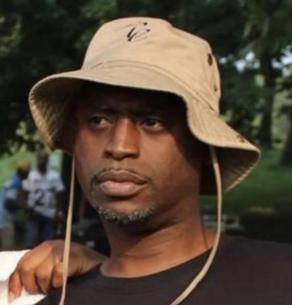
William Van Camp, a 31-year-old White/Caucasian man, was living and working on his family’s farm in the Town of Freedom area of Outagamie County when he and his mother were killed during the night of May 11, 1940. Records identify him more fully as Samuel William Van Camp, the youngest of the sons of Samuel and Johanna “Annie” Van Camp. The farm stood roughly five miles north of Little Chute, along County Trunk U near its intersection with what is now Highway 55.
William operated the farm and shared the farmhouse with his widowed mother, who was 77 years old.
Saturday, May 11, appears to have begun routinely. William spent part of the evening playing a ball game with men from the neighborhood and was reportedly seen until approximately 9 p.m. Investigators later concluded that the killings probably occurred sometime between about 9 p.m. and midnight. There was no indication that William and his mother were expecting violence when they returned to their normal nighttime routine.
Sometime after William came home, he apparently began preparing for bed. When his body was discovered, he was barefoot and dressed in overalls over his underwear, while his bed had not been disturbed. Investigators believed he may have heard someone approaching or entering near the rear of the farmhouse and gone to investigate. William was found on the enclosed back porch, lying on his back in a pool of blood. He had been shot in the left side of the face at extremely close range with a 12-gauge shotgun. Authorities believed he fell where he had been standing and died immediately.
His mother, commonly identified in contemporary reports as Mrs. Samuel Van Camp or Annie Van Camp, was found in her bedroom. She was still in bed and appeared not to have struggled or attempted to get up. She had been shot in the right cheek, also at close range. The condition of the room suggested she may have been asleep or otherwise caught completely by surprise when the killer entered. Investigators found no obvious evidence that she had reacted to the gunshot that killed William elsewhere in the house.
Dr. H. E. Ellsworth, the Outagamie County coroner, determined that both victims had apparently been dead for at least several hours by the time they were discovered. Examination of the wounds indicated that both had been struck by No. 4 shot, ammunition commonly used at the time for hunting ducks and rabbits. The close concentration of the wounds led investigators to believe the shotgun had been fired from only a short distance away. Both deaths were considered essentially instantaneous.
The discovery was made early on Sunday morning, May 12, which was Mother’s Day. John Verkuilen, a farm worker who lived across the road from the Van Camp property, became concerned when William failed to appear for his normal morning routine. William ordinarily came to the south barn for breakfast milk, but that morning he did not arrive. Verkuilen carried the milk toward the farmhouse and entered to investigate, discovering William on the back porch at approximately 6:45 a.m. He then found Annie in her bedroom.
There had been one unusual sign during the night. Verkuilen later reported awakening at about 2 a.m. and noticing that lights were still burning in the Van Camp house. That was considered unusual because William and his mother generally retired early and were seldom awake after midnight. Verkuilen mentioned the lights to his wife but apparently had no reason at the time to believe that anything violent had occurred. When he entered the farmhouse several hours later, the lights were reportedly still on.
Investigators also noted that a large shepherd-type dog was tied roughly 30 yards from the farmhouse. Neighbors described the animal as a good watchdog. The presence of the dog raised questions about whether the killer might have approached without alarming it or whether the animal had been deliberately kept away from the house. No surviving evidence established whether the assailant was someone familiar to the dog, however, and the circumstance never produced an identified suspect.
Robbery quickly emerged as the leading suspected motive. Inside Annie's bedroom, investigators found an empty leather purse or drawstring money sack on top of a dresser, while a drawer where money was apparently normally kept had been opened. Family members could not determine with certainty how much cash, if any, had been stolen. Some change remained inside the room, suggesting that whoever searched the area may have been looking for a larger amount of money rather than simply taking everything of value.
The investigation faced serious difficulties almost immediately. Before law enforcement officers were able to preserve the farmhouse as a crime scene, people who discovered the victims and members of the extended family had entered and moved through portions of the residence while trying to determine what had happened and whether anything was missing. That activity potentially altered evidence and introduced additional fingerprints and footprints, making it much more difficult for investigators to determine which traces had been left by the killer.
Outagamie County Sheriff John Lappen led the investigation. Officers located a 12-gauge shotgun among weapons kept in William's bedroom, but examination indicated that it had not recently been fired and authorities did not believe it was the murder weapon. The gun was nevertheless taken for examination and fingerprint testing. No publicly available account establishes that testing connected it to the killings. The shotgun actually used to murder William and his mother was never recovered.
Authorities questioned people in connection with the double homicide, and historical accounts indicate that at least one person was formally treated as a suspect for questioning. Later summaries describe investigators as interrogating several possible suspects, but none could be connected to the murders through the available evidence. No reliable surviving source identifies a person who was ultimately established as the killer, and there is no indication that John Verkuilen or any member of the Van Camp family was ever charged.
An inquest was conducted as authorities attempted to reconstruct the murders. The physical circumstances suggested William was shot first after approaching the rear portion of the house, followed either immediately or shortly afterward by the killing of his mother in her bedroom. Whether one person committed both murders or more than one person was involved was never established. Although robbery remained the principal theory, investigators were unable to prove who entered the farmhouse, how the offender knew money might be kept there, or whether anything besides cash was taken.
No arrest ever resulted in murder charges, and consequently there was no criminal trial or conviction for either killing. The investigation eventually went cold. Compounding the difficulties for later investigators, the original investigative file was subsequently reported lost, apparently after the mid-1940s. The disappearance of the file meant that later generations of investigators lacked much of the original documentation, witness interviews, forensic information and suspect material that might otherwise have allowed the case to be reconsidered using newer investigative techniques.
William Van Camp was buried at St. Nicholas Catholic Cemetery in Freedom. His death and that of his mother remained an enduring mystery within the Van Camp family and the surrounding community. Decades later, the Outagamie County Sheriff's Office continued to list the killings among the area's unsolved cases, identifying robbery as the suspected circumstance. Authorities have indicated that the murders could still be reconsidered if meaningful new information surfaces, but no suspect has ever been prosecuted for the killings of William and Annie Van Camp.