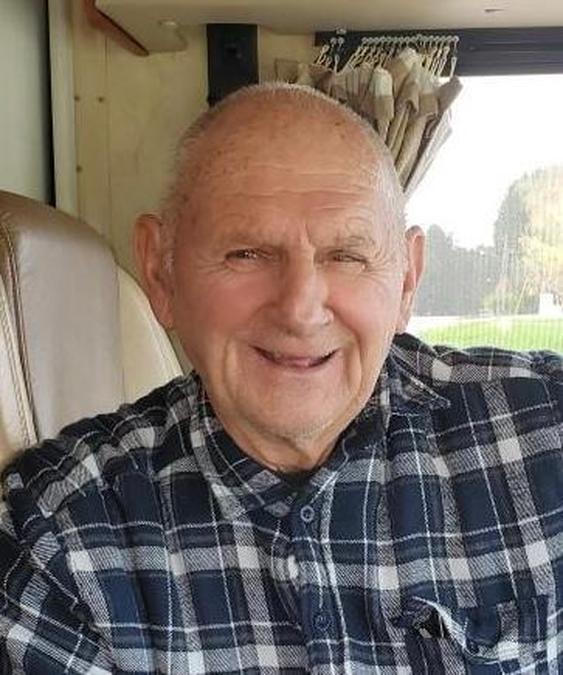
Quin Edward O’Brien was a 50-year-old White/Caucasian male who had devoted much of his adult life to public service. A United States Army and Marine Corps veteran, he had served with the Waukesha County Sheriff’s Department for approximately 24 years and had risen to the rank of sergeant. On June 21, 1978, O’Brien was working inside the Waukesha County Courthouse when an ordinary court proceeding suddenly erupted into one of the most violent incidents in the county’s history.
The prisoner at the center of the incident was Filemon Amaro Jr., who was appearing before Judge Neal Nettesheim on a sex-related charge. Deputy Michael Geszvain, a longtime sheriff’s department member serving as a courtroom bailiff, was guarding Amaro. During the proceeding, a struggle broke out between Amaro and Geszvain. Amaro managed to seize Geszvain’s service handgun, instantly turning the courtroom into a scene of gunfire and confusion. He shot Geszvain at close range and then opened fire on O’Brien when O’Brien attempted to intervene. Contemporary reporting described O’Brien as having been struck in the head and leg, while later accounts stated that Amaro shot both deputies in the head at point-blank range. Judge Nettesheim was forced to dive for cover as a shot was also fired above the judge’s bench.
Geszvain was mortally wounded during the attack and died that day. O’Brien remained alive but was critically injured and was rushed to a hospital. Although June 21 is sometimes associated with O’Brien’s death because that was the date of the courthouse shooting, law-enforcement memorial records list his end of watch as June 22, 1978, stating that he succumbed to his wounds the following day. His death left a wife and seven children and ended a law-enforcement career that had spanned nearly a quarter-century.
The violence did not end inside the courtroom. After shooting the deputies, Amaro used an attorney as a shield while making his way from the courtroom. He then forced county social worker Nellie Gurrath, who was also a former Milwaukee police officer, into an elevator and took her hostage. Gunfire was reported as Amaro moved through the courthouse, and he eventually forced Gurrath to accompany him to her automobile. The escape developed into a prolonged pursuit and hostage crisis stretching from Waukesha toward Madison. Contemporary reports described the entire ordeal as lasting nearly five hours.
The confrontation finally ended in Madison. Police surrounded the vehicle, and when Amaro emerged with a handgun drawn, officers opened fire. Amaro was wounded in the shoulder. Gurrath survived the ordeal and took cover beneath the automobile during the final exchange of gunfire. Amaro was taken into custody and hospitalized under police guard, bringing the courthouse escape and hostage episode to an end.
Amaro was subsequently prosecuted for the killings of O’Brien and Geszvain and for the kidnappings committed during his escape. His criminal trial later became historically significant in Wisconsin because it was broadcast live by public television during an experimental period in which cameras were being permitted in state courtrooms. Coverage ran from November 30 through December 15, 1978, and the proceedings became the first criminal trial broadcast live in Wisconsin. On December 8, a guilty murder verdict was returned.
Amaro was ultimately convicted of two counts of first-degree murder and two counts of kidnapping. He received two life sentences along with an additional 35 years of imprisonment. Decades later, the killings continued to influence courthouse security practices in Waukesha County, with Wisconsin appellate court opinions specifically recalling the 1978 incident when discussing the need to protect judges, jurors, courtroom employees, spectators and defendants from violence.
Amaro eventually became eligible for consideration for parole. His first bid was denied, and the Wisconsin Parole Commission imposed an unusually lengthy deferment, pushing his next opportunity for consideration twenty years into the future. Judge Nettesheim, prosecutors and relatives of the slain officers had urged the commission not to release him. O’Brien’s killing therefore did not remain merely an unsolved or unresolved courthouse tragedy: Amaro was identified immediately, captured within hours, prosecuted, found guilty of the murders and kidnappings, and sentenced to spend decades in prison for the violence that claimed the lives of O’Brien and Geszvain.