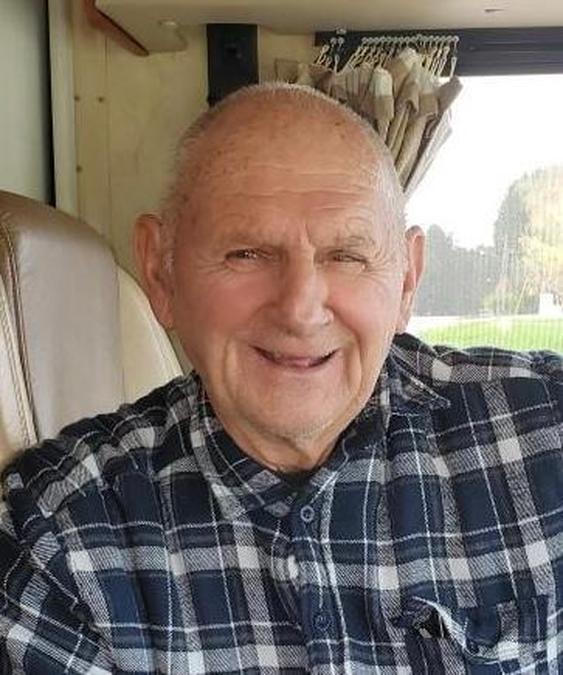
Michael Geszvain was a 52-year-old White/Caucasian man who had spent 23 years serving with the Waukesha County Sheriff’s Department when a routine courtroom assignment turned deadly on June 21, 1978. Geszvain was working as a courtroom bailiff inside the Waukesha County Courthouse while prisoner Filemon Amaro Jr. was appearing before the court. Amaro was being held in connection with a sex-related charge, and nothing about the proceeding suggested that within moments the courtroom would
become the scene of a violent escape attempt.
During the proceeding, a struggle suddenly broke out between Amaro and Geszvain. Amaro managed to seize Geszvain’s service handgun and opened fire. Geszvain was shot and fatally wounded with his own weapon. Sergeant Quin O’Brien rushed to assist and was also shot, suffering wounds to his head and leg. O’Brien was taken to a hospital in critical condition and died from his injuries the following day, leaving two members of the Waukesha County Sheriff’s Department dead as a result of the courthouse attack.
The violence unfolded within feet of Judge Neal Nettesheim. Later accounts said Nettesheim had to dive for cover as Amaro fired a shot into the ceiling above the judge’s bench. Amaro then used an attorney as a shield while making his way out of the courtroom. Elsewhere in the courthouse, gunfire was exchanged with another deputy as the attempted escape continued.
Amaro next seized county social worker Nellie Gurrath as a hostage. Authorities reported that he forced her into an elevator, where additional shots were fired, and then compelled her to accompany him to her automobile. With Gurrath under his control, Amaro fled Waukesha and headed west toward Madison, transforming the courthouse shooting into a prolonged armed manhunt and hostage crisis.
The ordeal lasted for nearly five hours before reaching its conclusion in Madison. Police surrounded the vehicle containing Amaro and Gurrath. When Amaro emerged from the car carrying a handgun, officers opened fire and struck him in the shoulder. He survived the shooting and was taken into custody under police guard. Gurrath survived the kidnapping and the exchanges of gunfire that had followed her from the Waukesha courthouse to Madison.
Amaro was subsequently prosecuted for the killings and kidnappings. His trial began in late November 1978 and became historically notable because Wisconsin public television broadcast the proceedings live during the state Supreme Court’s experimental period allowing cameras in courtrooms. On December 8, 1978, a guilty murder verdict was returned. Amaro was ultimately convicted of two counts of first-degree murder and two counts of kidnapping for the deaths of Geszvain and O’Brien and the hostage-taking connected with his escape. He received two life sentences plus an additional 35 years in prison.
Decades later, the consequences of the courthouse murders remained part of Amaro’s imprisonment. When he became eligible to seek parole, the families of the slain deputies, prosecutors and Nettesheim opposed his release. His first parole request was denied, and the Wisconsin Parole Commission imposed an unusually lengthy deferment before he could again be considered. The murder of Michael Geszvain therefore ended not as an unsolved courthouse shooting but as a fully prosecuted case in which the gunman was captured the same day, tried, convicted of the murders and associated kidnappings, and given life imprisonment.