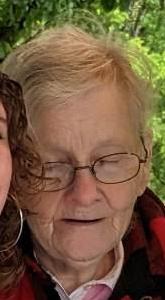
Tammy R. Kilborn, a 40-year-old white woman from Jackson, Kentucky, spent the morning of Saturday, September 11, 2010, in the small roadside mobile home park in the Mount Carmel community of Breathitt County where she lived with her family. It was the kind of place where neighbors knew each other’s routines, and Tammy’s life was intertwined with those around her. She was married to J.D.
Kilborn, and at least one of her daughters, Natasha Leggett, had been visiting her that very morning but left shortly before the violence began; Natasha later struggled to speak through tears as she described how she had only just walked away from her mother’s trailer before the gunfire erupted.
In another trailer in the same park, 47-year-old neighbor Stanley Neace had been growing more volatile for months. Neighbors and his landlord later told reporters that Neace had become increasingly hostile, angry over small slights, to the point that eviction proceedings had already been started to remove him from the park. He was known to receive disability checks, spent long stretches at home, and had a reputation, in the words of one neighbor, for being “trouble” and “unpredictable.” On that late-summer morning, a quarrel inside his trailer over how his wife cooked his eggs escalated from raised voices to a shotgun being taken down and loaded. Witnesses later said that he snapped in a burst of rage over the breakfast dispute and that his wife tried to run for help.
What followed was a chaotic, terrifying rampage that swept across the compact mobile home community in a matter of minutes. Neighbors later described him storming across several lawns in his pajamas, carrying a 12-gauge pump shotgun and firing repeatedly as people fled in all directions. He chased his wife around a vehicle outside one trailer as she screamed and tried to escape, ultimately shooting and killing her. Nearby, her adult daughter, Sandra Rachel Strong, and Sandra’s boyfriend, Dennis Joe Turner, were also gunned down as the violence spread from one home to another. Another neighbor, Teresa Gail Fugate, was shot and killed in front of her seven-year-old daughter; witnesses later recounted how the child pleaded for her life, and Neace told her she could leave, allowing her to run from the scene.
In the middle of this turmoil was Tammy’s trailer. Accounts collected after the shooting agree that Tammy was drawn into the tragedy as a neighbor and witness, though details differ on the exact sequence of moments leading to her death. Some relatives and news reports described her as a witness who stepped onto the porch of a nearby trailer when she heard the commotion, trying to understand the source of the gunfire and shouting. Local coverage added that there was at least one child with her; she reportedly moved the child into a bathroom to hide, an instinctive act to protect the youngster as shots echoed through the park. Neace then came looking for her, asking where she was, and when he saw her in the hallway of her own home, he shot her there. Whatever the exact position of her final steps, the picture that emerges is of a neighbor caught in a sudden burst of senseless violence, trying to shield a child as the gunman closed in.
Inside and outside the cluster of trailers, the gunfire left five victims dead: Tammy, Sandra Neace, Sandra Strong, Dennis Turner, and Teresa Fugate. Their bodies, along with Neace’s, were later transported to the Kentucky Medical Examiner’s Office in Frankfort for autopsies, formalizing the grim toll of the rampage. When Kentucky State Police and other officers finally reached the park, they arrived to a scene already largely over. Troopers reported hearing a single gunshot as they approached; that last shot was Neace turning the shotgun on himself on the porch of his own trailer. Inside two other mobile homes, officers found the bodies of the neighbors he had killed only minutes earlier.
In the hours and days after the shooting, investigators pieced together the story from shell casings, the positions of the bodies, and the stunned accounts of neighbors and family members. Kentucky State Police publicly identified the victims and confirmed that Neace had acted alone. Because the gunman died by suicide at the scene, there were no arrests, no formal charges, and no criminal trial. The case was effectively closed as a murder–suicide: a domestic argument that spiraled into a mass killing, leaving families and an entire community to grapple with the aftermath without the prospect of a courtroom reckoning.
For Tammy’s family, the aftermath was immediate and painfully tangible. News photographs captured her father, James Wyatt, and her brother-in-law, Johnny Kilborn, standing outside as friends quietly cleaned the inside of the trailer where she had been killed, the door open to a home that would never feel the same. Her obituary noted only that she was forty years old and from Jackson, with services to be held at a local funeral home, a brief public notice that revealed little of the terror of her final minutes or the shock of the loved ones she left behind. On paper, her name simply joined the list of victims of gun violence recorded for that date and place; in the memories of those who knew her, the story remained far more personal, bound up with a Saturday morning that began like any other and ended with sirens, shattered families, and a community marked forever by the violence that claimed her life.