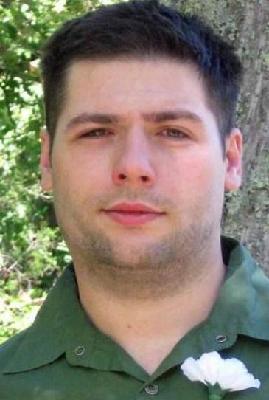
Johnny Lynn Curry, a 37-year-old man from Manchester, Kentucky, spent his life close to the hills and roads where he was born on November 22, 1982. He grew up and raised a family in the same Clay County community, eventually becoming a father to Jadelynn Curry and Paris Dean and a grandfather to little Addalyn Faith Collette. His life was closely bound to his extended family as well: his father and stepmother, Jimmy and Charlotte Curry, his biological mother Mary Roberts, his adopted mother
Barsha Couch, his sister Crystal Root, a niece and nephew, and the woman who shared his daily life, his girlfriend Brittany Smith. On Monday, September 7, 2020, that family circle was suddenly and violently broken when Johnny’s day ended at AdventHealth in Manchester, where he died after being shot. His funeral was held a few days later, on September 11, with services at Rominger Funeral Home and burial in Manchester Memorial Gardens, a quiet resting place not far from the roads he drove and the people he loved.
Labor Day 2020 began like any other late-summer day in Clay County, but shortly after midday, calls began to come in about a shooting at the junction of Kentucky Highway 149 and U.S. 421 South, a familiar crossroads just outside town. Around 1:30 in the afternoon, Clay County Sheriff’s deputies and other local officials were dispatched to the scene, where a man had been critically wounded. That man would be identified as Johnny, of Crawfish Road in Manchester. Emergency responders and investigators converged on the intersection: Sheriff Patrick Robinson and his deputies, Manchester City Police officers, and the county coroner’s office worked together in the heat of the day as traffic moved uneasily past the taped-off roadway. Johnny was taken to AdventHealth in Manchester, but the injuries he suffered in the shooting proved fatal, and by the end of the day his death was being investigated as a homicide.
Even as deputies secured the scene, the man responsible for the gunfire was already on his way to give himself up. According to the arrest citation and subsequent reports, 41-year-old Terry Wagers of Rocky Branch Road in Manchester called authorities and told them he had shot someone. He then drove to the Clay County 911 or dispatch building, arriving with the handgun he had used. There, he turned himself in without incident. Deputies arrested Wagers at roughly 1:30 p.m., and jail records show that he was booked into the Clay County Detention Center that afternoon, charged with murder. Investigators tied the confession and the weapon back to the shooting at the highway junction, and the victim in their case was formally identified as Johnny, 37, of Crawfish Road. As the evening came on, official statements were still sparse, but it was clear that the confrontation at that intersection had ended with one man dead and another facing the most serious charge under Kentucky law.
Back at the scene, and in the hours that followed, Johnny’s family began to absorb the news. His daughter Jadelynn stood near the place where her father had fallen and struggled to describe their loss. She spoke about how he loved his family and how hard he had been working to improve himself and strengthen those relationships in the months before his death. She remembered him as someone who would give the shirt off his back to help someone else, a man whose past might have been complicated but whose intentions, at least in her eyes, were turning toward better days. What hurt her most, she said, was knowing that her young daughter would now grow up without the grandfather who doted on her. The rawness of that grief, so close to the spot where gunfire had shattered their lives, underscored the human cost behind the brief lines of police reports and news releases.
In the weeks and months after the shooting, the case against Terry Wagers moved through the courts. Initially charged with murder in connection with the killing at the highway junction, he remained in custody as prosecutors reviewed the evidence gathered by the Clay County Sheriff’s Office and the Manchester City Police. Nearly four years later, the case reached its conclusion in state court. In June 2024, Kentucky’s Attorney General announced that Wagers, then 44, had admitted responsibility by pleading guilty to one count of first-degree manslaughter, a Class B felony under Kentucky law, for killing Johnny by shooting him twice with a handgun in September 2020. Under an April 2024 plea agreement, he was sentenced to 12 years in prison, with no eligibility for probation and a requirement that he serve 85 percent of his sentence before he can be considered for parole. Corrections records list him as an active inmate serving that 12-year term on a manslaughter conviction from Clay County, with a parole eligibility date in 2030 and a projected sentence expiration in 2031.
For Johnny’s family, the formal resolution of the case could not restore what was taken on that Labor Day afternoon. The obituaries that followed his death painted a picture of a man whose life, though imperfect, was deeply entwined with his children, grandchild, parents, and extended family, and whose loss left a tangible absence at family gatherings and in the everyday rhythms of Manchester. At the same time, the sentence handed down to Wagers acknowledged in law what Johnny’s loved ones already knew in their hearts: that a life had been wrongfully taken and that there would be consequences for the man who pulled the trigger. Years after the sirens faded from the crossroads of Highway 149 and U.S. 421, the case stands as both a closed chapter in the courts and an open wound for the people who still speak of Johnny in the present tense, remembering who he was before a brief eruption of violence cut his story short.