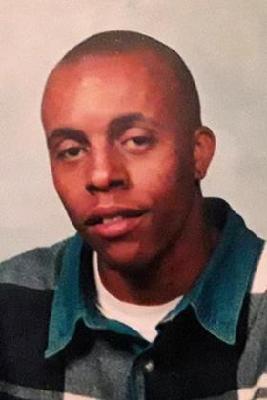
Michael Hamilton, a 45-year-old man, was fatally shot inside his home in the 3800 block of South Meridian Avenue in Wichita on December 2, 2016. What initially appeared to responding officers as a shooting inside a private residence was later reconstructed as a marijuana transaction that erupted into a violent confrontation. Hamilton was found critically wounded after several gunshots were fired, and although emergency personnel transported him to a hospital, he died from his injuries.
According to testimony and evidence later described in court proceedings, James Welborn arranged for Hamilton to purchase four ounces of marijuana from Keeshaun W. Milo for $825. Welborn was supposed to receive a small portion of the marijuana for helping organize the transaction and accompanied Milo to Hamilton’s residence. Milo arrived in a red Pontiac Grand Am belonging to his girlfriend and entered the home carrying what witnesses described as several bags of marijuana.
The transaction deteriorated when Hamilton reportedly produced $325 in cash and a $500 Walmart gift card instead of paying the entire amount in cash. Court testimony indicated that Milo was dissatisfied with the proposed payment and demanded the agreed-upon cash price. Hamilton then took control of the marijuana and displayed a handgun. Witness testimony portrayed the encounter as quickly becoming physical, with Hamilton grabbing Milo, striking him with the gun and his fists, and pinning him against a couch while demanding that he apologize for disrespecting Hamilton inside his home.
During the struggle, Milo obtained or produced a black semiautomatic handgun and opened fire. Welborn fled from the residence as the confrontation continued, running toward a nearby QuikTrip while additional shots were being fired behind him. Hamilton’s wife, who was inside the residence, saw the shooter leaving through the still-open front door and later discovered Hamilton gravely wounded. She removed Hamilton’s handgun from the area because she feared that her daughter might see it, placing the weapon in a laundry basket before officers recovered it.
Police found a. 32-caliber Mauser semiautomatic pistol belonging to Hamilton inside a tote. Investigators determined that the weapon had suffered a double-feed malfunction, meaning it may have jammed while attempting to chamber another round. No spent. 32-caliber shell casings were recovered from the residence, an important detail because the evidence suggested that Hamilton’s weapon had not successfully fired during the fatal portion of the confrontation.
A neighbor reported seeing one of the men run into the nearby QuikTrip, leading officers to arrest Welborn there shortly after the shooting. During questioning, Welborn identified Milo and provided information that allowed detectives to examine text messages and social-media profiles. Police traced Milo’s cellphone and arrested him later that same day.
Investigators collected substantial physical evidence connecting Milo to the struggle and shooting. Clothing taken from him contained blood, including blood on his boxer briefs that matched Hamilton’s DNA. Tests on Milo’s shirt collar, belt and belt buckle also revealed mixtures of blood associated with Hamilton and Milo. Officers found an envelope containing eighteen one-dollar bills in Milo’s pocket, and the envelope was stained with Hamilton’s blood. A cigarette package found in Milo’s possession also carried Hamilton’s blood.
The red Pontiac Grand Am used to travel to the residence contained additional evidence. Detectives observed blood on the driver’s-side door, and laboratory testing connected it to Hamilton. Blood was also found on the vehicle’s interior visor and on Milo’s keys. Combined with Welborn’s account, Hamilton’s wife’s description of the fleeing gunman and the physical evidence, prosecutors concluded that Milo had fired the shots that killed Hamilton.
On December 6, 2016, prosecutors charged Milo and Welborn with felony murder based on the underlying felony of distributing marijuana. The charge did not require the state to prove that the killing had been planned in advance. Under Kansas felony-murder law, prosecutors instead argued that Hamilton’s death occurred during an inherently dangerous felony—the attempted sale and distribution of marijuana.
Milo maintained that he had acted in self-defense. His attorneys emphasized evidence that Hamilton had displayed a firearm, attacked him and attempted to take the marijuana without paying the agreed price. The defense also questioned the reliability of Welborn’s testimony and argued that personal tensions may have influenced the circumstances surrounding the meeting. Milo claimed that Welborn had reason to resent him because Milo had previously been involved in an affair with Welborn’s wife. The defense further suggested that Milo may have been deliberately placed in a dangerous situation.
The court did not permit self-defense to excuse the felony-murder allegation in the manner Milo requested. Because the shooting occurred during an attempted marijuana distribution, prosecutors argued that Milo remained legally responsible for the resulting death even if Hamilton had initiated the physical attack. The prosecution’s case focused on Milo’s decision to participate in the illegal drug sale and the fact that the gunfire resulting from that transaction killed Hamilton.
Milo was released on a $200,000 bond in October 2017 while awaiting trial, a decision that reportedly caused concern among members of Hamilton’s family. The criminal case nevertheless continued, and in December 2018 a Sedgwick County jury found Milo guilty of first-degree felony murder. The verdict established that he was the person criminally responsible for Hamilton’s death during the attempted marijuana transaction.
The district court sentenced Milo to life imprisonment with no possibility of parole for 25 years, commonly described in Kansas as a “hard 25” sentence. The court also imposed lifetime post-release supervision in the event that he is eventually granted parole. Milo appealed his conviction, challenging the trial court’s treatment of his self-defense argument and other legal issues.
In May 2022, the Kansas Supreme Court affirmed Milo’s conviction and sentence. The justices concluded that self-defense could not serve as a defense to felony murder because the offense imposes responsibility for a death occurring during the commission or attempted commission of an inherently dangerous felony. Although the court examined the legal reasoning used during the trial, it found no error requiring the conviction to be reversed.
Welborn was initially arrested and charged alongside Milo because of his involvement in arranging and facilitating the marijuana transaction. The publicly available appellate decision focuses primarily on Milo’s prosecution and identifies Welborn as the cooperating witness whose account helped investigators identify the shooter. The most clearly documented final outcome is Milo’s conviction for first-degree felony murder, his life sentence with a mandatory minimum of 25 years, and the Kansas Supreme Court’s subsequent decision leaving that judgment in place.