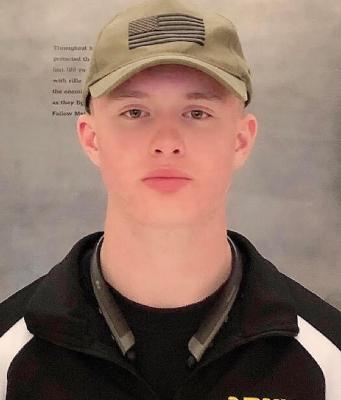
Augustus J. Perreira, Jr., a 27-year-old Black patrolman with the Colorado Springs Police Department, was a U.S. Army veteran who had served on the police force for two years. He was a husband and a father to a young son. His family remembers him as a man who lived an amazing life, filled with love. His son, Omar, who was only eight when his father was killed, later recalled conversations with him about his police work, which inspired an early interest in law enforcement.
On the evening of April 12, 1980, Officer Perreira’s life was cut short in a sudden act of violence. Around 7:35 p.m., he made a routine stop at a 7-Eleven convenience store at 2555 Delta Drive. Unaware that a clerk had already called police to report a disturbance, Officer Perreira entered the store and was flagged down by the employee. The clerk pointed out a man, later identified as Seth Buckmaster, who was causing a disruption.
Officer Perreira approached Buckmaster and began escorting him out of the building.
As they reached the parking lot, Buckmaster suddenly declared that he was not going to jail. He then produced a concealed .38 caliber revolver and shot Officer Perreira several times. Despite being mortally wounded, Officer Perreira managed to draw his own weapon and return fire, wounding Buckmaster before he collapsed. The heroic officer was rushed to a hospital, but he succumbed to his injuries.
The investigation into the shooting was handled by the Colorado Springs Police Department. Seth Buckmaster was taken into custody at the scene. The case against him revealed a long and troubled history of severe mental illness. Court records from a subsequent lawsuit showed that Buckmaster had been diagnosed with paranoid schizophrenia and harbored intense delusions about police, believing they were controlling his thoughts with a "radiation gun."
In the months leading up to the shooting, Buckmaster had been in and out of mental health facilities. He was involuntarily committed to the Fort Logan Mental Health Center in October 1979 after being found severely delusional and living on the streets. Despite his condition and his family's concerns, he was discharged in December 1979, approximately four months before he killed Officer Perreira.
At his criminal trial, Seth Buckmaster was found not guilty by reason of insanity. He was committed to the Colorado State Hospital in Pueblo, where he remained until his death in 2010. Following the verdict, Officer Perreira’s wife, Vendria, filed a wrongful death lawsuit against the State of Colorado, the Fort Logan Mental Health Center, and the psychiatrist who oversaw Buckmaster's treatment and release, alleging negligence. The legal battle that followed went all the way to the Colorado Supreme Court, establishing new standards of care for mental health professionals regarding the release of potentially violent patients.
Decades after his death, the memory of Augustus Perreira’s sacrifice endures. His name is etched on the Pikes Peak Region Peace Officers Memorial in Memorial Park. In July 2017, his son Omar, along with his own family, attended the groundbreaking ceremony for the permanent memorial site. "That made it important to me," Omar said, reflecting on the talks he had with his father about his police work. The continued presence of his family at such events underscores a loss that is still felt deeply, many years later. The case remains a tragic example of the intersection of mental illness and public safety, and a solemn reminder of the risks faced by law enforcement officers.