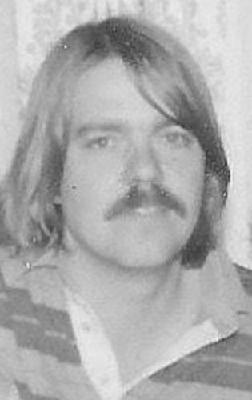
Robert Allen Lilly was a 49-year-old White/Caucasian man serving as chief of police in Elkins, West Virginia, when a routine attempt to make an arrest turned into a fatal gun battle on Monday evening, July 22, 1901. The incident began near the Wilson Street swinging bridge along the river, where Officer Lantz encountered William “Will” Brooks with a woman and attempted to take them into custody for conduct that was then punishable as a misdemeanor.
Brooks produced a revolver, pointed it at Lantz and forced the officer to withdraw. Lantz went for assistance, and word of the confrontation soon reached Chief Lilly.
Lilly went to the Wilson Street area to make the arrest himself. One detailed local historical account says that when Lilly told Brooks he was under arrest, gunfire erupted, with Brooks and his female companion on one side and Lilly and a bystander, Thomas Dick, on the other. Brooks struck Lilly three times, with wounds described as being to the bladder, chest and arm. Brooks was also badly wounded, suffering gunshot injuries to his groin, arm and legs, but he managed to run from the scene. Other surviving accounts give somewhat different details of the confrontation: an early newspaper report said Lilly and Brooks struggled after Brooks fled into a house and that Brooks obtained Lilly’s revolver during the struggle before shooting him through the abdomen. Despite those differences, the sources consistently identify Brooks as the person whose gunfire fatally wounded Lilly.
Brooks did not escape. Thomas Dick and other citizens pursued him, and workers near the railroad shops eventually caught him. He was taken into custody and confined in a makeshift jail behind B. Wees’ store, where Dr. A. M. Fredlock treated his gunshot wounds. Mayor Fout then arranged to have Brooks transferred to the Randolph County jail at Beverly on the 8:25 p.m. train. When that train was delayed, authorities removed Brooks from the cell at about 8:30 and placed him in a buggy for transportation. By then, however, an angry crowd had gathered around the prisoner. The mob seized Brooks from the officers who had custody of him and dragged him several blocks to Elkins City Park.
Brooks never reached the county jail and never faced a criminal trial for shooting Lilly. Members of the mob placed a rope around his neck, threw it over the lower limb of an oak tree in the eastern portion of the park and lynched him. Contemporary reporting described a crowd numbering in the hundreds, while West Virginia Governor Albert B. White’s later official account stated that Brooks was taken from the possession of a deputy sheriff and hanged in the park. His body remained hanging until approximately 10 o’clock the next morning. Photographs were taken of the scene, and Brooks’ body was later removed to Kendall Funeral Home. Because he was killed while in custody only hours after the shooting, there was no indictment, prosecution, trial or conviction of Brooks for Lilly’s death.
While Brooks was being taken into custody and then lynched, physicians were struggling to save Lilly. He was initially treated in Elkins at the office of Dr. W. W. Golden. His wounds were considered serious enough that arrangements were made to transport him by train to a hospital in Cumberland, Maryland. At about 11 p.m., Lilly left Elkins accompanied by Dr. Golden, his daughter Daisey and attorney M. H. King. He reportedly remained conscious during the trip but suffered greatly from pain and thirst. Once in Cumberland, Dr. B. Curtis Miller performed an operation with Dr. Golden assisting. The operation initially appeared successful, but Lilly’s condition ultimately proved fatal. The historical account places his death at approximately 9:30 p.m. the following evening. The Officer Down Memorial Page likewise records his end of watch as Tuesday, July 23, 1901, and Governor White’s official account states that Lilly died on the evening following the July 22 shooting. Those records therefore place the fatal shooting on July 22 and Lilly’s death on July 23, rather than identifying July 22 as the actual date of death.
William Brooks was the principal and clearly identified suspect in Lilly’s killing. Historical accounts describe him as an itinerant railroad worker or teamster employed on Coal and Iron Railroad construction near Elkins. Reports about his earlier life were inconsistent, variously associating him with North Carolina, Kentucky and Indianapolis. One account based on reporting from Indianapolis said he had once worked there as a lamplighter, had previously killed someone in what was described as self-defense and later traveled with a circus before eventually working on railroad projects in West Virginia. He was also said to have previously appeared in police court in Clarksburg. None of that earlier history resulted in a judicial determination concerning Lilly’s death because Brooks’ lynching prevented the homicide case from ever proceeding through the courts. The woman who was with Brooks at the beginning of the incident is not identified by name in the surviving accounts reviewed, and although one account places her on Brooks’ side during the exchange of gunfire, those sources do not document an arrest, charge, trial or conviction involving her.
The killing consequently produced two violent deaths but no conventional homicide prosecution. Brooks had been captured and was under lawful custody, and officials were actively arranging his transfer to the county jail when the mob intervened. Governor White later condemned the lynching and pressed Randolph County officials to investigate the people who had taken Brooks from custody. He wrote to the prosecuting attorney and sheriff, emphasizing that the mob participants reportedly made little effort to conceal themselves and arguing that identifying them should have been possible. The prosecuting attorney eventually responded that determining responsibility would be difficult and that obtaining convictions would be even harder. The sheriff did not personally respond to the governor, while a deputy sheriff later submitted an account that convinced White the officers had failed in their responsibility to protect the prisoner.
Despite the governor’s demands, the available official account says no meaningful effort was ultimately made to bring Brooks’ lynchers to justice. There is no documented series of arrests, indictments, trials or convictions arising from the mob killing. White complained that inadequate state law and the lack of funds for detectives limited what he could do and warned that allowing such an openly committed lynching to pass without punishment could encourage further mob violence. Thus, although authorities unquestionably had a named suspect in Lilly’s shooting and had actually captured him, William Brooks was killed before charges could be adjudicated, while the members of the mob that seized and lynched him likewise escaped prosecution. Lilly was subsequently buried in Maplewood Cemetery in Elkins, leaving the July 1901 episode as both a line-of-duty killing and a case in which extrajudicial violence prevented the courts from ever determining the gunman’s criminal responsibility.