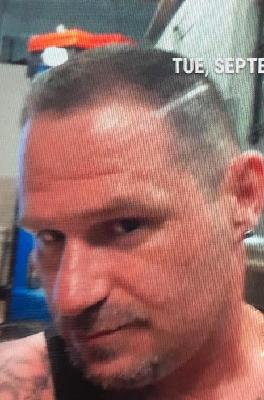
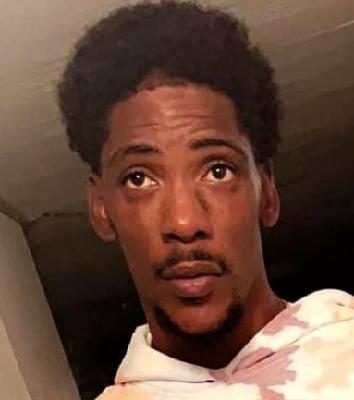
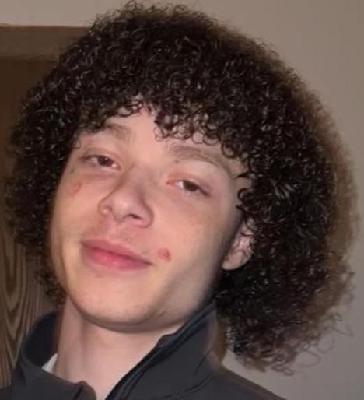
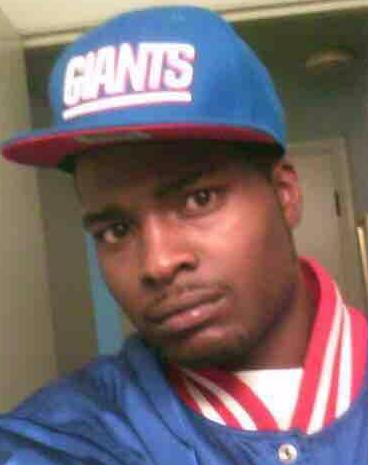
Charles Eugene Smith II was a 29-year-old White/Caucasian man and a detective corporal with the Beckley Police Department when he was fatally shot during an improvised undercover narcotics investigation in the early morning hours of August 29, 2006. Smith had served with the department for approximately five and a half years and worked in its narcotics unit, whose officers were considered subject to being called into duty around the clock.
What began as an evening away from work with fellow Beckley officer Corporal William Reynolds developed into an attempt to investigate a possible drug transaction on the streets of Beckley.
Smith and Reynolds had gone to dinner and later visited several local establishments. Smith's girlfriend, Jasminda Gonzales, eventually joined them. While they were at the Pikeview Lounge, a man named Timothy Blackburn approached Smith with information about a possible drug transaction involving a dealer known as "Jelly Bread." Smith, Reynolds and Gonzales followed Blackburn to an apartment complex, expecting that a drug transaction might occur. The anticipated dealer never appeared, and several other attempts to locate someone willing to supply drugs were unsuccessful. Although Smith and Reynolds had begun the evening off duty, testimony later established that Smith's role as a narcotics officer meant investigations could develop unexpectedly and at virtually any hour.
As the night continued, Smith and Reynolds encountered Michael E. Martin. Reynolds later testified that Martin offered to obtain drugs for Smith. Martin used Smith's cellular phone to contact Thomas E. Leftwich and arrange a cocaine transaction. Smith, Reynolds, Gonzales and Martin then traveled in Smith's Jeep to the area of South Fayette Street and Willow Lane. Martin initially approached the area of the house but returned, and there was discussion over who would complete the transaction. Eventually Smith and Martin walked toward the bottom of a stairway leading toward the residence, while Reynolds and Gonzales remained nearby.
Thomas Leftwich came down toward the meeting place carrying crack cocaine and a loaded Smith & Wesson. 357-caliber revolver. According to testimony from Reynolds, a short verbal confrontation occurred while Smith and Martin were at the foot of the stairs. Reynolds testified that he saw Smith reach into his pocket and display his police badge to Leftwich. Gonzales also testified that she saw Smith display his badge. Leftwich later gave investigators a different account, maintaining that he did not realize Smith was a police officer. He said he believed he was about to be robbed and thought Smith was reaching for a gun. Leftwich acknowledged firing the weapon, telling investigators that he had intended to aim low and had not wanted to kill Smith.
Leftwich fired several rounds from the. 357 revolver. Smith was struck four times. Medical testimony at Leftwich's trial established that the most devastating gunshot entered Smith's left chest, perforating both lungs and damaging his heart. Reynolds rushed to his fallen friend and attempted to move him to a safer position, using the Jeep as protection. He checked Smith for signs of life but testified that Smith's rapidly beating heart stopped. Emergency medical records placed the first EMS assessment at approximately 4:32 a.m.; Smith had no detectable cardiac activity, blood pressure or respiration. He was transported to Raleigh General Hospital and was pronounced dead at approximately 4:56 a.m.
Both suspects fled after the shooting. Martin was later arrested at the home of his stepfather. Police focused quickly on the Leftwich residence after Reynolds told investigators that the gunman had emerged from the house above the street and fled back in that direction. During the subsequent police operation, Leftwich approached an investigator and admitted that he had shot Smith. He also directed officers to the weapon. Leftwich had told investigators that after firing three or possibly four times he ran, concealed the revolver beneath a porch and hid in the basement. Firearms examination later established that the bullets that struck Smith had been fired from Leftwich's Smith & Wesson. 357 revolver.
Authorities arrested both Thomas Leftwich and Michael Martin and charged them with first-degree murder. Martin's alleged criminal responsibility was based not on an accusation that he personally fired the shots, but on his participation in arranging and facilitating the drug transaction that culminated in Smith's killing. Martin told police that he had participated in arranging the cocaine delivery but claimed he barely knew Leftwich, did not know that Leftwich was armed, and had no idea that he would shoot Smith. Prosecutors nevertheless pursued both premeditated- and felony-murder theories against him. A jury convicted Martin of first-degree murder without a recommendation of mercy and felony conspiracy, and he received life imprisonment without the possibility of parole for the murder plus a consecutive one-to-five-year term for conspiracy.
Martin's conviction later encountered a significant appellate reversal. On November 23, 2009, the Supreme Court of Appeals of West Virginia overturned his murder and conspiracy convictions and ordered a new trial. The court determined that the state's chief investigator had improperly been allowed to tell jurors that he considered Reynolds and Gonzales credible witnesses. Because their credibility was central to Martin's defense and to conflicting accounts of how the drug transaction began, the state's highest court concluded that the testimony improperly invaded the jury's role and prejudiced Martin's trial. The reversal concerned errors in Martin's trial rather than a finding that he had no involvement in the drug transaction. Later law-enforcement memorial records report that both suspects ultimately received life sentences, and reporting in 2022 stated that Martin and Leftwich remained imprisoned in connection with Smith's death.
Leftwich was tried separately in March 2008 on charges that included first-degree murder, conspiracy and use of a firearm. His defense centered on self-defense. His attorney argued that Leftwich did not know Smith was a police officer, believed he was facing a robbery and thought Smith was reaching for a weapon. Prosecutors countered with Reynolds' and Gonzales' testimony that Smith displayed his badge immediately before the gunfire, Leftwich's own recorded admission that he fired the shots, the recovery of the revolver, and ballistic evidence connecting that weapon directly to Smith's wounds. The jury rejected the self-defense argument and convicted Leftwich of first-degree murder and conspiracy.
Leftwich was sentenced to life imprisonment without the possibility of parole for first-degree murder, with an additional consecutive sentence of one to five years for conspiracy. His efforts to overturn the conviction have continued for years. The Supreme Court of Appeals of West Virginia confirmed in 2022 that he remained imprisoned under those sentences, and on January 13, 2026, the court again rejected a challenge to his incarceration, affirming the denial of another habeas corpus petition. His first-degree murder conviction and life-without-parole sentence therefore remain in effect.
Smith's death ended the life of a longtime public servant who had also served his country. Born July 5, 1977, in Raleigh County, he graduated from Independence High School in 1995, served in the United States Marine Corps and completed a tour in Japan before entering law enforcement. Outside police work he remained closely involved in athletics, including wrestling and golf, and had served as head wrestling coach at Woodrow Wilson High School and assistant coach at Park Junior High School. He left behind his family, including his wife and young daughter. The West Virginia Senate later formally memorialized his life and service, while Beckley continues to recognize Detective Corporal Charles Eugene Smith II among the city's officers killed in the line of duty.