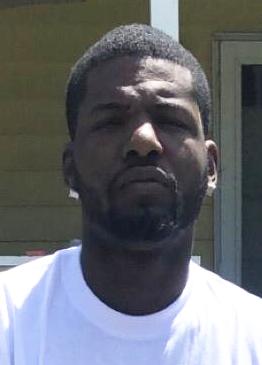
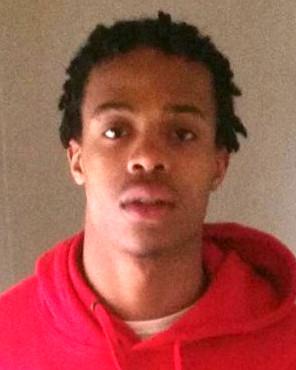
Jeffrey Steven Wright II, a 16-year-old Black/African American male, died in Huntington, West Virginia, after a shooting on July 23, 2015. What became known publicly began with gunfire in the Oakland Avenue area on that Thursday morning. Huntington police later confirmed that officers had received a report of shots fired in the neighborhood, but at the time there was no immediate discovery of Wright and authorities did not yet know that a fatal shooting had occurred.
For roughly two days, Wright remained undiscovered. At about 3 a.m. on Saturday, July 25, police located his body in a wooded area in the 100 block of Oakland Avenue. His family believed that he had been shot Thursday morning, around the time the gunfire was reported, meaning that the shooting apparently occurred well before officers found him. Huntington Police Captain John Ellis said investigators were trying to determine what had happened and follow whatever leads they could develop. At that early stage, Ellis specifically said police were not prepared to identify anyone as a person of interest.
Wright's mother, Kimberly Adams, described an especially disturbing scene while speaking during a vigil for her son. She said her son had run for his life before being ambushed and that whoever was responsible had covered him with leaves and left him there. Her account suggested that Wright had attempted to escape before he was fatally wounded and that an effort may have been made afterward to conceal his body in the wooded area. Police did not immediately confirm all of the family's account because investigators were awaiting the autopsy and continuing to reconstruct the circumstances surrounding his death.
Subsequent local-news coverage identified Wright's death as a shooting and reported that police believed the killing occurred during an attempted robbery. Archived references to reports from WSAZ and WOWK both described investigators reaching that conclusion after the initial discovery of the body. The surviving online material does not clearly establish from the headline alone who initiated the attempted robbery or precisely how the confrontation unfolded, so the available evidence does not support assigning Wright or another individual a particular role in the attempted robbery beyond stating that police connected it to the fatal shooting.
The investigation initially appeared to have few publicly disclosed leads. When police first discussed the case, they did not announce a named suspect, a person of interest, or an arrest. Authorities were still working to determine how Wright came to be in the wooded area, who had been with him, and what happened between the reported gunfire and the eventual discovery of his body. The fact that his remains were not found until Saturday complicated the early investigation because the scene had gone undiscovered for an extended period following the shooting.
Publicly accessible online reporting located on the case does not identify anyone who was subsequently arrested or formally charged with Wright's killing, nor does it document a prosecution, trial, guilty plea, or conviction connected to his death. The contemporaneous coverage instead ends with investigators pursuing leads and with no person of interest publicly identified. Accordingly, based on the available online record, there is no verified suspect name or arrest that can responsibly be attributed to Wright's homicide.
Wright's death left his family and the Huntington community grieving while the investigation continued. Funeral services were held at Spirit of the Lord Church in Huntington, followed by burial at Spring Hill Cemetery. His obituary identified him as Jeffrey Steven Wright II and recorded July 23, 2015, as the date of his death, the same day investigators and his family believed the fatal encounter occurred.