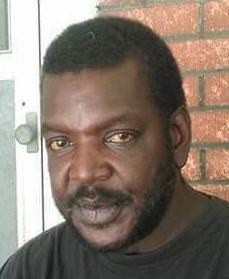
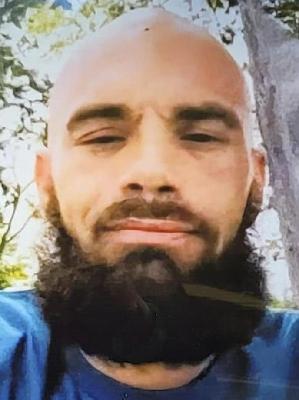
Shannon Cade, a 20-year-old Black/African American man, was caught in a burst of gunfire inside a home on Charleston’s West Side during the opening hours of 2016. Late on January 1, Cade was sitting at a kitchen table in a residence in the 800 block of Mathews Avenue with his younger sister and another juvenile when someone approached the rear of the house and fired repeatedly through the kitchen window.
Cade was struck in the head, while a 14-year-old girl was also hit but survived with injuries described as non-life-threatening. Cade was rushed to CAMC General in critical condition and died from his gunshot wounds the following day, January 2, 2016.
Investigators soon determined that Cade apparently had not been the person the gunman intended to confront. According to the prosecution’s later account, Antonio Carnell Williams II had learned that his girlfriend, Jaylynn Stephenson, had been involved with another man, Lamar Coles. Williams demanded that Stephenson take him to the residence where she had been with Coles. Williams, Stephenson, Sean Burdette and a juvenile identified in court records as G.T. then traveled to the Mathews Avenue house. Williams and Stephenson went toward the rear of the residence, where the kitchen was located. Prosecutors said Williams looked through the kitchen window, saw people sitting at the table, drew a gun and began firing through the glass. Cade and the juvenile identified as C.K. were struck even though Cade was not believed to have been the person Williams was seeking.
Williams left Charleston after the shooting and traveled to Morgantown. Charleston detectives, working with Morgantown police and a SWAT team, located and arrested him on January 5. His half-brother, Tequan Pratt, was present when Williams was taken into custody, and court records later established that Williams had used Pratt’s vehicle to travel to the shooting scene and afterward to Morgantown. Sean Burdette was also arrested in Morgantown. Criminal complaints initially charged both Williams and Burdette with first-degree murder, with investigators alleging that Burdette had driven Williams, Stephenson and the juvenile to the residence and helped Williams leave after the gunfire.
The case against Williams moved forward on March 31, 2016, when a Kanawha County grand jury indicted him on three counts: first-degree murder for Cade’s killing, malicious wounding for the shooting of C.K., and wanton endangerment with a firearm. Burdette’s case eventually took a different course. Although he had originally faced a murder charge, he pleaded guilty in August 2017 to misdemeanor accessory after the fact to wanton endangerment. Prosecutors said Burdette acknowledged that he drove Williams following the shooting. Williams remained jailed while his trial was postponed numerous times, with delays caused by issues that included additional investigation, newly discovered evidence and a conflict involving one of his defense attorneys and a potential prosecution witness.
Williams finally went before a jury in March 2019. At the conclusion of the guilt phase, jurors convicted him on all three charges: first-degree murder, malicious wounding and wanton endangerment. During the punishment phase, the jury recommended mercy on the murder conviction. On June 5, 2019, Kanawha County Circuit Judge Charles King sentenced Williams to life in prison with mercy for Cade’s murder, two to ten years for malicious wounding and five years for wanton endangerment. The sentences were ordered to run consecutively. The mercy recommendation made Williams eligible for parole consideration on the life sentence after fifteen years, although the additional consecutive sentences also remained part of his punishment. Williams continued to maintain that he had not killed Cade and sought a new trial before sentencing, but the request was denied.
Williams appealed, arguing in part that the trial court had improperly removed his retained attorney because that lawyer was simultaneously representing Tequan Pratt, who had become a potential prosecution witness. The Supreme Court of Appeals of West Virginia rejected Williams’ arguments in June 2020. The court concluded that the dual representation created an actual conflict of interest and affirmed the circuit court’s decision, leaving the outcome of the prosecution undisturbed. What began as a confrontation apparently directed at someone else had ended with Cade being fatally struck while simply sitting inside the home, followed by years of court proceedings that ultimately resulted in a first-degree murder conviction and a life sentence for Williams.