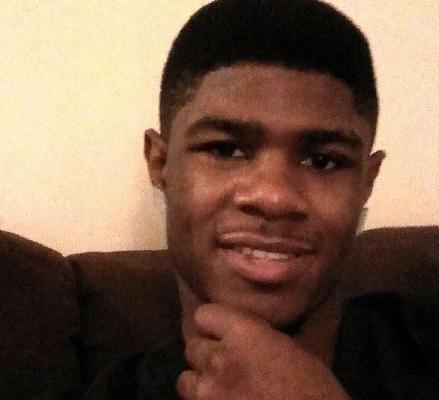
Kourtney Young was a 21-year-old Black man from Chicago whose life ended on a quiet Sunday morning, May 8, 2016, when gunfire broke the stillness of Mother's Day weekend on the city's South Side. That morning, around 8:45 a.m., shots rang out along the 7600 block of South Prairie Avenue in the Park Manor area, a residential stretch of brick buildings and tree-lined streets that sits within a cluster of neighborhoods often grouped together as Chatham and Greater Grand Crossing. Neighbors awoke to the sound of sirens as police and paramedics converged on the scene and found Kourtney suffering from multiple gunshot wounds. Emergency responders rushed him to Stroger Hospital, but despite their efforts he was pronounced dead at 9:35 a.m., less than an hour after the shooting was first reported.
Kourtney's death unfolded amid a wave of violence that made headlines across the country. That Mother's Day weekend was one of the deadliest Chicago had seen in months: news accounts counted eight people killed and around forty others wounded in shootings citywide over roughly a two-day span, turning what should have been a day of celebration for many families into one of mourning. In that grim tally, his name became one among many, listed in paragraphs that moved quickly from one tragedy to the next: a 16-year-old shot in East Garfield Park, a man killed on Lake Shore Drive, another slain in Austin, an older man struck by bullets that tore through his front door in Archer Heights. The pattern of violence underscored how random and sudden such losses could feel, and how little time there was for any one story to be fully told before the next shooting was added to the weekend's grim list.
Behind the brief headlines, however, Kourtney was more than a statistic. Public records identify him as Kourtney LaTrell Young Jr., born January 2, 1995, a lifelong Chicagoan whose life was rooted in the same South Side streets where he would later be attacked. On online memorial pages, family and friends left traces of who he had been to them: they remembered him as loving and caring, a “best brother ever,” his grandmother's favorite, an adored nephew with a playful nickname and a reputation for being a good friend who could be counted on. Dozens of virtual candles have been lit in his memory, each one a small, glowing acknowledgment that he was cherished in ways a police summary could never capture.
Even the basic geography of the crime, as later retold, hints at how quickly details blur once the initial shock fades. Some accounts place the killing in Park Manor, others describe it as occurring in Chatham, and still others simply say Greater Grand Crossing, all overlapping slices of the South Side where streets and community boundaries run into one another. What remains consistent across these tellings is the essential picture: a young resident of the area, living only a few blocks away on South King Drive, cut down by multiple bullets on a Sunday morning, with no clear explanation offered in the public record for how an ordinary start to the day turned into a fatal ambush.
In the hours and days after the shooting, police acknowledged that they did not yet have firm details about what led up to the gunfire on South Prairie. News stories that revisited the weekend's violence in the weeks and years that followed repeated the facts of where and when Kourtney was shot, but they did not add a suspect's name, a description of an assailant, or a motive. Memorial and case-summary sites likewise recount his death in sober, factual terms and explicitly invite the public to share any updates, a sign that no arrest or prosecution has been widely reported in connection with the case. Taken together, the publicly available accounts suggest that those responsible for his killing have not been identified in the open record, leaving his family and community with grief but no clear resolution.
Today, Kourtney's story survives mainly in fragments scattered across obituaries, crime rundowns, and remembrance pages: a birth date and an address, a precise time of death in a hospital log, a short police summary, and a handful of loving descriptions from people who knew him. They add up to a picture of a young life interrupted—someone who woke up on a May morning in Chicago and never came home, whose absence is still felt by those who write that he was their favorite grandson, their “chunky monkey,” their best friend.