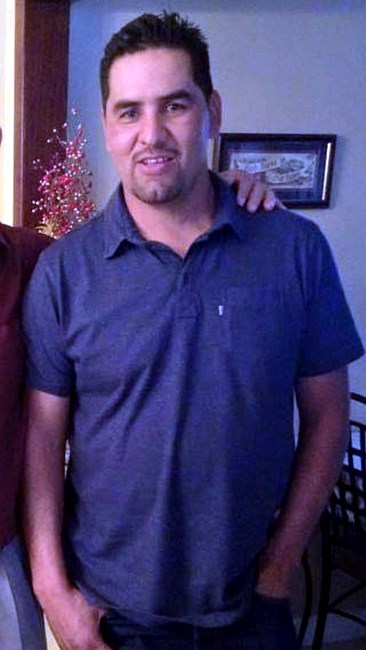
In the early hours of September 18, 2015, police were called to an apartment complex near 48th Street and Interstate 10 in Phoenix, Arizona, after reports that a man had been stabbed while intervening in a robbery. The victim was identified in news coverage as Miguel Jose Briseno and in obituary records as Miguel Angel Briseño Bautista, a 42-year-old Hispanic/Latino male visiting a friend at the complex when he saw a man attempting to snatch a purse from a 23-year-old woman who was standing
outside with a small group of people. According to police and witness accounts, the would-be thief approached the group, grabbed for the woman’s bag, and a struggle broke out. Miguel stepped in to help, engaging the assailant in a physical fight; during that confrontation, the attacker cut his neck, then dropped the purse and ran from the scene. Friends and bystanders initially did not realize how badly he was hurt, but within moments they saw blood at his neck and tried desperately to stem the bleeding while emergency responders were called. He was transported to a local hospital, where he was pronounced dead from his injuries later that morning.
Obituary and case-file information show that Miguel had been born on August 3, 1973, in Juanacatlán, Jalisco, Mexico, and had made Phoenix his home, where he worked in the landscaping industry and was associated with a small business known as MB Landscaping. He was described as a devoted husband and the father of three children, someone who was hardworking and deeply involved in supporting his family. In interviews after the killing, his sister Maria spoke about the family’s shock and grief, saying they did not know how they were going to go on without him, while a longtime coworker, Michael Cohen, remembered him as a reliable colleague and insisted that stepping in to protect a stranger was entirely in character. Those who knew him and subsequent true-crime write-ups have repeatedly referred to his actions that night as selfless and heroic, emphasizing that he intervened not out of obligation but out of instinct when he saw a young woman in danger.
From the beginning, investigators treated the case as a homicide and appealed publicly for help. Witnesses could only give a limited description: the assailant was described by Phoenix police as a dark-skinned man dressed in all black who fled on foot after the struggle, leaving the purse behind. Silent Witness and local media outlets circulated that description, a phone number for tips, and later included Miguel’s death in year-end summaries of unsolved Phoenix homicides from 2015, underscoring that no suspect had been identified by name in the immediate aftermath. Specialized cold-case and homicide-tracking sites that later compiled information about the killing—drawing on public records and obituaries—continue to list the case as an unresolved “death by force,” noting Miguel’s basic biographical details and asking readers to report any new information. One such entry, updated as recently as November 2025, explicitly invites updates and links back to his obituary, which further indicates that, in open sources, the killing is still treated as an unsolved homicide with no publicly documented arrest or conviction tied to the attack that claimed his life.