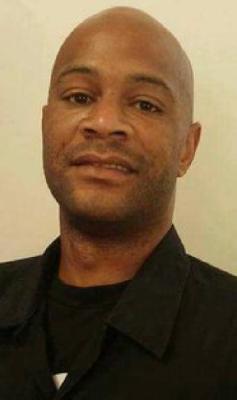
Terry Milton Lipsmeyer, a 52-year-old white male from Sherwood, Arkansas, had built a life rooted in education, public service, and music before his death in October 2014. Born on May 9, 1962, in Morrilton, he graduated from St. Joseph’s High School in Conway, went on to earn a bachelor’s degree in chemistry from the University of Central Arkansas, and later completed a master’s degree in public health administration at the University of Arkansas for Medical Sciences.
For more than twenty years he worked for the Arkansas Department of Health, where colleagues knew him as a dedicated professional. Away from work he was an accomplished musician and a member of St. Boniface Catholic Church, remembered by family and friends for his quick wit, easy laughter, and the warmth he brought into everyday moments.
In the early morning hours of Saturday, October 18, 2014, that life was cut short in a quiet residential stretch of Little Rock’s Capitol View/Stifft Station neighborhood. Around 4 a.m., two men slipped through the back door of the house at 118 Rice Street, where Lipsmeyer was inside with other occupants. According to police accounts and later case summaries, the intruders were armed and moved quickly to rob those inside at gunpoint, turning the modest home into the scene of a sudden, terrifying home invasion. As the men began to flee, one of them fired a single shot that struck Lipsmeyer in the chest. Responding officers and medical personnel could not save him; he died from the gunshot wound, and the address on Rice Street was soon marked off with police tape as detectives began a homicide investigation.
News of the killing moved quickly through Little Rock. Local outlets initially reported only that a 52-year-old man had been shot during a home invasion near the State Capitol, but within a short time police publicly identified the victim as Terry Lipsmeyer. Investigators described a forced entry through the back of the house and confirmed that the shooting occurred during a robbery. The details of the crime — the timing before dawn, the intrusion into a private home, the fatal shot delivered as the assailants retreated — contributed to a sense of unease in the surrounding neighborhood and drew close scrutiny from detectives assigned to the case.
Within days, the investigation yielded its first major break. A specialized Violent Criminal Apprehension Team located and arrested 23-year-old Wesley Wooley of North Little Rock, who was charged with capital murder in connection with the shooting death of Lipsmeyer. Police said Wooley was one of the men who had entered the Rice Street home and that the case against him arose directly from the events of the home invasion. A judge later ordered that he be held without bail. Separate reporting examined his background, noting a history of probation violations and substance-abuse issues and stating that he was alleged to have been in violation of probation on the night of the killing, underscoring concerns about how a series of prior infractions had not resulted in significant jail time before the homicide on Rice Street.
The investigation did not end with Wooley’s arrest. By the middle of the following week, Little Rock police announced that two additional North Little Rock men had been taken into custody in connection with the same crime. On Wednesday, October 22, 2014, investigators arrested 26-year-old Timothy Pemberton and 26-year-old Allen York. Both men were charged with capital murder, and local coverage described all three suspects — Wooley, Pemberton, and York — as involved in the home invasion at 118 Rice Street. Police reiterated that the men were alleged to have forced their way into the house, robbed the residents at gunpoint, and that one of them shot Lipsmeyer in the chest before they fled. The arrests were portrayed as a swift response to a particularly disturbing killing, but publicly available summaries focus on the charges and initial court appearances, without widely accessible detail about later stages of prosecution or final case outcomes.
As the criminal case moved through the system, Lipsmeyer’s family and community turned toward mourning and remembrance. An obituary circulated through funeral-home and cemetery sites, noting the large circle of his surviving family: his daughter Katherine, his parents Jerome and Carolyn, several siblings, and numerous nieces and nephews. Funeral Mass was held at St. Boniface Catholic Church, with burial at the church cemetery in Perry County, returning him to a rural landscape where many members of the Lipsmeyer family are also buried. Online memorial pages dedicated to him describe him as a gentle soul who loved music and made people laugh, while national gun-violence remembrance sites list his name among those lost to firearms on October 18, 2014, in Little Rock.
Years later, the circumstances of the crime continue to be summarized on homicide and crime-solving websites, which recount the early-morning break-in, the robbery at gunpoint, and the fatal shot that ended Lipsmeyer’s life, and invite visitors to share any new information or reflections. Together, those records — the news reports on arrests, the case listings, and the memorial tributes — sketch the arc of a story that begins with a man who devoted his career to public health and ends with a violent home invasion on Rice Street, leaving a family, a church community, and former colleagues to carry his memory forward while the legal traces of his case reside in court files and archived headlines.