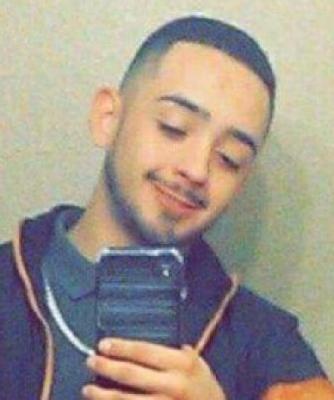
On Thanksgiving Day, November 23, 1989, Ramon Bazurto accompanied his friend Richard Alberts to a small house in Tucson, Arizona, where a high-value cocaine deal had been arranged with local dealer Eric Owen Mann. Ramon Bazurto, whose exact age is not publicly reported, was a male of Hispanic/Latino ethnicity from Tucson, and he appears in the record as an associate of Alberts, who was involved in the cocaine trade.
The meeting was supposed to involve the purchase of roughly a kilogram of cocaine for about $20,000, with the exchange to take place inside the residence Mann shared with his girlfriend, Karen Miller.
According to later court findings, Mann never intended to provide cocaine. In the days leading up to the deal, he devised a scheme to “rip off” Alberts: he would hand over a shoebox filled with paper instead of drugs, keep the money, and then kill Alberts so he could not report the robbery. When Alberts arrived that night, he brought Bazurto with him, an unplanned complication that forced Mann to decide on the spot whether to carry out the violent plan in front of a second witness. Mann led both visitors to the master bedroom, where Miller stood in the doorway while the transaction unfolded. Alberts handed over the bag of cash; Mann passed him the shoebox. As Alberts opened the box and saw it was filled with paper, Mann drew a pistol and shot Alberts, then immediately turned the gun on Bazurto and shot him as well. Both men were struck once in the torso by bullets that passed through their bodies and into the bedroom walls.
Alberts died quickly from a wound through the heart, but medical and testimonial evidence later presented at trial showed that Bazurto did not die instantly. He remained conscious for several minutes after being shot, struggling and in obvious distress before he succumbed to internal injuries that included a lung wound and a severed aorta. The Arizona Supreme Court later cited this prolonged awareness and suffering in upholding a finding that his killing was “especially cruel” under the state's capital-sentencing statute, emphasizing that he experienced significant physical pain and terror before death.
After the shootings, Mann and Miller began covering up the crime. Mann left the house to find someone who would help move the bodies and soon returned with a friend, Carlos Alejandro. Together, Mann and Alejandro loaded the bodies of Alberts and Bazurto into Alberts's car, drove them out of Tucson into rural Graham County near Fort Grant prison, and left them by a gravel or dirt road. The next day, the bodies were discovered on the roadside, triggering a homicide investigation that initially provided little sense of what had happened in the Tucson house the night before. Back in the city, Mann and Miller cleaned the bedroom thoroughly, patched the bullet holes in the walls and made other repairs, buying paint and attempting to erase physical traces of the shooting from the interior of the home.
Within days of the discovery of the bodies, investigators traced the victims back to Mann's residence. Police executed a search warrant at the Tucson house on November 28, 1989, and observed fresh repairs in the rear bedrooms that were consistent with bullet damage and patching. Mann admitted that Alberts and Bazurto had come by on the night in question for a drug deal, but he claimed the negotiations had broken down over price and that the men had left alive. Despite the suspicious circumstances, including the physical alterations to the room, there was not yet enough corroborated evidence to charge anyone, and no immediate arrests were made. The double homicide remained officially unsolved for several years, even as Mann continued his life elsewhere.
The stalemate in the case ended after Mann's relationship with Karen Miller deteriorated. She left him in late 1993, took their child, and moved to Washington State to live near her family. Distanced from Mann and carrying the memory of the killings and the cover-up, Miller eventually contacted law enforcement. In January 1994 she reported the murders to the Pima County Sheriff's Department, providing a detailed account of the drug-rip-off plan, the shootings of Alberts and Bazurto inside the Tucson house, the transport of the bodies with the aid of Carlos Alejandro, and the subsequent efforts to clean and repair the crime scene. Investigators used her information to locate and interview Alejandro, whose statements corroborated Miller's description of events and further implicated Mann as the gunman and planner of the crime.
Based on the information from Miller and Alejandro, authorities identified Eric Owen Mann as the primary suspect and moved forward with charges. Mann was arrested in 1994 and indicted in Pima County Superior Court on two counts of first-degree murder for the killings of Richard Alberts and Ramon Bazurto during the staged cocaine deal, along with related charges tied to the robbery motive. Miller and Alejandro, who had helped move the bodies and conceal the crime but had not fired the shots, received immunity from prosecution in exchange for their cooperation and testimony against Mann. Their eyewitness accounts became the backbone of the state's case at trial.
Mann's trial began in October 1994 in Tucson. Prosecutors argued that he had orchestrated a calculated robbery, lured Alberts to his home under the pretense of a major drug sale, and decided in the moment to kill Bazurto as well to eliminate a second witness. The defense challenged the credibility of Miller and Alejandro and raised issues about Mann's mental health and history of head injury, but the jury ultimately accepted the prosecution's version of events. Mann was convicted on two counts of first-degree murder and sentenced to death for both killings, with the judge citing pecuniary gain, the especially cruel manner of Bazurto's death, and the multiple-victim nature of the crime as aggravating factors that outweighed any mitigating evidence.
In the decades since the verdict, Mann's convictions and death sentences have been the subject of extensive appellate and post-conviction litigation in state and federal courts. Panels of the Ninth Circuit Court of Appeals have examined claims that his trial lawyers were ineffective, particularly in investigating and presenting evidence of possible brain injury, but while one panel briefly vacated his death sentence, the full en banc court later reinstated it, concluding that the Arizona courts' handling of the case did not violate clearly established federal law. Throughout these proceedings, the core factual findings regarding the events of November 23, 1989—the planned drug rip-off, the fatal shootings of Alberts and Bazurto in Mann's Tucson bedroom, the disposal of their bodies in rural Graham County, and Mann's role as the shooter—have remained intact. As a result, the official record continues to reflect that Ramon Bazurto lost his life in a calculated double homicide for which Eric Owen Mann was arrested, prosecuted, and remains under a sentence of death.