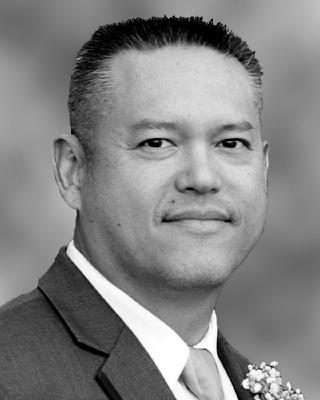
Kenneth Brown was a 27-year-old white male employee at a Jack in the Box restaurant in the Phoenix metropolitan area who was killed on May 19, 2002, in a late-night robbery that turned into a triple homicide. That night he was working the late shift alongside co-workers Beatriz Alvarado and Fausto Jimenez at the 24-hour Jack in the Box located at Main Street and Lindsay Road in Mesa, Arizona, part of the greater Phoenix area. After 10 p.m.
the dining room doors were locked so only the drive-through was open. Between roughly 11:15 and 11:30 p.m., the three workers were attacked, forced into the restaurant’s walk-in freezer, and shot; Brown died inside the freezer almost immediately, while his two colleagues were able to briefly escape before collapsing from their wounds.
A short time later, a customer pulling up to the drive-through found Alvarado near the back of the store, badly wounded and moaning. She managed to speak to both the customer and the first responding officer, saying she was hurt and indicating that two other people were still inside. When police entered the restaurant, they found Jimenez and Brown already dead and the freezer area littered with shell casings, bullet fragments, and signs of a close-range attack. Several cash registers at the front of the store had been pried open, but investigators later determined that only a small amount of money—on the order of a few hundred dollars—had been taken, and the main safe remained untouched, reinforcing the impression of a targeted yet hastily executed crime.
From the outset, detectives suspected that whoever carried out the attack knew the restaurant’s layout and routines. Attention quickly focused on Christopher Allen Hargrave, a young former employee who had worked at that Jack in the Box from April 19 until May 15, 2002, when he was fired after Jimenez reported that Hargrave’s cash register was repeatedly coming up short. Hargrave was closely associated with Steve Alan Boggs; the two had formed a small paramilitary group they called the Imperial Royal Guard, described in court records as a militia-style organization that promoted the supremacy of the white race and harbored hostile views toward racial minorities. The combination of Hargrave’s recent termination, his inside knowledge of the restaurant, and the extremist ideology he shared with Boggs quickly moved both men to the center of the investigation.
Physical evidence soon strengthened those suspicions. On May 21, just two days after the shootings, Boggs pawned a Taurus handgun at a pawnshop owned by a family who knew him, and the shop owner found the transaction odd enough to clean the gun, lock it in his safe, and later alert law enforcement. When police recovered the weapon and submitted it for testing, a criminalist matched the shell casings, bullet fragments from the freezer, and bullets removed from the victims’ bodies to that Taurus pistol. Investigators also learned that shortly after the murders, someone later identified as Hargrave attempted to use Jimenez’s bank card at an ATM, further tying him to the events of that night.
On June 5, 2002, Mesa police brought Boggs to the station for questioning. According to court records, he waived his Miranda rights and over the course of hours of interrogation gave several conflicting versions of what had happened on and after May 19. His statements, combined with the ballistics and financial evidence, led to the identification and apprehension of Hargrave. When confronted, Hargrave admitted his involvement and described how, on the night of the crime, he went to the restaurant wearing his old work uniform and told the employees he had been called back in, which allowed him to be let inside. Boggs then followed, armed with a handgun. Inside, Boggs ordered the three workers to lie on the floor and empty their pockets while Hargrave watched them and Boggs removed cash from the registers. The two then forced the employees into the walk-in freezer, where Boggs fired multiple shots at close range; testimony in Hargrave’s case described Boggs yelling racial slurs as he shot the victims.
Initially, investigators interpreted the case solely as a robbery that had spiraled into lethal violence, but as more evidence emerged a racial-hate component became clear. Boggs later made a statement, quoted in secondary summaries of the case, that his motive had been to “rid the world of a few needless illegals,” language that aligned with the ideology of the Imperial Royal Guard. Arizona Supreme Court summaries in both men’s appeals noted that Boggs and Hargrave’s militia was explicitly focused on promoting the white race and denigrating minorities, and another summary of Hargrave’s case explicitly observed that all three victims were racial minorities and that the group was a white supremacist organization.
Both Boggs and Hargrave were formally charged with three counts of first-degree murder, along with related counts including armed robbery, burglary, and kidnapping arising from the confinement of the workers in the freezer and the theft of cash. Boggs was tried first; in 2005 a jury found him guilty of all three murders and, after finding aggravating factors such as expectation of financial gain, the especially cruel manner of the killings, and the commission of multiple homicides during the offense, sentenced him to death—a judgment later affirmed by the Arizona Supreme Court. Hargrave was tried separately and likewise convicted of three counts of first-degree murder and associated felonies; his death sentence was upheld in a 2010 decision that emphasized the same aggravating factors, including the suffering the victims experienced as they tried to escape the freezer after being shot. Both men remain incarcerated on Arizona’s death row in connection with the killing of Kenneth Brown and his co-workers.