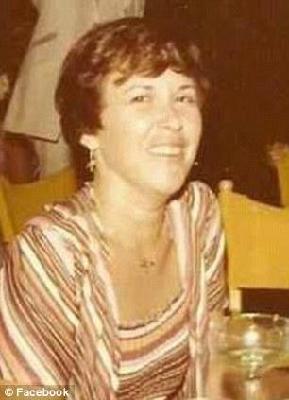
On October 6, 2009, in Tucson, Arizona, Kandice Sue Smith, a 21-year-old female of unspecified ethnicity, was fatally shot during what was supposed to be a routine visit with family members on the city’s southwest side. She and her boyfriend, Rodney Lavon Kirk, had been at his mother’s home that day; moments after the couple left the house together, a gun in Kirk’s possession discharged and a single round struck Kandice in the right side of her torso.
She succumbed to the injury shortly afterward, and public records describe her death as the result of gun violence in a domestic setting.
Investigators quickly focused on Kirk as the central figure in the shooting. He initially told police that the firearm had gone off accidentally, but evidence gathered during the investigation raised doubts about that explanation. A medical examiner later testified that the muzzle of the gun had been pressed into Kandice’s side when it fired, suggesting a close-contact shot inconsistent with a simple accidental discharge in open space. Additional investigative work identified discrepancies between Kirk’s account and the physical evidence, reinforcing law enforcement’s conclusion that this was not a mere mishandling of a weapon but a criminally culpable act.
As a result of the investigation, Tucson authorities arrested Rodney Lavon Kirk and he was formally charged with second-degree murder in connection with Kandice’s death, according to statements attributed to a Tucson Police Department spokeswoman and domestic-violence fatality documentation. The case was prosecuted in Pima County Superior Court as a domestic-violence homicide; at trial in May 2010, prosecutors asked the jury to convict Kirk of second-degree murder, while the defense argued that the shooting was a tragic accident more appropriately classified as negligent homicide. After deliberating, the jury returned a verdict of manslaughter rather than second-degree murder, and Kirk—by then in his mid-twenties—faced a sentencing range of seven to twenty-one years in prison, with sentencing scheduled for June 28 before Judge John Leonardo.
In the years following the crime, Kandice’s family and loved ones have worked to preserve her memory and to frame her death within the broader problem of intimate-partner violence. Her sister, Julinda LeDee, later created “Kandice’s Korner,” a small community book collection at San Jose City College, explaining that Kandice loved to read and using the space as both a tribute and a quiet call to awareness about domestic-violence fatalities. Advocacy and remembrance projects, along with listings on gun-violence and memorial sites, continue to present her as a victim of domestic violence killed by her boyfriend, underscoring that her death was not only a personal tragedy but also part of a larger pattern of intimate-partner homicide.