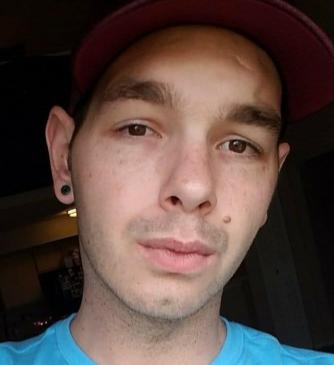
On a hot Sunday in mid-August 2023, Robert Anthony Wade, a 42-year-old man from Cookeville, Tennessee, spent what would be his final hours in the rolling countryside south of town. Born in Lebanon, Tennessee, he had built his life in Cookeville, the place he most recently called home. The day began like any other summer weekend day in the Upper Cumberland, quiet and unremarkable, with no hint that it would end in tragedy on a rural road called Pigeon Roost Creek.
That afternoon, just before 3 p.m. on August 13, the calm was shattered when Cookeville police were dispatched to a residence on Pigeon Roost Creek Road after reports of shots fired. As officers headed toward the address, they came across a vehicle that appeared to be tied to the call. The car had left the roadway and come to rest in a nearby field, a violent end to what should have been an ordinary drive. Inside the crashed vehicle, officers found Wade in the driver’s seat.
He was already beyond saving, bearing injuries that investigators described as consistent with an apparent gunshot wound.
The discovery turned the quiet stretch of Pigeon Roost Creek Road into an active crime scene. Officers and investigators worked both at the residence where the shots were reported and at the field where the vehicle had come to rest, trying to piece together the moments that led from gunfire at a home to a fatal crash nearby. The Gun Violence Archive would later summarize the sequence starkly: a man shot at a residence, then found dead in a crashed vehicle in a nearby field. Police interviewed everyone believed to have been involved or present, but in their first public statements they declined to name any of those individuals, saying their identities were being withheld to protect the integrity of the investigation.
Even as they held back names, investigators tried to calm the surrounding community. Cookeville police indicated they believed the shooting was an isolated incident and that there was no broader threat to the public, a reassurance often offered in small communities where news of sudden violence travels fast and unsettles neighbors. At the same time, they appealed for help, asking anyone with information to contact the department’s Criminal Investigation Division, specifically directing tips to a named lieutenant, a detail that underscored how seriously the case was being handled.
In the days and months that followed, Wade’s name moved from breaking news into the solemn lists that track lives cut short by gunfire. On GunMemorial, he appears among the victims from Cookeville, identified by name and age, remembered as “lost to gun violence” on August 13, 2023. An online obituary records his full name, his date of birth on July 4, 1981, and notes that he was born in Lebanon and later settled in Cookeville, offering a quieter portrait of the man behind the headlines—someone with favorite music, a personal history, and relationships that do not show up in police reports. Friends, family, and community members added their grief to these digital memorials, lighting virtual candles and leaving messages that suggest a circle of people still trying to understand how an ordinary Sunday could end in such a sudden, violent loss.
Yet, despite the intensity of that initial investigation, publicly available records and news coverage show no clear resolution to what happened on Pigeon Roost Creek Road. Beyond the first statements that all involved parties had been interviewed and that the case was under active investigation, there have been no widely reported announcements of arrests, no suspects named, and no public descriptions of charges, trials, or convictions connected to Wade’s death. As far as open sources reveal, the story remains frozen at those early moments: a Sunday call about shots fired, a crashed vehicle in a field, a man fatally wounded, and a community left with questions that, at least in public, have yet to be fully answered.