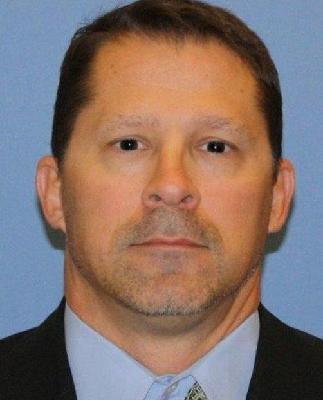
Michael Gale Garbo, a 51-year-old male Drug Enforcement Administration supervisory special agent, had spent more than sixteen years tracking drug traffickers from the U.S.–Mexico border to Afghanistan by the time he stepped onto the Amtrak Sunset Limited in downtown Tucson on the morning of October 4, 2021. A former Metropolitan Nashville police officer who joined the DEA in 2005, he had risen to become a respected group supervisor in the Phoenix Field Division, known for his calm leadership,
tactical skill, and willingness to take on difficult assignments. That day, he led a joint team of DEA agents and Tucson Police Department officers on a routine interdiction operation, moving quietly through the train as it paused at the station, looking for weapons, cash, and narcotics hidden among the luggage and passengers.
The operation began with a tip from Amtrak personnel, who had flagged two men as suspicious. Agents watched as one of them, later identified as Devonte Okeith Mathis, sat on the upper level of a double-decker car and shifted a backpack and two bags several rows away from his seat, then casually returned to where he had been sitting. When questioned, Mathis denied that the bags were his. Following standard procedure, an officer moved the luggage down to the platform for inspection, while Garbo and another DEA agent focused on the second man who had been seated near Mathis. The three men stepped off the train to the platform, and agents secured permission to run a drug-sniffing dog around several pieces of luggage while other officers remained aboard to keep watch.
As the canine team worked, the officer who had taken custody of the bags opened the backpack and discovered large bulk packages of marijuana, along with marijuana edibles and related cannabis products. He alerted Garbo and the second DEA agent that there was probable cause to believe the men were involved in drug trafficking. On the train above them, passengers were still settling in for a long ride between Los Angeles and New Orleans, unaware that events were about to turn violent. Garbo and his colleague re-entered the car to speak again with the second suspect, intent on turning a routine seizure into a carefully controlled arrest.
Instead, they walked into an ambush. When the agents approached, the second man drew a handgun and opened fire at close range. Shots echoed through the cramped upper level of the car as panicked passengers dove for the floor and scrambled toward the exits. Garbo was struck multiple times, mortally wounded where he stood. A second DEA agent was hit and gravely injured, and a Tucson police officer rushing in to help was also shot as gunfire erupted from the train car. Outside, officers on the platform heard the shots and converged on the doors and windows, trying to locate the shooter while directing terrified passengers away from the line of fire.
The gunman retreated deeper into the train as law enforcement officers returned fire. He moved toward the lower level, taking up a position inside or near a restroom as additional shots were exchanged. Eventually, a Tucson Police Department sergeant and other officers engaged him in a final burst of gunfire that ended the threat. The man who had fired on the agents, later identified by the Pima County Medical Examiner as 26-year-old Darrion Taylor, died at the scene from gunshot wounds to his torso and limbs. Investigators later emphasized that those wounds were not self-inflicted; Taylor was killed during the exchange of fire with law enforcement.
While medics and officers worked desperately to stabilize the wounded, attention turned back to Mathis, who had remained on the train and was taken into custody. Court documents and subsequent reporting described how agents linked him to the backpack and bags containing approximately 2.4 kilograms of raw marijuana, dozens of packages of marijuana edibles, and other cannabis products, all consistent with distribution rather than personal use. Initially charged in a federal complaint with possessing marijuana with intent to distribute less than 50 kilograms, Mathis was later indicted on more serious counts tied to a broader drug-trafficking conspiracy.
As the investigation unfolded, federal prosecutors built a case that the events on the train were the violent culmination of a joint smuggling venture between Mathis and Taylor. According to the U.S. Attorney’s Office and the DEA, Mathis eventually pleaded guilty to Conspiracy to Possess with Intent to Distribute Marijuana, Using and Carrying a Firearm During and in Relation to a Drug Trafficking Crime, and Possession of a Firearm in Furtherance of a Drug Trafficking Crime. In his plea, he admitted he knew Taylor possessed two handguns and acknowledged that it was reasonably foreseeable that his co-conspirator would carry and use those weapons while they trafficked drugs together. In June 2023, a federal judge in Tucson sentenced Mathis, then 24, to a total of ten years in prison—five years on the drug conspiracy count and a consecutive five-year term on a firearm count—followed by five years of supervised release, holding him criminally accountable even though Taylor, the actual gunman, had died in the shootout.
In the days after the shooting, the focus turned to honoring the fallen agent. DEA Administrator Anne Milgram described Garbo’s operational expertise, mentorship, and leadership as “legendary,” noting that he had volunteered for duty in Afghanistan and had become a pillar of the Tucson law enforcement community. Arizona’s governor ordered flags at state buildings flown at half-staff, and colleagues from across the country traveled to Tucson for his funeral, filling Calvary Chapel with agents, officers, friends, and family who had come to say goodbye. Garbo was remembered as a devoted husband and father, as well as a mentor whose steady presence made everyone around him better. His name was later added to the DEA’s Wall of Honor and memorialized in state legislation dedicating a stretch of highway in Illinois to his memory, ensuring that the story of the train where he fell—and the investigation and prosecutions that followed—would be linked forever to a career spent trying to stop the very violence that claimed his life.