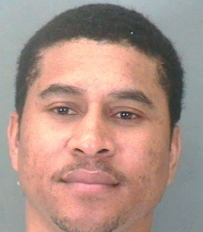
Do you know who murdered Sean McNeil Anderson? On Sunday, October 16, 1994, in Southeast Washington, D.C., 25-year-old Sean McNeil Anderson, an African-American male, was found dead alongside another young man, Marqueit Dalvin Ward, behind the Benning Stoddert Recreation Center near East Capitol Street and Stoddert Place SE. The recreation center, normally a place for games, neighborhood gatherings, and families passing through the nearby fields, instead became the scene of a grim discovery in the early hours of the day, when both men were
located and their deaths were quickly treated as a double homicide by police.
Officers from the Metropolitan Police Department arrived and secured the secluded area behind the recreation center, transforming a familiar corner of the neighborhood into a taped-off crime scene marked by patrol cars and investigators. The case was turned over to the department's Major Crimes Unit, an indication of both its seriousness and its complexity, and investigators classified Sean's death as “death by force,” underscoring that what had happened to him and Ward was no accident or natural tragedy.
In the years that followed, Sean's name would remain on official unsolved-homicide lists and cold-case websites, often accompanied by a small photograph and a few stark lines summing up his life and death: his full name, the city and date he was found, and the location behind Benning Stoddert Recreation Center. Public case summaries emphasize how little is known outside investigative files: that two young men in their twenties were discovered together, that the killings came during a period when violent crime was a particular concern in the area, and that the double homicide “shocked the surrounding community.”
Because the trail grew cold, authorities sought the public's help. Reward flyers issued by the Metropolitan Police Department offered up to $50,000 for information leading to the closure of the case, listing the victims' names and the precise location of the crime and urging anyone who knew anything to contact detectives or the department's information and command centers. Those reward notices, still available decades later, describe the investigation as ongoing and under the responsibility of Major Crimes, a formal reminder that Sean's killing has never been resolved.
Despite the passage of more than thirty years, no suspect has been publicly named, and there are no records indicating any arrests connected to the murders of Sean McNeil Anderson and Marqueit Dalvin Ward. Instead, Sean's story survives mostly through these brief official notices and cold-case entries that continue to ask, “Do you know who murdered Sean McNeil Anderson?” They frame his death as an unanswered question hanging over a neighborhood that once woke to the news that two young men had been killed behind a recreation center, and they leave open the hope that someone, somewhere, still holds the information needed to finally explain what happened that night.