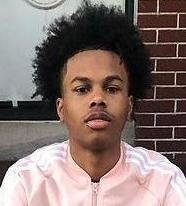
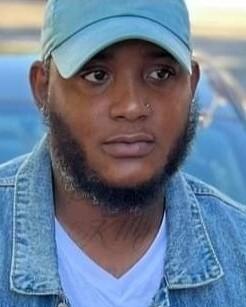
On May 27, 2014, Alphonso L. Boyd, a 28-year-old African American man from Wilmington, Delaware, was fatally shot following an argument on a residential street in the city's West Side neighborhood. Known affectionately to family and friends as "Izzo," Boyd was a husband, father, and grandfather whose life ended in an act of violence just steps from where he lived.
His death would lead to a lengthy homicide investigation, multiple court proceedings, and the eventual conviction of the man responsible.
Earlier that evening, Boyd had returned to the 1100 block of Conrad Street, where he resided. He spent some time speaking with people in the neighborhood before approaching another local resident, Demonte Johnson, who was also known by the nickname "Illy." According to testimony presented during the subsequent murder trial, an argument developed between the two men. The precise reason for their disagreement was not clearly established in the publicly available accounts, but the confrontation quickly turned violent.
During the altercation, Johnson produced a. 32-caliber semiautomatic handgun. As Boyd attempted to get away, Johnson fired, striking him in the back. The bullet penetrated Boyd's chest, causing a fatal injury. Witnesses who were nearby saw or heard portions of the confrontation, and their observations would later become central to the prosecution's case. Boyd collapsed in the street as the confrontation came to a devastating end.
At approximately 9:30 p.m., Wilmington police officers were dispatched to the area of Conrad and Van Buren Streets following reports of a shooting. Officer Douglas Rivell was among those who responded and discovered Boyd lying on the ground, unresponsive and suffering from a gunshot wound. Rivell immediately began cardiopulmonary resuscitation while awaiting emergency medical personnel. Despite attempts to save his life, Boyd could not be revived and was pronounced dead that evening. An autopsy confirmed that the gunshot wound to his back, which had penetrated his chest, caused his death.
Wilmington Police Detective Thomas Curley was assigned to lead the homicide investigation. Investigators began interviewing witnesses, examining evidence, and reconstructing the events surrounding the shooting. Several people familiar with both Boyd and Johnson provided accounts of what they had witnessed. Among them was Annaquasia Watson, who testified that she had seen Johnson standing near an alleyway holding a gun shortly before Boyd was shot. Watson subsequently identified Johnson as the shooter during a police photographic lineup.
Another witness, Aiun-Yea Chambers, testified that she heard Boyd and Johnson arguing before the gunshot. Chambers identified Johnson as the person responsible and maintained that she had no doubt about the source of the fatal shot. Investigators also developed additional evidence, including cellular telephone records and statements that prosecutors argued connected Johnson directly to the killing.
Johnson became a suspect relatively early in the investigation. On June 1, 2014, Detective Curley interviewed him about Boyd's death. Although Johnson was questioned and his cellular telephone was taken during the interview, he was not arrested for the murder at that time and was permitted to leave. Investigators continued developing their case, conducting additional interviews and examining evidence intended to establish his whereabouts and actions on the night of the shooting.
The investigation continued for more than a year before formal criminal proceedings advanced. On August 31, 2015, a New Castle County grand jury indicted Johnson on charges of first-degree murder, possession of a firearm during the commission of a felony, and possession of a firearm by a person prohibited. Johnson had a previous robbery conviction that legally prohibited him from possessing a firearm. Court records also identify September 9, 2015, as the date of his formal arrest.
The first murder trial began on March 20, 2017. Prosecutors presented evidence intended to establish that Johnson had deliberately shot Boyd following their disagreement. However, the jury was unable to reach a unanimous verdict, resulting in a mistrial. The failure to secure a verdict meant the case would have to be tried again, extending the legal proceedings nearly three years beyond Boyd's death.
Johnson's second trial began on January 29, 2018, in Delaware Superior Court. This time, prosecutors presented testimony from three eyewitnesses who identified Johnson as the shooter. The prosecution also introduced evidence concerning statements Johnson allegedly made to acquaintances acknowledging his involvement in Boyd's killing. Shakia Hodges and Joshua Hinton were among the witnesses whose accounts became important to the case, although Hinton gave contradictory testimony and attempted to distance himself from statements he had previously made to investigators.
Additional evidence included cellular telephone location analysis that placed Johnson's phone in the vicinity of the shooting. Prosecutors also introduced recordings of telephone conversations Johnson made while incarcerated, arguing that those conversations demonstrated efforts to interfere with the testimony of a key witness. According to the prosecution, Johnson had attempted to prevent Hodges from appearing in court. Although she initially failed to appear when scheduled, she ultimately testified.
The defense challenged portions of the evidence and questioned the reliability of certain witnesses. Johnson also disputed elements of the prosecution's account. Nevertheless, prosecutors maintained that the eyewitness identifications, statements attributed to Johnson, and cellular telephone evidence collectively established his responsibility for Boyd's death.
On February 6, 2018, the jury found Demonte Johnson guilty of first-degree murder, possession of a firearm during the commission of a felony, and possession of a firearm by a person prohibited. The verdict came nearly four years after Boyd was killed.
Following the conviction, Johnson's attorneys sought a new trial, arguing that certain testimony and actions during the proceedings had unfairly prejudiced the jury. The defense raised concerns involving statements from witnesses, the prosecution's questioning, and the possibility that jurors had been exposed to improper information. Superior Court President Judge Jan R. Jurden reviewed the arguments and rejected the request in July 2018, concluding that the challenged circumstances did not warrant overturning the verdict or ordering another trial.
On August 29, 2018, Johnson was sentenced to life imprisonment for Boyd's murder, along with an additional 11 years of incarceration for the associated firearm convictions. The sentence ensured that Johnson would face a substantial period of imprisonment for the fatal shooting. His defense subsequently pursued an appeal, continuing the legal proceedings after sentencing.
Outside the courtroom, Boyd's death left a family grieving the loss of someone who had been an important part of their lives. His obituary identified his wife as Bessie "Pooh" Boyd and his parents as Cynthia Boyd-Rollins and Reginald Harris. He was remembered as the father of Shainnah, Dontaé, and Jay'Brianna, as well as a stepfather to several children and grandfather to King Taylor. He also left behind numerous siblings, extended relatives, and friends.
Family and community members gathered to honor Boyd in June 2014. A public viewing was held on June 6 at Congo Funeral Home on North Market Street in Wilmington, followed by a Janazah funeral service at Masjid Al-Razzaq on West Seventh Street. He was laid to rest at Gracelawn Memorial Park.
What began as an argument on Conrad Street ended with a fatal gunshot, leaving a family without a loved one and a neighborhood confronting another act of violence. The investigation ultimately identified Demonte Johnson as the person responsible, and the criminal proceedings resulted in his conviction and life sentence. Although the underlying cause of the disagreement was not fully explained in the available public accounts, the evidence presented at trial established that Boyd was shot while attempting to flee. His death remained at the center of the case throughout the years of investigation and litigation, culminating in a murder conviction that brought a measure of legal accountability for the loss of his life.