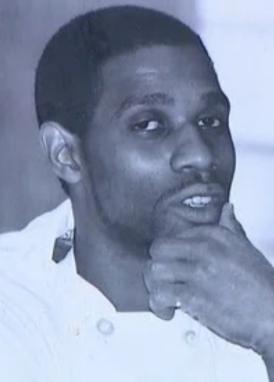
William O. Brown, a 35-year-old Black/African American man from Wilmington, Delaware, was killed during the early hours of November 16, 2015, after an altercation inside the Gold Club at 1031 South Market Street near Wilmington. Brown was a regular patron of the club. The confrontation reached a bathroom near the club’s entrance, where Brown was shot in the upper torso. The gunman fled immediately after the shooting.
Brown was taken to Christiana Hospital, where the gunshot wound proved fatal.
What initially appeared to be a sudden argument eventually developed into a murder case against Lamott Matthews, who was from New York. Court records later showed that Matthews had gone to the Gold Club earlier that evening with two women. Before arriving there, the group had been drinking at a local bowling-alley bar, then continued drinking at the Gold Club into the early morning. Prosecutors contended that Matthews left the club and later returned, interpreting Brown’s behavior as staring or looking at him in a challenging way. The prosecution portrayed that perceived slight and the resulting argument as the reason Matthews returned and shot Brown. The court record noted that there was no evidence of any previous dealings between Brown and Matthews.
The evidence identifying Matthews as the shooter was largely built from witness accounts rather than physical evidence. Investigators did not recover or introduce the murder weapon, there was no physical or forensic evidence directly connecting Matthews to the killing, and there was no surveillance recording from inside the Gold Club. Prosecutors did use footage from an adjacent motel parking lot in an effort to support their reconstruction of Matthews’s movements, but testimony about what appeared in that footage was not entirely consistent. Jennifer Sanchez, who had been at the club with Matthews, testified that Matthews made a statement amounting to some form of confession, although the court later described her recollection as questionable because of inconsistencies, reluctance to become involved and the large amount of alcohol consumed that night. Hector Ocampo, the only eyewitness who was actually in the bathroom, also acknowledged substantial alcohol consumption. He could not identify the shooter, and the description he gave did not match Matthews.
Another important witness was Natasha Chanelle, who was working at the club’s front entrance. She remembered someone running into the club shortly before the gunshot and the same person running back out immediately afterward, but she did not see the runner’s face and did not identify Matthews as that person. Her testimony became especially important because prosecutors were trying to prove that Matthews, after having been inside with the two women earlier, was also the person who returned immediately before Brown was shot. The weaknesses and contradictions in these accounts would later become central to what happened after Matthews’s first trial.
The investigation nevertheless focused on Matthews, and on February 16, 2016, a U.S. Marshals task force arrested him at an apartment in the 100 block of West 122nd Street in New York City. He was taken into custody on a Delaware warrant and held while awaiting extradition. Authorities announced that he would face first-degree murder, possession of a firearm during the commission of a felony, and possession of a firearm by a person prohibited. Police alleged that Matthews had shot Brown during the bathroom argument and then fled the club.
Brown’s killing also intensified official scrutiny of the Gold Club itself. Three days after the homicide, the Delaware Attorney General’s Office went to Superior Court seeking to have the property declared a criminal nuisance. State officials said police had been called to the Gold Club at least 237 times during the preceding four years, with incidents involving shootings, assaults, stabbings, drugs, vehicle thefts and other criminal activity. The club was temporarily closed, later reopened as Fantasia Lounge under conditions intended to improve security and end adult entertainment, and was permanently closed in March 2016 after authorities said those conditions had been violated.
Matthews eventually went before a Delaware Superior Court jury beginning June 5, 2018. The trial lasted six days, and prosecutors presented 17 witnesses as they attempted to piece together the events inside and around the club. On June 13, the jury returned guilty verdicts for first-degree murder and possession of a firearm during the commission of a felony. The Delaware Department of Justice also reported a conviction for possession of a firearm by a person prohibited. Prosecutors publicly announced that the murder verdict was expected to result in life imprisonment, with sentencing then planned for August. Deputy Attorneys General Zachary Rosen and Joseph Grubb prosecuted the case, and Delaware State Police investigator Dan Grassi was identified as the chief investigating officer.
The guilty verdicts did not become the final word in the prosecution. Matthews challenged the trial on the ground that prosecutors had misstated critical eyewitness testimony during closing arguments. In particular, the prosecutor told jurors, in substance, that Chanelle had linked the person who ran into and out of the club at the time of the shooting with the person who had earlier entered with the two women. Her actual testimony had not made that identification. Defense counsel objected during the closing argument and sought a mistrial. The prosecution later conceded that one of its representations about her testimony had been mistaken, while arguing that the error had been unintentional and had not affected the verdict.
On December 10, 2018, Superior Court Judge Vivian L. Medinilla granted Matthews a new trial. The court emphasized that the prosecution’s case was a close one and that the identity of Brown’s shooter was the central disputed issue. Because Chanelle had never identified Matthews as the person who ran into and out of the club, the judge concluded that the inaccurate closing argument improperly strengthened the prosecution’s identification evidence at precisely the point where the case was most vulnerable. The court found that the corrective instruction given to the jury had not been sufficient to remove the prejudice and ruled that the prosecution’s misstatement affected Matthews’s right to a fair trial and amounted to more than harmless error. The order required a new trial, meaning the June 2018 guilty verdicts could not stand as the final resolution of the prosecution for William O. Brown’s killing.