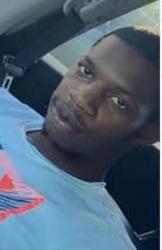
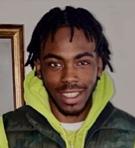
Jamai White, a 23-year-old Black/African American man identified by police as being from Philadelphia, was fatally shot on the evening of December 3, 2015, in the Brandywine Apartment Complex on Jacqueline Drive in the Claymont area of Delaware. New Castle County Police began receiving reports of gunfire at approximately 6:06 p.m. Callers reported that someone had been shot inside a dark-colored vehicle and that the gunman had fled on foot.
Officers arrived to find White unresponsive inside the vehicle with gunshot wounds to his upper body. They immediately began CPR until paramedics took over, and White was transported to Christiana Hospital by the Claymont Fire Company. He was later pronounced dead. An initial search involving numerous officers and a police K-9 failed to locate the shooter.
The vehicle in which White was shot was later identified through court proceedings as a 2011 GMC Sierra owned by Robert Betson, a friend who had loaned the truck to White. Police seized the truck as evidence in the murder investigation and retained it for years afterward, a circumstance that later became the subject of a separate civil lawsuit by Betson against New Castle County and the State of Delaware. That litigation confirmed that White had been found inside the borrowed truck after suffering multiple gunshot wounds.
A later Delaware Superior Court opinion provided a much more detailed account of the events leading to the shooting, based largely on statements made by eyewitness Molly Hoffman. According to the court's recitation of her account, Hoffman had been arranging to obtain cocaine for a man identified only as Martin, who lived at the Brandywine Apartments. She first contacted White about bringing $60 worth of cocaine, but his telephone apparently lost power before she knew whether the transaction had been finalized. She then contacted Vincent Clark, who agreed to supply the drugs and offered to drive her to the apartment complex. During the trip, Clark reportedly asked Hoffman whether she had seen White and then instructed her to contact White and ask him to bring the cocaine to Brandywine Apartments. Hoffman knew Clark and White were acquainted and apparently did not initially realize that anything violent was being planned.
After Hoffman arrived at the complex, White eventually telephoned her. At Clark's earlier request, she asked White to complete the delivery, and White agreed to come to the apartments. Hoffman then contacted Clark, who told her he was still in the parking lot and would see White when he arrived. When White pulled into the complex in the pickup truck, Hoffman approached the vehicle to make sure it was him. According to her account summarized by the court, she then saw Clark approaching the truck on foot. Clark allegedly fired multiple shots into the truck, striking White. White's wounded vehicle subsequently left the roadway, consistent with early news reports describing him as having been shot while driving.
The court record states that Clark left the area after the shooting. Within minutes, Hoffman said she received a telephone call from him in which he allegedly threatened to kill her if she told anyone what she had witnessed and instructed her to get rid of her telephone. Frightened, Hoffman removed the SIM card and flushed it down a toilet before hiding the telephone inside the apartment. Although she and Martin initially told responding officers they knew nothing about the shooting, Hoffman soon left the complex, contacted her sister Michelle, and described what had happened. Her sister persuaded her to return and speak with police. Hoffman then flagged down an officer and was taken to the police station, giving statements about the shooting along the way and again during a formal interview.
Investigators quickly focused on Vincent Clark. On December 7, New Castle County Police publicly identified Clark, then 25 and last known to live in the 900 block of Marcus Hook, Pennsylvania, as the suspect in White's killing. Detectives said evidence collected from the shooting scene linked Clark to the crime, while witnesses had also described a vehicle in the area that matched one operated by Clark. Clark had already been taken into custody on December 5 with assistance from the Marcus Hook Police Department and the Delaware County Prosecutor's Office. He was charged with first-degree murder and possession of a firearm during the commission of a felony and was initially held pending extradition to Delaware.
The prosecution continued into Delaware Superior Court under State v. Vincent Clark. Before the case could proceed to trial, however, Hoffman died, depriving prosecutors of the eyewitness they regarded as central to the case. Her death created a major evidentiary issue because Clark's attorneys argued that allowing prosecutors to introduce her recorded police statements without giving the defense an opportunity to cross-examine her would violate his constitutional confrontation rights. In February 2017, the Superior Court ruled that Hoffman's statements to police were inadmissible under the confrontation principles established by Crawford, but it permitted her sister to testify about what Hoffman had told her shortly after the shooting because the court found that statement qualified as an excited utterance. The State's request to use Hoffman's out-of-court statements was therefore granted in part and denied in part.
The available online records establish that Clark was arrested, formally charged and prosecuted in connection with White's killing, and that the case had advanced to significant pretrial litigation by 2017. However, the reliable publicly accessible sources located for this synopsis do not establish a subsequent Delaware jury verdict, guilty plea, dismissal, acquittal or sentence in White's case. The documented record therefore supports identifying Clark as the charged defendant while stopping short of stating that he was convicted of White's murder.