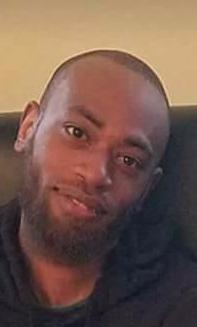
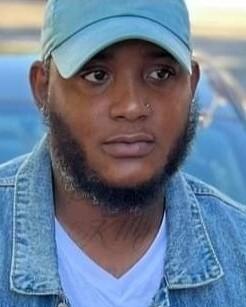
Keeven Hale, a 38-year-old Black/African American man, was outside his home at 602 East 23rd Street in Wilmington, Delaware, on the evening of February 23, 2017. He was drinking beer and talking with a neighbor when surveillance cameras recorded Kashiem Thomas near a convenience store about a block away. Thomas was initially seen wearing dark clothing and a ski mask rolled above his face.
Minutes later, the cameras captured him walking toward Hale's block with the mask pulled down, his hood raised and his right hand in his pocket. Forty-one seconds after he disappeared from the camera's view, Wilmington's ShotSpotter system detected ten gunshots outside Hale's address.
Hale's mother saw him stumble through the front door bleeding and called 911. Officers entered the residence and found him on the living-room floor with approximately four to six gunshot wounds to his torso and upper extremities. When a detective asked whether the person lying outside had shot him, Hale responded affirmatively, but he was unable to provide further details. Paramedics transported him to Christiana Hospital, where he died from his injuries. Thomas was found wounded on the sidewalk between Hale's home and a neighboring property with a single gunshot wound to his lower back. Because Thomas was injured, authorities initially described him as the second victim of the shooting.
The investigation soon shifted toward Thomas. Police determined that the surveillance footage placed him walking toward Hale's house immediately before the gunfire while concealing his face. Hale's neighbor later told investigators that he had passed a masked person dressed in black shortly before hearing the shots and, when he turned around, saw that person on the sidewalk while Hale ran inside. The neighbor said he saw no one else in the immediate area. Investigators also found gunshot residue on both Hale and Thomas, including residue on Thomas's hands and the right pocket of his jacket. ShotSpotter analysis indicated that the opening shots came from the sidewalk in front of Hale's house, followed by additional shots from Hale's lawn and an adjoining lawn.
Police recovered Hale's still-warm. 40-caliber handgun from beneath a couch armrest inside the home after family members had moved it from the porch. Officers also collected. 40-caliber cartridge casings, plastic. 410-bore shot-shell casings and a discharged bullet-jacket fragment from the scene. Hale's doorway and a neighboring door frame bore evidence of the exchange of gunfire. Investigators did not find a firearm on Thomas, and the weapon that fired the fatal shots was never recovered. Prosecutors later argued that a crowd that gathered closely around the injured Thomas before paramedics arrived could have provided an opportunity for someone to remove a weapon.
After further investigation, Wilmington police identified Thomas as the suspect. He was formally charged while still hospitalized with first-degree murder and possession of a firearm during the commission of a felony, then transferred to correctional custody after his medical release. A New Castle County grand jury subsequently indicted him on the murder and firearm charges, along with a separate person-prohibited firearm count that was handled apart from the principal trial.
During a six-day jury trial, prosecutors built their case largely through surveillance recordings, ShotSpotter data, gunshot-residue evidence, Hale's response to the detective, witness testimony and the circumstances in which Thomas was discovered. The defense emphasized that no witness had actually seen Thomas fire a weapon, that police had not recovered the murder weapon and that the forensic evidence could not conclusively prove who fired each shot. Thomas sought a judgment of acquittal, contending that the state had established only his presence near the shooting rather than his identity as the killer. The trial judge rejected that argument, finding that the combined direct and circumstantial evidence was sufficient for the jury to decide the case.
On May 1, 2018, the jury convicted Thomas of first-degree murder and possession of a firearm during the commission of a felony. On February 8, 2019, he was sentenced to spend the balance of his natural life in prison for the murder, followed by an additional 15 years for the firearm offense, with the sentence effective from March 2, 2017. The Delaware Supreme Court affirmed the convictions and sentence in March 2020, ruling that a rational jury could conclude beyond a reasonable doubt that Thomas had fatally shot Hale despite the absence of an eyewitness to the actual gunfire or a recovered murder weapon.
Thomas continued challenging the case through habeas corpus and post-conviction proceedings. A 2021 habeas petition was denied, and later claims alleging ineffective assistance of counsel and improper prosecution testimony also failed. In April 2026, the Delaware Supreme Court again upheld the lower court's rejection of his post-conviction claims, leaving his convictions and sentence of life plus 15 years intact.