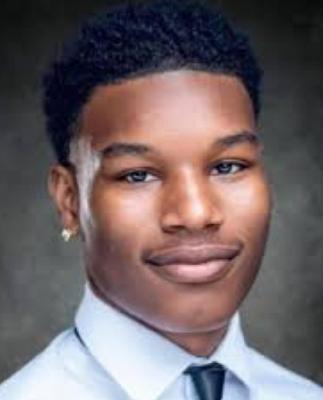
Dwayne Grimes was a 19-year-old Black/African American man from Wilmington, Delaware, whose life ended in a daylight shooting on October 16, 2017. At approximately 4:20 p.m., Wilmington police were called to the 500 block of West Sixth Street in the city's West Center City neighborhood. Officers found Grimes suffering from a gunshot wound to his torso. New Castle County paramedics treated him at the scene and transported him by ambulance to Christiana Hospital, but he died from his injuries.
Later court proceedings described the fatal injury more specifically as a single shotgun wound to his back.
The investigation did not produce an immediate arrest. Detectives examined surveillance recordings from several nearby locations, although the cameras reportedly captured only general activity in the area and not the shooting itself. Investigators recovered 20-gauge shotgun shell casings that were consistent with the fatal wound. Over time, witnesses gave police information placing Tyliek Smith in the area and describing statements in which Smith allegedly admitted responsibility. According to evidence summarized during a court hearing, one witness said Smith claimed he wanted to reach Grimes before Grimes reached him and admitted shooting him once in the back. Another witness said Smith described surprising Grimes, who tried to run before he was shot, and referred to the shotgun as “Big Bertha.” A separate witness reported seeing one person moving away while concealing a large firearm near his waistband. Prosecutors characterized the killing as the result of an ongoing dispute between Grimes and Smith.
The case moved forward more than two years after the shooting. Smith, who had been 15 at the time of Grimes's death, was taken into custody while being held in West Virginia on unrelated matters and was returned to Delaware. On November 12, 2019, a grand jury indicted him on first-degree murder, possession of a firearm during the commission of a felony, and possession of a destructive weapon. Although Smith was still a juvenile when the homicide occurred, the prosecution proceeded in Superior Court. After a January 29, 2020 hearing, a judge rejected his request to have the case transferred to Family Court, meaning he would face the charges as an adult.
Smith did not ultimately stand trial for first-degree murder. On June 4, 2021, he pleaded guilty to second-degree murder, treated as a lesser-included offense of the original murder charge, and to possession of a firearm during the commission of a felony. Under the agreement, prosecutors dismissed the destructive-weapon charge. The parties also agreed that Smith would seek no less than 25 years of unsuspended imprisonment while the state would recommend 30 years. The court accepted the plea and ordered a presentence investigation.
Before sentencing, Smith attempted to withdraw his guilty plea. A motion filed in January 2022 stated that he believed his attorney had pressured him into pleading guilty and should have negotiated a better agreement. Following a hearing in February, the Superior Court denied the request. The judge allowed Smith's attorney to withdraw and appointed new counsel, who was permitted to seek withdrawal of the plea again if a valid basis could be found. No new motion was filed.
On July 8, 2022, Smith was sentenced to 35 years for second-degree murder, with that term suspended after 20 years for decreasing levels of supervision. He also received a consecutive seven-year prison term for the firearm conviction, resulting in 27 years of unsuspended imprisonment. The sentence was made effective as of November 19, 2019, giving him credit from the date associated with his Delaware custody. Smith appealed, but the Delaware Supreme Court concluded in February 2023 that the appeal contained no meritorious issue and affirmed the Superior Court's judgment, leaving his conviction and sentence intact.