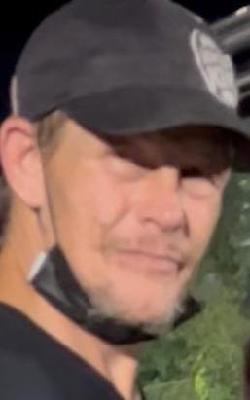
Greg Jenkins, a 43-year-old Black man, was killed inside a residence in Wilmington’s Brandywine Village neighborhood in early February 2018. His recorded date of death was February 1, although he was not discovered until several days later. At approximately 1 p.m. on February 5, Wilmington police officers were sent to a house at 2230 Lamotte Street to conduct a welfare check.
When officers entered the residence, they found Jenkins and Kelli Snow dead inside, turning what began as a concern for the occupants’ safety into a double-homicide investigation.
The scene revealed that Jenkins had endured an especially violent attack. Reports indicated that he had been beaten and stabbed in addition to suffering fatal gunshot wounds. Snow was found with a gunshot wound to the head. Investigators believed the two had been dead for several days before police entered the home. The delay between the killings and the discovery left detectives with the difficult task of reconstructing what had happened inside the residence without an immediate witness account or publicly identified motive.
Crime-scene investigators recovered six spent 9-millimeter cartridge casings, three fired projectiles and four live rounds of 9-millimeter ammunition from the house. Ballistic evidence later became an important part of the case. Authorities compared the casings from the Lamotte Street killings with evidence collected after gunfire was reported near 100 South Chapel Street in Newark on January 30, 2018, only days before Jenkins and Snow were believed to have died. A firearms examiner concluded that casings from the Newark incident and the Wilmington homicide scene had been fired from the same weapon.
The investigation eventually identified Neki Gibbs and Dejuan Cruz as suspects, and both men were listed as having been arrested in connection with the case. Gibbs was formally indicted in September 2019 for first-degree murder arising from the Wilmington killings and for criminal mischief connected to the separate Newark shooting. Prosecutors intended to use the ballistic comparison to link him to both incidents. Gibbs’ attorney attempted to restrict or exclude the firearms examiner’s testimony, arguing that the expert evidence did not meet the necessary standards. In December 2019, a Superior Court judge denied the defense request, ruling that the prosecution could present the ballistics evidence, although the examiner’s testimony would be subject to certain limitations.
Gibbs was already incarcerated by the time the murder prosecution moved forward. Two days after Jenkins and Snow were found, he appeared in court for violating probation imposed in an earlier criminal case. He admitted using cocaine and heroin and failing to attend required sex-offender treatment sessions. The court sentenced him to four years in prison for those violations. That sentence was separate from the later murder charge.
As Gibbs approached trial in March 2020, public reporting stated that he reached a negotiated plea agreement with prosecutors and was scheduled to enter the plea in Superior Court. Available reports do not clearly identify the precise charge to which he pleaded, the terms of the agreement or the sentence imposed in connection with Jenkins’ death. Cruz was also identified and arrested as a suspect, but publicly accessible information about the final disposition of his case is limited. It is not clear from reliable public records whether Cruz was convicted at trial, accepted a plea agreement or had the charges against him resolved in another manner.
The arrests and the prosecution of Gibbs moved the investigation beyond its uncertain early stage, but significant parts of the case remain absent from public reporting. Authorities did not widely disclose a definitive motive or a complete account of what led to the violence inside the Lamotte Street home. What emerged from the investigation was evidence of a sustained and brutal attack, followed by several days of silence before the victims were found. Jenkins’ death became part of a complicated double-homicide prosecution involving two suspects, ballistic evidence connecting separate crime scenes and court proceedings that continued for more than two years after the killings.