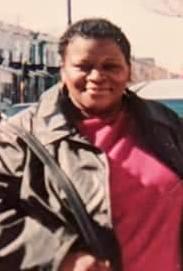
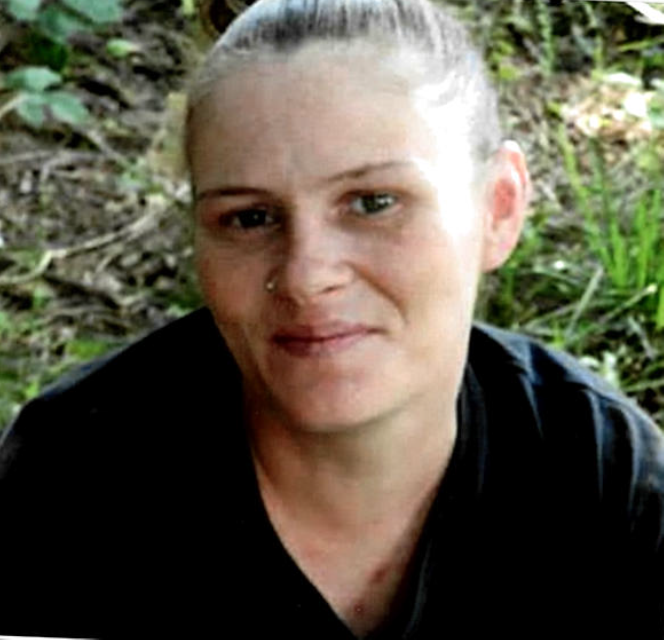
Doris Ericka Dorsey was a 15-year-old Black/African American girl whose life was taken during a family birthday gathering in the Belvedere area near Wilmington, Delaware, early on June 17, 2018. She had returned home to spend time with her father, Duncan Dorsey, as he celebrated his birthday on the day before Father’s Day. Shortly after 1:00 a.m., Doris was sitting in her family’s car in the driveway of the Lloyd Street home, talking and playing games with a friend through FaceTime.
Her father and his close friend, Vincent DiMenco, were seated in the front yard, while Doris’s mother, who was also named Doris, was inside the house.
A man carrying a 12-gauge shotgun walked onto the property. When Duncan noticed the armed stranger and stood to confront him, the gunman cocked the weapon and fired into the car where Doris was sitting. Duncan threw a chair in an attempt to protect his daughter, but the shooter fired into the vehicle again. The gunman then turned his weapon toward DiMenco as he attempted to flee and shot him in the head. Doris’s mother tried to close the front door, but another shotgun blast tore through it, grazing her back before passing through walls and a cabinet and finally lodging in a backyard shed. Duncan escaped to a nearby fire station and called for help. The first 911 call was recorded at approximately 1:26 a.m. Doris was taken to Christiana Hospital with multiple gunshot wounds and was pronounced dead, while DiMenco was pronounced dead at the scene. Investigators found no evidence of a struggle before the attack, and the family described the shooting as sudden and unprovoked.
The killer was not immediately identified. Duncan and his wife told police that they did not recognize the shooter, describing him as tall and heavily built, with a bald or closely cropped head and a broad, clean-shaven face. Duncan was shown a photographic lineup several days later but did not identify Glenford Blackwood, who had by then become a person of interest. Detectives nevertheless began constructing a circumstantial case from surveillance recordings, ammunition records, vehicle information and electronic location data. A motion-activated camera several houses from the scene recorded a white sport utility vehicle traveling along Lloyd Street shortly before the shootings. The vehicle was identified as a GMC Terrain, and investigators compared it with registered vehicles in Delaware.
The inquiry led detectives to a Walmart where the same type of Federal-brand 12-gauge ammunition recovered at the crime scene had recently been sold. Store records and surveillance footage showed that the purchaser was a large-framed man who had arrived in a white GMC Terrain. The partial and later complete license-plate information connected that vehicle to Blackwood. Additional surveillance footage placed a similar white SUV traveling from the area of Blackwood’s residence toward Lloyd Street before the attack and returning afterward. Police searched Blackwood’s home on June 22, five days after the killings. They seized his telephone and a pair of boots that later tested positive for particles characteristic of gunshot residue. In a bedroom nightstand, investigators also found documents concerning a 2015 incident involving Doris’s mother, including handwritten references to Duncan Dorsey and the Lloyd Street address.
Authorities concluded that the violence was rooted in a grudge from that 2015 confrontation at a Family Dollar store, where Blackwood had worked in loss prevention. During that episode, Blackwood confronted another man, Keith Whitaker, over suspected shoplifting. Whitaker attacked Blackwood and attempted to strike him with the Dorsey family’s car. Doris’s mother had been present, and prosecutors later argued that Blackwood held her responsible or associated her with the attack. Their theory was that Blackwood came to the home intending to kill the mother but mistook the younger Doris for her as she sat inside the vehicle. Neither Doris nor DiMenco was believed to have known Blackwood personally.
Blackwood initially told detectives that he had attended a private party in Glen Mills, Pennsylvania, on the night before the murders and had driven directly home afterward. He denied visiting Lloyd Street, owning or firing a gun, or harboring resentment toward the Dorseys. He acknowledged buying shotgun ammunition months earlier but claimed that he had misplaced it. His account began to unravel as investigators compared it with witness testimony and digital evidence. The party’s host said the guests had left by midnight, earlier than Blackwood claimed. Google location records placed Blackwood’s telephone near the party, then moving toward Wilmington and onto Lloyd Street shortly after 12:30 a.m. The device later returned to his residence. During the critical period surrounding the shootings, the telephone stopped transmitting location information, which an FBI cellular-analysis specialist testified was consistent with it being powered off or placed in airplane mode. The data resumed shortly after the 911 call and showed the device moving away from the area.
Investigators also discovered that Blackwood’s phone had been used in the days following the killings to search for information about states with the death penalty and the phrase “Smiley Face Killer,” a label the media had used for the unknown gunman because witnesses said he smiled before opening fire. The phone contained an earlier photograph of Blackwood holding a shotgun. He had also withdrawn $7,000 and sent it to Jamaica the day after the murders, although he claimed the money was intended for a home purchase. At trial, Blackwood admitted that parts of his original account to detectives were false but continued to deny being the shooter. He maintained that his phone had stopped reporting its location because its battery had died and disputed that the vehicle recorded near the crime scene was his.
After approximately three months of investigation, New Castle County police arrested Blackwood on September 21, 2018. At the time, he was charged with two counts of first-degree murder and two firearm offenses and was held on more than $2 million cash bail. The prosecution later expanded the case to include the gunfire directed at Doris’s parents. Following a ten-day Superior Court trial in July 2021 and more than two days of jury deliberations, Blackwood was convicted on every count: two counts of first-degree murder for killing Doris and DiMenco, two counts of attempted first-degree murder for firing at her parents, and four counts of possessing a firearm during the commission of a felony.
Blackwood was sentenced on June 24, 2022. The court imposed a life sentence for each of the two murder convictions and each of the two attempted-murder convictions, along with a combined additional 20 years for the four firearm offenses. He appealed while representing himself, challenging matters that included the search of his telephone and the handling of evidence at trial. In October 2023, the Delaware Supreme Court rejected his arguments and affirmed the convictions and sentences, leaving in place the judgment that held him responsible for the attack that killed Doris Dorsey and Vincent DiMenco and wounded Doris’s mother during what had begun as a family celebration.