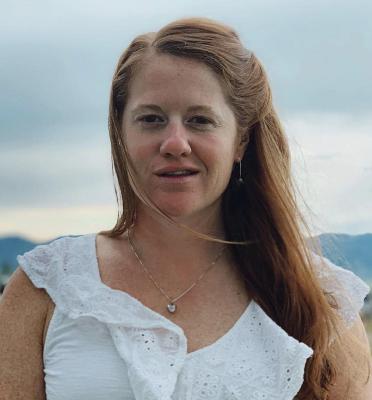
In the quiet town of Hope, Idaho, the sense of peace was shattered on April 5, 2017. Shirley Ramey, a 79-year-old Caucasian female and the town's long-time former city clerk, was found deceased in her rural home by her husband, Daryl. She had been shot twice in what investigators described as an "execution style" killing near a sliding glass door in her residence.
Daryl Ramey had been playing cards with friends at a senior center that afternoon and was quickly ruled out as a suspect by law enforcement. For years, Shirley had been a pillar of the small community of just 90 people, known for her dedication and for never missing a city council meeting in her 25 years of service. The brutal and seemingly random nature of her death left the tight-knit community in a state of shock and fear.
The investigation into Shirley Ramey's murder was a complex and lengthy ordeal. Initially, authorities focused on a local man, Nathan Utt, who owned a trailer that had been struck by bullets from the same gun used to kill Ramey. Utt was arrested in Spokane after being tracked to an Amtrak train. However, he was quickly exonerated when his alibi confirmed he was in another state at the time of the homicide. With no other immediate suspects, no witnesses, and no surveillance footage, the case went cold for over two years, leaving the community and Ramey's family without answers. Detectives from the Bonner County Sheriff's Office continued to work the case, submitting evidence from the scene for testing at state and federal labs in the hope of a breakthrough.
The break in the case finally came in August 2019, thanks to the persistence of law enforcement and the use of a national ballistics database. Investigators identified Judith Carpenter, a real estate appraiser from Coeur d'Alene, as the primary suspect. On the same day as Ramey's murder, Carpenter had been arrested in Libby, Montana, for a road rage incident where she pointed a pistol at another driver. Two firearms were seized from her vehicle: a 9mm Glock pistol and a Savage Model 99 rifle. In 2019, at the urging of an ATF agent, the Glock was test-fired, and the shell casings were entered into the National Integrated Ballistics Information Network. The system found a match to the 9mm shell casings recovered from the Ramey crime scene. Furthermore, the rifle found in Carpenter's possession was the same make and model as one that had been stolen from the Ramey residence.
With this crucial evidence, Judith Carpenter was arrested and charged with the first-degree murder of Shirley Ramey. Investigators found no prior connection between Carpenter and Ramey, and the motive appeared to be a burglary that turned fatal. Cell phone records placed Carpenter in Bonner County on the day of the murder. During questioning, Carpenter gave conflicting stories about how she came to possess the stolen rifle. Ultimately, facing the overwhelming evidence against her, Judith Carpenter entered an Alford plea to second-degree murder, acknowledging that the prosecution had enough evidence to likely secure a conviction. She was sentenced to fifteen years to life in prison.