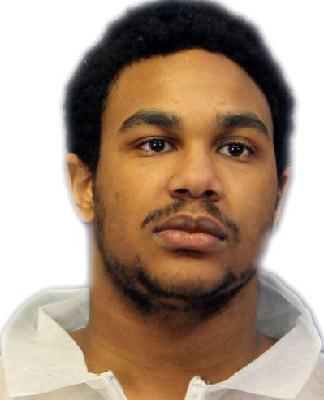
Do you know who murdered Ivory Campbell? On a quiet Sunday night in late February 2006, Ivory Campbell, an African-American man from Washington, D.C., was along the 240 block of 37th Street SE when gunfire shattered the calm of the neighborhood. Shortly before 11 p.m. on February 26, 2006, shots rang out near 240 37th Street SE, a stretch of roadway in Southeast Washington lined with homes and apartment buildings. Responding officers from the Metropolitan Police Department arrived around 10:50 p.m.
and found Campbell suffering from gunshot wounds alongside the street. Despite efforts to save him, he was pronounced dead, and the block where he fell became the center of a homicide investigation that would linger for years without resolution.
Campbell’s life emerges most clearly from the fragments preserved in funeral and memorial notices. In obituary listings, he is remembered as Ivory W. “Bozo” Campbell, a beloved brother to Barbara and Larry McCadden and to Lynn, Monica, and Samuel Campbell. He is described as a cherished friend of Terlisha Pate and the devoted godfather of Christislove Clark, his circle widened still further by a godmother, Rusti Davis, and godsisters Laticia Jackson and Ronica Swann. These details sketch a man rooted in family and community, someone whose absence would reverberate through multiple households and relationships rather than a nameless figure in a police report. His body lay in state at First Baptist Church of Minnesota Avenue in Southeast Washington, where mourners gathered on March 4, 2006, before he was interred at Lincoln Memorial Cemetery in nearby Suitland, Maryland, placing his final resting place just beyond the city whose streets had claimed his life.
Almost immediately, detectives from the Metropolitan Police Department’s Violent Crimes Branch took up the case. A printed homicide flyer bearing Campbell’s photograph and the word “HOMICIDE” in bold red letters announced a reward of up to $25,000 for information leading to the arrest and conviction of whoever was responsible. The flyer fixed key details in stark type: on Sunday, February 26, 2006, at approximately 10:50 p.m., Ivory Campbell was shot to death alongside 240 37th Street SE. Beneath that, the department asked for the public’s help and listed Detective Robert Cephas as the primary contact, signaling that investigators were depending heavily on community tips to advance the case. The inclusion of Campbell’s name on the Metropolitan Police Department’s roster of major case and unsolved homicides for 2006 confirmed that, as the years passed, his killing remained an open wound in the department’s files as well as in his family’s memory.
Yet, for all the formalities of the investigation, the trail appears to have grown cold almost from the outset. Summaries compiled by true-crime and case-tracking sites echo the official timeline: Campbell was shot and killed at about 10:50 p.m. along 240 37th Street SE; officers found him at the scene with fatal wounds; and the crime scene became the focus of an intensive inquiry. But those same accounts stress what is missing—clear leads, cooperative witnesses, or compelling physical evidence that might reveal how an ordinary Sunday evening turned into a fatal ambush. Over time, online case profiles would repeatedly state that, despite ongoing investigative efforts, no suspects have ever been publicly identified in connection with Campbell’s murder and no arrests have been announced, leaving the case officially unsolved.
In the years since, Campbell’s story has been kept alive largely through these digital traces: the police flyer still archived on the city’s website, the unsolved-homicide list that quietly carries his name between dozens of others, and dedicated cold-case pages that invite readers to share tips or corrections. Each of these small entries returns to the same unresolved moment on 37th Street SE, where a man with a close-knit family and a circle of friends was gunned down and left as the central figure in a mystery that authorities have yet to unravel. The standing reward, the enduring presence of his name among unsolved cases, and the continued calls for information underscore that, after all these years, the central questions remain painfully open: who pulled the trigger that night, and why Ivory Campbell was the one left dying on the pavement.