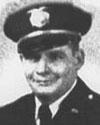
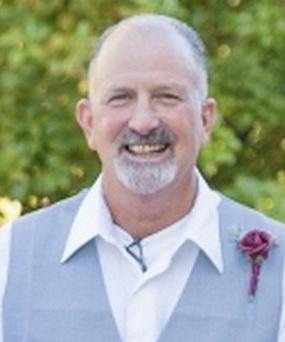
Daniel C. Hansen, a 42-year-old White male, was serving as town marshal in Cokeville, Wyoming, when a threat against a local banker pulled him into what sounds, even now, like the opening scene of a frontier ambush. In the days before his death on June 21, 1912, banker Peter Olson reportedly found a blackmail note demanding $1,500 and ordering that the money be left near the Bear River bridge, marked by a red lantern. The note was signed with the names Hugh and Charley Whitney, brothers already linked in newspaper accounts to violent outlawry in the region and to the earlier robbery of the Cokeville bank. Rather than ignore the threat, Hansen took it seriously and went out to investigate it himself on the night of June 20.
What happened next was described in grim, immediate detail by later accounts drawn from 1912 newspaper reporting. Riding toward the designated spot around 10 o'clock that Thursday night, Hansen reportedly saw a man moving in the darkness on all fours. He called out, asking who was there, and was answered with gunfire. One bullet struck him in the side. His horse wheeled, and a second shot killed the animal outright. Hansen managed to fire back, but the encounter was badly one-sided, and he was left wounded on the road in the dark. He was not found at once by officers in a planned operation, but by an automobile party that came upon him later, with a sheriff among those present. He was brought back to town by carriage, alive but fading, and he died the following afternoon at 3:41. The story carries the lonely feel of so many early Western killings: a single lawman riding into the night, a trap already sprung, and a town waiting for him to return.
The online record points to named suspects almost immediately. Hansen was said to have partially identified Bert Dalton in a deathbed statement. Dalton was then arrested in Cokeville and jailed. Contemporary reporting preserved online says he admitted being associated with the Whitney brothers and claimed that while they attacked Hansen, he held their horses and expected to receive a share of the extorted money. At the same time, Hugh and Charley Whitney were publicly described as the main suspects in the killing, and reports said officers feared they might try to free Dalton from jail. A posse was expected to organize against them, and newspaper language from that week made clear that people in and around Cokeville believed Hansen had fallen in the line of duty while trying to stop an extortion scheme tied directly to the Whitney gang.
What becomes harder to pin down is the final legal ending. Online sources clearly show Dalton was arrested and jailed in the aftermath, and a Wyoming history entry identifies Bret Dalton as a member of the Whitney Gang who was in the Wyoming State Penitentiary by October 1912, when he led a prison break. But the available online material I found does not cleanly establish a documented murder conviction for Hansen's killing, nor does it show a full trial record or final judgment against Hugh Whitney, Charley Whitney, or Dalton specifically for Hansen's death. Decades later, Charley Whitney resurfaced in national reporting when he admitted his role in the 1911 Cokeville bank robbery and pleaded guilty to that robbery in 1952, but that account did not state that he was prosecuted for Hansen's murder. So the picture that survives online is vivid on the killing itself and on the immediate arrests and suspicions, yet murkier on whether the law ever fully closed the book on the marshal's death.
That leaves Hansen's story with the ache of an old Western case that is both sharply remembered and partly unresolved. He was not killed in a random quarrel or a drunken outburst, but while trying to protect a threatened family and prevent a criminal shakedown from taking hold in a small town. The surviving accounts remember him as a marshal who rode out because someone had to, and who never came back from the road south of town. In the historical record online, the names of the men believed responsible still stand beside his, but the strongest through-line is not their notoriety. It is the image of Hansen answering a threat against his community, stepping into the dark to meet it, and dying before the law could plainly finish what he had begun.