On August 19, 1878, Deputy Sheriff Robert Widdowfield, a 32-year-old White male, English-born, rode out from the coal camp country around Carbon in pursuit of outlaws who had tried to rob a Union Pacific train east of Medicine Bow.
With Union Pacific detective Henry “Tip” Vincent beside him, the 32-year-old Deputy Widdowfield, followed a thin trail toward Elk Mountain and into the dry folds of Rattlesnake Canyon, where the gang had fled after the botched derailment attempt at Como
Bluff.
The canyon was quiet. When the lawmen came upon the outlaws last camp, the ashes of a campfire still warm, and the two lawmen pressed forward into an ambush that would enter Wyoming lore.
Hidden behind brush, the gang had stamped out its fire and waited.
A shot tore into the 32-year-old Deputy Robert Widdowfield, dropping him as he approached the camp; Vincent turned to flee up the draw and was cut down moments later.
The outlaws stripped the dead of weapons, hid the bodies beneath uprooted brush, and fled the mountain.
Days passed before searchers found the concealed remains in Rattlesnake Canyon on August 27, closing the circle on a hunt that began with a midnight tampering of rails and ended with two lawmen dead in Carbon County.
Names soon hardened into suspects.
Locals and later historians fixed the killers within the gang led by George “Big Nose George” Parrott and Charles “Dutch Charley” Burris, outlaws who had loosened the rails and strung telegraph wire to yank them free as a train approached, then broken for Elk Mountain when section men discovered the sabotage.
The murders of the Deputy Sheriff, and his railroad partner ignited the coal towns along the tracks, where miners muttered about a stolen payroll and vowed revenge.
Arrests followed in fits.
Early in 1879, authorities captured “Dutch Charley.”
As officers escorted him by rail from Laramie to Rawlins on January 23, the locomotive paused at Carbon and a mob swarmed the cars, dragged Burris out, and lynched him from a telegraph pole within sight of the cemetery where Deputy Robert Widdowfield, lay buried.
No court would ever hear Burris's defense; his body was cut down after dawn and denied burial inside the cemetery fence.
Parrott eluded capture until July 1880, when Carbon County Sheriff James Rankin tracked him to Montana and brought him back to stand trial for the Elk Mountain murders.
In Rawlins, he was arraigned on September 13, 1880, and by December the court had entered a sentence of death by hanging set for April 2, 1881.
Ten days before that date, Parrott tried to break out of jail; word of the attempt drew an armed crowd that seized him and lynched him in downtown Rawlins on March 22, 1881.
With Burris dead by vigilante rope and Parrott lynched after conviction, no further prosecutions would speak for Deputy Robert Widdowfield, whose death on August 19, 1878, in Carbon County had set the pursuit in motion.
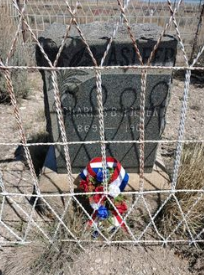
What remains on the ground is spare: a marble marker in the Carbon Cemetery naming a 32-year-old male, English-born, deputy sheriff, Robert Widdowfield; a date—August 19, 1878—tied forever to Rattlesnake Canyon; and a frontier measure of justice that came not from a jury but from two ropes in two towns.
The coal camp that sent him riding still tells his story alongside that of his partner, a reminder that the quiet of a Wyoming draw can be a thin skin over sudden violence, and that the men responsible were named, seized, and killed before a formal sentence could ever be carried out.