Thomas J. Kling, a White male lieutenant with the Rawlins Police Department, was killed in Rawlins, Wyoming, on April 20, 1903, after what appears in the surviving accounts as a routine response turned into a deadly trap. That night, shots were reported at a local grocery store owned by Frank Keefe. One account says Officer James Spencer reached the scene first and found Keefe inside with a rifle, and that Keefe fired at him and missed.
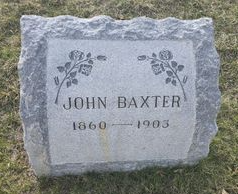
Soon afterward, Kling and City Marshal John Baxter came to the store in answer to the disturbance. What they walked into was not confusion so much as an ambush. Later memorial and historical summaries agree that Keefe, a store owner long feared in town for violent behavior, especially when drunk, had set the scene for the officers and opened fire when they entered. Kling was shot and killed there, and Baxter was killed as well.
The picture that emerges from the online sources is of a town that already knew the danger surrounding Keefe before that night. Contemporary retrospective summaries describe him as a man who had terrorized neighbors and antagonized the police for some time. One regional newspaper summary published shortly after the killings described the act as malicious and without provocation, adding that Keefe was drunk and had long been regarded as dangerous when drinking. That gives the episode a grim shape: not a spontaneous struggle, but a collision that had been building in public view until it finally broke into murder inside the store. Kling's death therefore reads less like an isolated act of frontier violence and more like the fatal outcome of a mounting local menace that finally turned its rifle on law officers who answered the call.
As for suspects and arrests, the online record points to Frank J. Keefe as the central and apparently sole suspect in the case. Legal summaries tied to the later Wyoming Supreme Court case state that Keefe was arrested on April 22, 1903, two days after the killings, for the murders of Thomas J. Kling and John Baxter. Those same summaries indicate that two separate first-degree murder informations were filed against him, one for each dead officer. That detail matters because it shows the authorities treated the deaths as two distinct homicide prosecutions arising from the same burst of violence, not as a single blended case. The fact that Keefe's name follows the case through arrest, charging, trial, imprisonment, rearrest, and appellate litigation strongly suggests that no other suspect emerged in the public record preserved online.
The prosecution that followed did not end in the most severe verdict first imagined by the charges. According to the law-case summaries and officer memorial records, Keefe was tried on one of the murder accusations, convicted instead of manslaughter, and sentenced to four years in the penitentiary. Memorial sources state that the manslaughter conviction was in the deaths of both officers, while the legal summary clarifies that he had originally faced two separate first-degree murder accusations and was convicted of manslaughter on one of them before serving his sentence. After his release, he was arrested again on the remaining information, which led to further litigation over delay in prosecution and produced the 1908 Wyoming Supreme Court decision in State v. Keefe. The online material located here does not show a second murder conviction tied to Kling specifically beyond that manslaughter outcome and the later procedural fight, but it does show that Keefe was not allowed to vanish from the case after the first prison term; the state continued trying to pursue the remaining charge.
What remains most vivid, even after the legal maneuvers and the passage of more than a century, is the scene itself: a call about gunfire, officers moving toward a grocery store in the dark, a rifle waiting inside, and Thomas J. Kling never coming back out. The surviving online sources do not provide his age, but they do preserve the broad outline of his life and death: a Rawlins police lieutenant, also remembered as a veteran of the Spanish-American War, killed in service beside John Baxter on a spring night in 1903. In the end, the name attached to the bloodshed is Frank Keefe, the store owner accused of turning his business into a killing ground and of meeting the law's answer first in arrest, then in murder charges, then in a manslaughter conviction and prison sentence that many later readers considered painfully light for the deaths left behind in Rawlins.