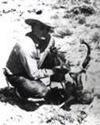
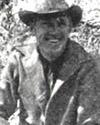
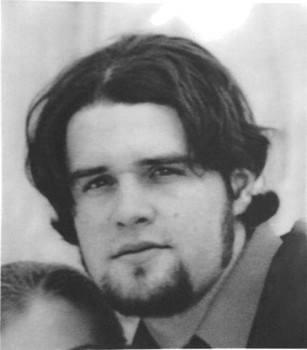
John Baxter, a 42-year-old White male, died in Rawlins, Wyoming, on April 20, 1903, after a violent call that turned into an ambush. He was serving as the city marshal when gunfire erupted at a local store, and the trouble led officers toward the business run by Frank J. Keefe. Later accounts agree that Keefe had already built a reputation in town as a difficult and threatening figure, and when lawmen moved in, the night broke open in rifle fire.
Baxter and the other responding officer, remembered in some records as Thomas Kling and in others as Thomas King, were both shot after going to the store to confront the danger. One later retelling says Baxter was taken to a doctor's office and died at 9:55 that night, giving the episode the shape of a desperate final struggle rather than an instant, faceless death.
What followed was not a mystery without a name. Frank J. Keefe was identified as the central suspect almost immediately, and contemporary reporting described him as the man who shot Baxter and the other officer during the attempted arrest. The early newspaper account portrays the killings as the act of a prominent local businessman who turned lethal when officers came for him, while later memorial records frame it as a planned ambush laid for the police. Either way, the picture that survives is of a town confrontation that ended with Baxter dead in the line of duty and Rawlins forced to reckon with the fact that the violence had come not from some stranger passing through, but from a man already known in the community.
There were arrests and formal prosecutions. A Wyoming Supreme Court opinion from 1908 preserves the legal trail in unusually clear detail: prosecutors first filed a murder charge against Frank J. Keefe in May 1903 for the killing of the second officer, and Keefe obtained a change of venue from Carbon County to Albany County that August. Then, in September 1903, prosecutors filed another first-degree murder information naming both Frank J. Keefe and William Keefe in the same killing. The court record says Frank Keefe was later arrested on a bench warrant issued in March 1907, served with the information that month, arraigned, and admitted to bail in April 1907, while William Keefe had never been arrested at all by the time of that proceeding. That means the case did not simply flare and vanish; it dragged on through years of motions, venue fights, renewed charges, and arguments over which court had authority to proceed.
The final outcome remembered most often is that Keefe was convicted not of first-degree murder but of manslaughter in the deaths of both officers and sentenced to four years in prison. That sentence has lingered in the historical record with a bitter edge, because the punishment appears strikingly light when set beside the deaths of two officers answering gunfire in their own town. So the story of John Baxter ends not only with the smoke and panic inside a Rawlins store, but with a long legal aftermath that narrowed a double killing into a conviction many later readers have regarded as inadequate. More than a century later, the case still reads like a frontier tragedy: a marshal answering danger, a merchant with a rifle waiting inside, a town left with two dead officers, one named suspect, another man later charged but apparently never taken into custody, and justice that arrived in a lesser form than the crime seemed to demand.